Sacred Alchemy: The Five Elements in Tibetan Wisdom – Healing with Form, Energy and Light
What you will learn
Embark on a Spiritual Odyssey Rooted in Tibetan Traditions
Unlock the Secrets of Elemental Balance for Inner Harmony
Practical Wisdom: Healing with the Forces of Nature
Discovering the Elemental Tapestry of Tibetan Cosmology
Journey to Wholeness: Uniting Mind, Body, and Spirit through Tibetan Wisdom
From Ancient Teachings to Modern Practices: A Holistic Approach
Mastery of Tibetan Shamanic Healing Techniques: Acquire in-depth knowledge and hands-on experience in the application of Tibetan shamanic practices for healing.
Description
Exploring Elemental Healing in Tibetan Spiritual Practices
Introduction: Welcome to the transformative journey of “Exploring Elemental Healing in Tibetan Spiritual Practices.” This course delves into the profound wisdom of Tibetan shamanism, tantra, and Dzogchen, offering a comprehensive understanding of the Five Elements and their role in healing, both on a physical and spiritual level. Guided by the teachings found in the referenced book by Author Himani, this course is designed to empower learners with ancient knowledge that transcends cultural boundaries and enhances their holistic well-being.
Certification-
Earn a Personalized Certificate from Vidya Retreat, a Prestigious Internationally Recognized Organization.
Key Takeaways:
- Deep Understanding of the Five Elements: Explore the significance of Earth, Water, Fire, Air, and Space in Tibetan spiritual traditions.
- Practical Application of Healing Techniques: Learn hands-on practices rooted in shamanic, tantric, and Dzogchen traditions to promote physical, emotional, and spiritual healing.
- Integration of Elemental Energy: Understand how to harmonize and balance elemental energies within oneself for overall well-being.
- Cultural Context and Philosophy: Gain insight into the cultural context and philosophical foundations of Tibetan spiritual practices.
- Mind-Body-Spirit Connection: Uncover the interconnectedness of mind, body, and spirit, and its role in holistic healing.
Course Outline:
Module 1: Introduction to Tibetan Spiritual Practices
- Overview of Tibetan spiritual traditions
- Historical context and cultural significance
- Key philosophical principles
Module 2: The Five Elements in Tibetan Cosmology
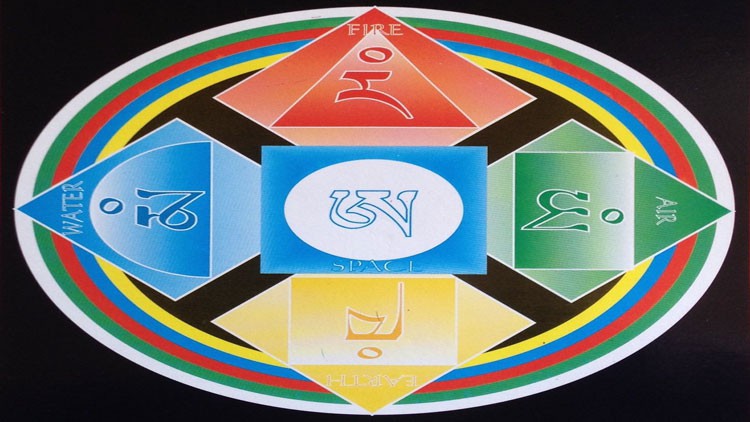
- In-depth exploration of Earth, Water, Fire, Air, and Space
- Elemental correspondences in Tibetan cosmology
- Symbolic representations and their meanings
Module 3: Shamanic Healing Practices
- Understanding shamanic techniques in Tibetan traditions
- Rituals and ceremonies for invoking elemental energies
- Practical application of shamanic healing
Module 4: Tantric Approaches to Elemental Healing
- Introduction to tantric philosophy
- Tantric rituals and practices related to the Five Elements
- Integration of tantric techniques for healing
Module 5: Elemental Awareness
- Elemental awareness
- Meditation and contemplative practices
Module 6: Practical Applications for Healing
- Hands-on exercises for elemental balancing
- Integrating elemental healing into daily life
- Case studies and real-life applications
Intended Learners: This course is suitable for individuals interested in holistic healing, spirituality, and cross-cultural exploration. It is open to beginners as well as those with some background in meditation, energy work, or related disciplines.
Course Prerequisites: No specific prerequisites are required, but an open mind, willingness to engage in contemplative practices, and a basic understanding of spiritual concepts will enhance the learning experience.
Highlights:
- Interactive Learning: Engage in practical exercises, discussions, and group activities.
- Expert Guidance: Benefit from the teachings inspired by the ancient wisdom found in the referenced book.
- Cultural Immersion: Gain a deeper appreciation for Tibetan culture and spirituality.
- Holistic Approach: Emphasize the integration of mind, body, and spirit for comprehensive well-being.
What Will Students Learn in This Course? Students will gain a profound understanding of Tibetan shamanism, tantra, and Dzogchen, focusing on the role of the Five Elements in healing. They will learn practical techniques to balance elemental energies, cultivate mindfulness, and integrate these ancient practices into their modern lives. By the end of the course, students will have the tools to embark on a transformative journey towards holistic well-being and spiritual growth.
Content
Introduction
The Essence of Tibetan Cosmology: The Five Elements
How the Elements Become Unbalanced
The Five Elements in Shamanism
Elemental Spirits
Guru Yoga
Exploring the Five Elements: A Spiritual Journey
Tantra
The Practice of Tsa Lung
The Five Elements in the Great Perfection
Glossary
Alright, let’s dive into this ‘Tibetan Shamanic 5 Elements Healing Teacher Training’. As someone who spends a good chunk of my day wrestling with complex systems and optimizing workflows, I was intrigued by the promise of “sacred alchemy” and a spiritual odyssey. Could ancient Tibetan wisdom really offer a path to holistic healing, and more importantly, could it translate into something tangible, something practical?
Overview
This isn’t your typical bootcamp, that’s for sure. The “Tibetan Shamanic 5 Elements Healing Teacher Training” is less about crunching code and more about decoding the intricate energetic architecture that the Tibetans believe underpins existence. Think of it as a deep dive into the building blocks of reality – Earth, Water, Fire, Air, and Space – and how their imbalance manifests as dis-ease, both within us and in the world around us. The program frames this as a journey from “Ancient Teachings to Modern Practices,” and I appreciate that forward-looking perspective. It’s not just about dogma; it’s about integrating these profound concepts into contemporary life and healing modalities. The emphasis on “Mastery of Tibetan Shamanic Healing Techniques” suggests a rigorous approach, aiming to equip participants with practical skills rather than just theoretical knowledge. The idea of “healing with Form, Energy and Light” sounds less like abstract philosophy and more like a toolkit for tangible transformation. It’s a bold claim, but the underlying principles of interconnectedness and energetic flow are, in my opinion, as relevant today as they ever were, albeit framed differently in the tech world.
Prerequisites
Honestly, the prerequisites here are less about your technical aptitude and more about your internal state. You’re not expected to have a degree in quantum physics or be an expert coder. Instead, the program hints at a need for an open mind, a willingness to explore non-conventional approaches, and a genuine desire for personal growth and healing. A foundational interest in mindfulness, meditation, or energy work would certainly be beneficial, acting like a good IDE for your personal development journey. It’s about being ready to engage with your inner landscape, which is, in its own way, a complex system to navigate.
Skills & Tools
This is where things get really interesting from a “skills acquisition” perspective, even if the “tools” aren’t silicon-based. The core of this training lies in developing a deep understanding of the five elements and their interplay. You’ll learn to identify elemental imbalances within yourself and others, and critically, how to use them for healing. This involves acquiring hands-on experience in various Tibetan shamanic practices. I imagine this would be akin to learning to use specialized, high-performance software for a niche problem. It’s not about general-purpose tools; it’s about mastering a specific, potent set of techniques. The “Teacher Training” aspect suggests that the goal is not just personal application, but also the ability to guide others, requiring a level of clarity and articulation that goes beyond basic comprehension. Think of it as moving from understanding a complex algorithm to being able to teach certification prep for it.
Career Benefits & Job Roles
This is where I had to do a bit of lateral thinking. If you’re coming from a traditional tech background, the direct “job roles” might not be immediately obvious. However, the skills honed here – deep listening, intuitive understanding, energetic awareness, and the ability to facilitate transformation – are incredibly valuable, even in the corporate world. Imagine a leadership coach who can intuitively grasp team dynamics on an energetic level, or a well-being consultant who can offer more profound healing modalities. Potential roles could include:
- Holistic Healing Practitioner
- Shamanic Counselor
- Wellness Coach (with a spiritual focus)
- Energy Healer
- Teacher/Facilitator of Elemental Wisdom
- Personal Development Guide
While not directly comparable to becoming a senior software engineer or a cybersecurity analyst, this training offers a unique path for career growth into a burgeoning field that prioritizes well-being and holistic approaches. It’s about developing specialized, sought-after skills in a less saturated market.
Pros
- Depth of Knowledge: The promise of acquiring “in-depth knowledge” in ancient Tibetan wisdom and shamanic practices is a significant draw for anyone seeking profound understanding.
- Holistic Approach: The integration of mind, body, and spirit is a refreshing departure from siloed approaches to healing and personal development.
- Practical Application: The emphasis on “hands-on experience” and “practical wisdom” suggests that this isn’t just theory; you’ll be equipped with actionable techniques.
- Unique Skillset: The specialized nature of Tibetan shamanic healing makes graduates highly distinct and capable of offering services beyond the mainstream.
Cons
My one honest con here is that this training is inherently subjective and experiential. While the program aims for “mastery,” the effectiveness of these practices is deeply personal and can be challenging to quantify or objectively “prove” in the way we do with technical achievements. It requires a significant leap of faith and a willingness to trust your intuition and the process, which might be a hurdle for those accustomed to purely empirical validation. It’s less about proving you can build a scalable microservice and more about demonstrating your ability to facilitate deep energetic shifts – a different, but equally valid, form of competence.