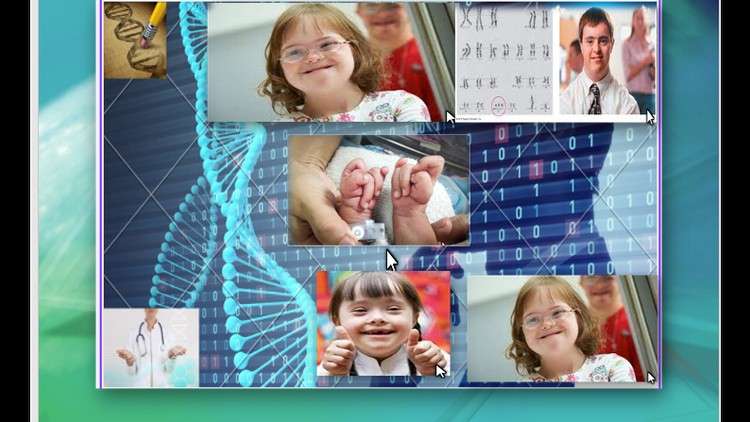
cares for individuals and families with abnormal variation the story of genetics and its applications
What you will learn
introduction to genetics
chromosomal disorders
single gene disorders
multifactorial inheritance
population genetics
Description
Medical genetics is the branch of medicine that involves the diagnosis and management of hereditary disorders. Medical genetics differs from human genetics in that human genetics is a field of scientific research that may or may not apply to medicine, while medical genetics refers to the application of genetics to medical care. For example, research on the causes and inheritance of genetic disorders would be considered within both human genetics and medical genetics, while the diagnosis, management, and counselling people with genetic disorders would be considered part of medical genetics.
In contrast, the study of typically non-medical phenotypes such as the genetics of eye color would be considered part of human genetics, but not necessarily relevant to medical genetics (except in situations such as albinism). Genetic medicine is a newer term for medical genetics and incorporates areas such as gene therapy, personalized medicine, and the rapidly emerging new medical specialty, predictive medicine
Medical genetics encompasses many different areas, including clinical practice of physicians, genetic counselors, and nutritionists, clinical diagnostic laboratory activities, and research into the causes and inheritance of genetic disorders. Examples of conditions that fall within the scope of medical genetics include birth defects and dysmorphology, intellectual disabilities, autism, mitochondrial disorders, skeletal dysplasia, connective tissue disorders, cancer genetics, and prenatal diagnosis. Medical genetics is increasingly becoming relevant to many common diseases. Overlaps with other medical specialties are beginning to emerge, as recent advances in genetics are revealing etiologies for morphologic, endocrine, cardiovascular, pulmonary, ophthalmologist, renal, psychiatric, and dermatologic conditions. The medical genetics community is increasingly involved with individuals who have undertaken elective genetic and genomic testing.
Content
Introduction
human genetic disorders
single gene disorders
chromosomal disorders
Multifactorial Inheritance
Population Genetics
Overview
I’ve spent the better part of a decade debugging software, but I recently realized I was ignoring the most complex source code ever written: the human genome. I signed up for the Clinical Foundations of Medical Genetics course with a healthy dose of skepticism—mostly wondering if it would be a dry memory dump of Latin terms. It wasn’t. Instead, this course reframes genetics not as a static map, but as a dynamic “story” of variation. It focuses on the bridge between raw biological data and the actual human beings sitting in a clinic.
What sets this curriculum apart from your standard beginner to advanced biology track is the narrative approach to “abnormal variation.” Rather than just looking at a mutation as a bug in the code, the course forces you to look at the “runtime” environment—the families and individuals affected by these changes. It’s an incredibly human-centric dive into how we identify, interpret, and communicate genetic risk. If you’re coming from a data science or software background like I am, you’ll start to see striking parallels between system architecture and chromosomal structure. The course doesn’t just teach you what a deletion is; it explains why that deletion matters in a clinical diagnostic pipeline. It’s about the “why” behind the “what,” moving beyond simple sequencing to actual medical application.
Prerequisites
You don’t need to be a practicing physician to get value here, but you should have a solid foundation in basic biology—think high school or early college level. If you know the difference between DNA and RNA, you’re halfway there. For the tech-heavy crowd, having a baseline understanding of probability and statistics is a massive leg up, especially when you hit the modules on population genetics. You don’t need a certification prep background in medicine, but a curious mind and the ability to process complex, multi-layered systems are essential.
Skills & Tools
This course is surprisingly heavy on job-ready skills that translate well into the burgeoning HealthTech and Bio-IT sectors. You’ll walk away with a toolkit that includes:
- Pedigree Analysis: Learning to map out inheritance patterns like a pro. This is basically system mapping for humans.
- Variant Interpretation: Understanding which genetic “glitches” are pathogenic and which are just benign noise.
- Clinical Correlation: The ability to link phenotypic symptoms to genotypic data—essential for anyone working on real-world projects in personalized medicine.
- Risk Assessment Models: Using industry-standard tools and statistical methods to predict the likelihood of recurrence in multifactorial disorders.
- Ethical Frameworks: Navigating the sensitive nature of genetic data, which is crucial for career growth in any HIPAA-compliant environment.
Career Benefits & Job Roles
If you’re looking to pivot into the biotech space, this course is a fantastic signal to employers. We’re seeing a massive surge in demand for people who can bridge the gap between clinical knowledge and technical implementation. Completing this can act as a solid certification prep for those looking to move toward genetic counseling assistant roles or clinical research coordination. For the techies, it’s a goldmine for career growth in Bioinformatics, Health Data Analysis, or Product Management for genomics companies like 23andMe or Color Health. You aren’t just a coder anymore; you’re someone who understands the clinical stakes of the data you’re processing. It’s a specialized niche that pays well because the barrier to entry (the knowledge gap) is so high.
Pros
- Case-Study Driven: The course uses real-world projects and clinical scenarios that move it out of the textbook and into reality. It’s much easier to remember a syndrome when you see the patient story attached to it.
- Scalable Learning: It moves smoothly from beginner to advanced concepts without hitting a “complexity wall.” The transition from single-gene disorders to complex multifactorial inheritance is handled with impressive clarity.
- High-Level Instruction: You aren’t just learning from academics; you’re learning from the perspective of clinicians. This gives you an “on-the-ground” look at how genetics is actually practiced today.
- Practicality over Pedantry: It focuses on the variations that actually matter in a clinical setting, helping you filter out the noise and focus on actionable medical insights.
Cons
- The “Dry” Math of Population Genetics: While the course does a great job overall, the section on population genetics and Hardy-Weinberg equilibrium can feel a bit like a math lecture from 1995. It’s necessary, but it lacks some of the hands-on labs or interactive simulations that would have made those statistical concepts really pop for a visual learner.