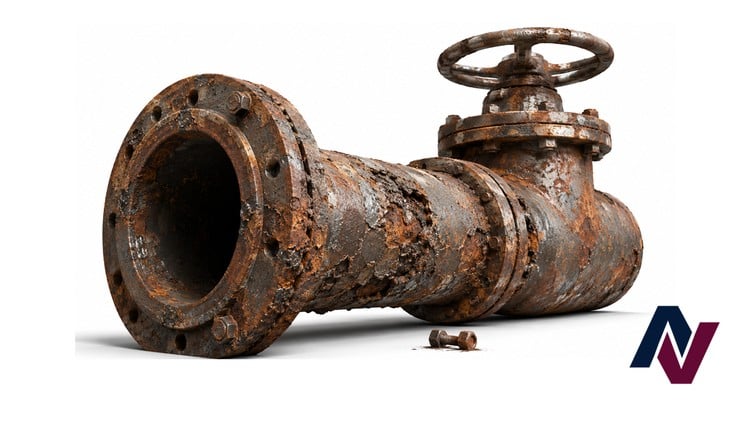
Understand corrosion principles and apply practical assessment, protection, and control for industrial applications.
What You Will Learn:
- Explain how electrochemical reactions cause corrosion and how material, environment and design affect corrosion behavior.
- Interpret electrode potentials, galvanic series, Pourbaix diagrams, polarization curves and passive behavior.
- Identify major corrosion mechanisms and distinguish uniform, localized, galvanic and environmentally assisted damage.
- Evaluate how alloy composition, microstructure, welding and fabrication influence corrosion resistance.
- Compare the corrosion behavior of common engineering metals and select suitable materials for service conditions.
- Assess corrosion risks in atmospheric, water, marine, soil, concrete, process, oil and gas, boiler and steam systems.
- Show more
Alright, let’s talk about ‘Corrosion Science and Engineering of Metals.’ If you’re eyeing this course, you’re likely already in, or aspiring to be in, a field where asset integrity isn’t just a buzzword – it’s the difference between a minor maintenance job and a multi-million dollar disaster. And let me tell you, this course delivers. It’s not some fluffy overview; it’s a deep dive into the relentless enemy that is corrosion, arming you with the knowledge to fight back effectively.
This isn’t just about memorizing chemical formulas; it’s about understanding the insidious ways materials degrade and, more importantly, how to predict, prevent, and mitigate those processes. From the macro-level catastrophic failures to the microscopic electrochemical dances that instigate them, you’ll gain an unparalleled perspective. It’s designed to transform your understanding from theoretical concepts to **real-world problem-solving**, equipping you to make critical decisions that impact safety, cost, and operational longevity in countless industrial sectors. Trust me, the insights you gain here are directly translatable into making tangible differences in design, material selection, and maintenance strategies for any large-scale infrastructure or complex machinery.
Prerequisites
Let’s be real for a moment: while the course is comprehensive, it’s not for the absolute beginner in all aspects of science. You’ll definitely want a solid foundational understanding of general chemistry, especially electrochemistry basics. Having some background in material science or metallurgy will also put you at a significant advantage. If terms like ‘oxidation,’ ‘reduction,’ and ‘electron transfer’ don’t scare you, you’re probably in good shape. The instructors do a decent job of reviewing core concepts, but you’ll get the most out of it if you’re not playing catch-up on the absolute fundamentals. It bridges the gap from **beginner to advanced** concepts quite smoothly, assuming you’ve got a decent footing.
Skills & Tools
This course doesn’t just teach you *about* corrosion; it teaches you how to *deal* with it. You’ll develop crucial analytical skills, learning to interpret complex diagrams like Pourbaix diagrams, galvanic series charts, and polarization curves – these aren’t just academic exercises, they’re **industry-standard tools** for diagnostics and prediction. You’ll master the ability to identify specific corrosion mechanisms, whether it’s uniform attack, pitting, crevice corrosion, stress corrosion cracking, or hydrogen embrittlement. Beyond identification, you’ll learn systematic approaches to material selection based on specific service environments, understanding how alloy composition and microstructure influence resistance. This involves developing a robust framework for **risk assessment** in diverse operational environments, from offshore platforms to intricate process piping. These are bona fide **job-ready skills** that employers actively seek.
Career Benefits & Job Roles
The career benefits from this course are immense. Proficiency in corrosion science directly translates into significant **career growth** opportunities in a multitude of industries. You’ll be highly sought after in roles such as:
- Materials Engineer
- Corrosion Engineer
- Asset Integrity Engineer
- Failure Analysis Engineer
- Quality Control/Assurance Specialist
- Process Engineer (especially in oil & gas, chemical processing)
- Consultant specializing in materials and degradation
This knowledge is critical for anyone involved in designing, operating, or maintaining infrastructure in sectors like oil and gas, marine, aerospace, manufacturing, construction, and power generation. It’s also excellent for individuals pursuing professional **certification prep** with organizations like AMPP (formerly NACE/SSPC), as the depth of content aligns perfectly with their rigorous requirements. You’ll be equipped to minimize downtime, extend equipment lifespan, and most importantly, enhance safety.
Pros
- Comprehensive and Practical Application: This course excels at blending theoretical principles with practical application. It’s not just “what is corrosion?” but “how do I assess it, protect against it, and control it in a real industrial setting?” The depth of environmental contexts covered – from marine to concrete – is genuinely impressive, offering **real-world project** relevance.
- Analytical Skill Development: The emphasis on interpreting critical diagrams and data (Pourbaix, polarization curves) is a massive strength. You don’t just learn about them; you learn how to *use* them as predictive and diagnostic tools, which is invaluable for any engineer.
- Directly Applicable to Asset Management: For anyone in asset integrity, this course is gold. It provides the framework for understanding material degradation, predicting lifespan, and implementing effective mitigation strategies, directly impacting operational costs and safety.
- Material Selection Expertise: You’ll gain a nuanced understanding of how alloy composition, microstructure, and even welding processes impact corrosion resistance, enabling you to make informed, cost-effective material choices for challenging service conditions.
Cons
- Intensity and Time Commitment: While thorough, the course is quite dense. It covers a vast amount of complex material, which means it demands a significant time commitment for self-study and digestion, especially if some of the foundational chemistry or metallurgy isn’t fresh in your mind. Don’t expect to cruise through it; you’ll need to put in the work to truly grasp and internalize the concepts for practical application.