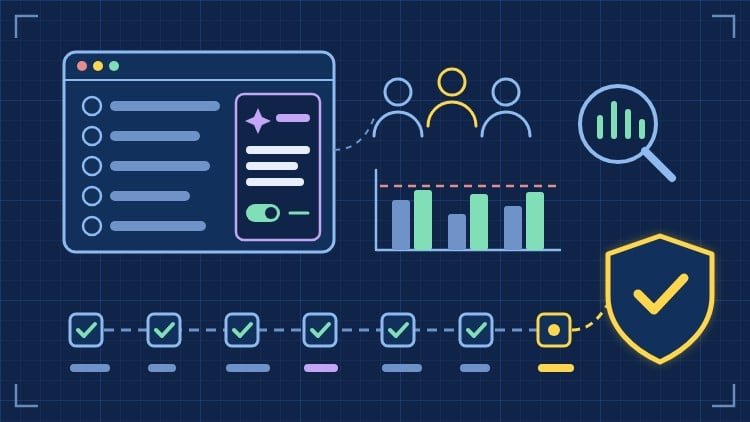
Assess harms, write AI requirements, design oversight and disclosure UX, test for fairness, and pass a launch gate
What You Will Learn:
- Decide whether a feature should use AI, who it affects, and how risky it is under the EU AI Act and US state laws
- Run a harms-modelling workshop and complete an AI impact assessment for a real feature
- Turn responsible AI principles and regulatory duties into user stories with testable acceptance criteria
- Design human oversight, AI disclosure, correction and appeal flows that people can actually use
- Test an AI feature for fairness with Fairlearn and AIF360, and write the trade-off decision
- Evaluate a generative AI feature with promptfoo, including misuse and prompt-injection cases
- Check AI interfaces for accessibility with axe-core and WCAG 2.2
- Write a model card, run a launch-gate review, and plan monitoring and feedback after release
Alright, let’s talk about ‘Responsible AI in Product Development: From Idea to Launch.’ As someone who’s navigated the choppy waters of shipping AI-powered products, I’ve seen firsthand how quickly good intentions can run aground without a solid framework for ethical development. This course isn’t just another theoretical rundown; it’s a strategic playbook for anyone serious about building AI that’s not only innovative but also trustworthy and compliant. Frankly, it’s the kind of practical guidance I wish I had a few years ago.
Overview
In a world grappling with the ethical implications and regulatory maze of AI, this course stands out as a critical guidepost. It recognizes that “Responsible AI” isn’t a post-launch add-on but an intrinsic part of the entire product lifecycle. Far too many organizations treat AI ethics as an afterthought or a compliance checkbox, often to their detriment. What this program brilliantly executes is integrating ethical considerations, risk assessment, and regulatory foresight directly into the product development workflow. It bridges the often-siloed worlds of engineering, product management, UX, and legal, showing how to embed responsible practices from the initial brainstorming sessions right through to post-release monitoring. This isn’t just about avoiding fines; it’s about building user trust, ensuring long-term product viability, and ultimately fostering genuine career growth for professionals who can capably navigate this complex landscape. If you’re tired of abstract discussions and want concrete strategies for building AI products that make a positive impact without creating unintended harms, this course is a breath of fresh air.
Prerequisites
While the course aims to be comprehensive, it definitely benefits those with some existing context. You don’t need to be an AI Ph.D., but a basic understanding of what AI/ML models are and how they generally function would be a strong asset. For product managers, UX designers, or tech leads, an appreciation for the product development lifecycle is crucial. Data scientists and ML engineers will find the regulatory and ethical frameworks immensely valuable, adding a critical layer to their technical skills. While it covers aspects from beginner to advanced, particularly in its deep dive into regulatory frameworks like the EU AI Act, professionals with a year or two in tech will likely derive the most immediate and profound benefits, transforming their experience into highly coveted job-ready skills.
Skills & Tools
This program is a powerhouse for acquiring hands-on expertise with industry-standard tools and methodologies. You’re not just reading about concepts; you’re actively engaging in hands-on labs to:
- Conduct harms modeling workshops and complete AI impact assessments for real-world features. This is invaluable for proactive risk management.
- Translate responsible AI principles and regulatory duties into actionable user stories with clear acceptance criteria – a true game-changer for bridging ethics with agile development.
- Design practical human oversight, AI disclosure, correction, and appeal flows, ensuring your products are user-centric and transparent.
- Master fairness testing using libraries like Fairlearn and AIF360, and learn to articulate those trade-off decisions effectively.
- Evaluate generative AI features with promptfoo, specifically addressing critical misuse and prompt-injection cases.
- Check AI interfaces for accessibility using tools like axe-core and adherence to WCAG 2.2 – an often-overlooked but crucial aspect of responsible design.
- Learn to create comprehensive model cards, run robust launch-gate reviews, and plan for effective post-release monitoring and feedback.
These are not theoretical exercises; they are the exact deliverables you’ll be expected to produce in any organization serious about responsible AI.
Career Benefits & Job Roles
The demand for professionals who can competently navigate the ethical and regulatory landscape of AI is skyrocketing. Completing this course equips you with highly sought-after job-ready skills that directly translate into competitive advantages for roles such as:
- Responsible AI Lead or AI Ethics Specialist
- AI Product Manager or Product Lead (especially those dealing with high-risk AI applications)
- AI Compliance Officer or AI Policy Analyst
- UX Designer for AI (focusing on disclosure, oversight, and accessibility)
- Data Scientist or Machine Learning Engineer looking to specialize in ethical ML deployment
- Consultants advising on AI strategy and governance
This program effectively serves as a crucial element for certification prep in the emerging field of AI ethics and governance, significantly bolstering your career growth trajectory in an area where expertise is rare and highly valued.
Pros
- Unmatched Practicality: This isn’t a theoretical deep dive; it’s a blueprint for action. The emphasis on hands-on labs and applying concepts to real-world projects ensures you walk away with tangible, deployable skills.
- Regulatory Acumen: The explicit focus on navigating the EU AI Act and US state laws is incredibly timely and valuable. Understanding these frameworks isn’t just about compliance; it’s about future-proofing your products and career.
- End-to-End Holistic View: From initial ideation and harms assessment to launch-gate reviews and post-release monitoring, the course covers the entire AI product lifecycle, fostering a truly interdisciplinary understanding.
- Interdisciplinary Skill Bridging: It effectively connects product, UX, engineering, and legal perspectives, teaching you how to speak multiple “languages” within an organization, which is crucial for successful AI deployment.
Cons
- Pacing and Depth: Given the sheer breadth and depth of topics covered – from technical testing with Fairlearn to legal compliance and UX design – the course can feel incredibly intensive. Expect to commit significant time and mental energy to truly absorb and master all the material. It’s not for the faint of heart or those looking for a casual stroll through AI ethics.