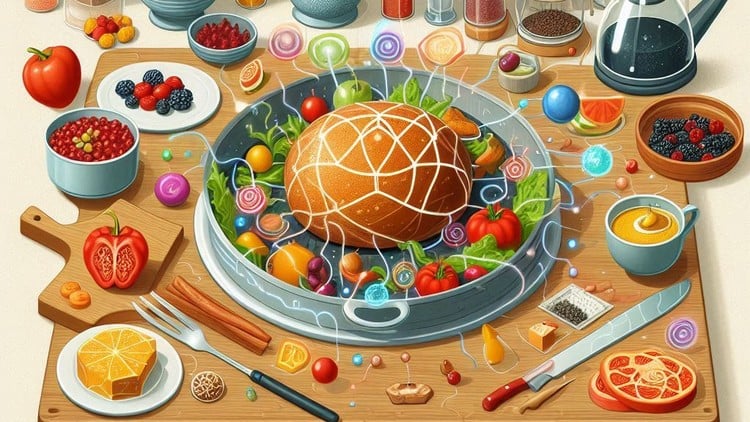
A beginner-friendly journey through quantum computing using food analogies to make complex concepts deliciously simple
What you will learn
Understand the key differences between classical and quantum computing
Explain qubits, superposition, and entanglement using intuitive analogies
Describe how quantum measurement affects quantum states
Recognize the purpose of quantum gates and circuits in computation
Understand the concept of quantum algorithms and their advantages
Identify real-world applications of quantum computing in various fields
Develop intuition for quantum mechanics without complex math
Gain foundational knowledge to pursue advanced quantum computing topics
Alright, let’s talk about “Quantum Kitchen: Cooking Up Concepts in Quantum Computing.” As someone who’s been in the tech trenches for a while, I’m always on the lookout for resources that can demystify those seemingly impenetrable fields. Quantum computing definitely falls into that category for most folks, myself included, at least until I dipped my toes into this course.
Overview
The premise of “Quantum Kitchen” is a clever one: use food analogies to explain the mind-bending principles of quantum computing. And honestly? It works. This isn’t your typical dry textbook or academic lecture. It’s a deliberate effort to make quantum accessible without sacrificing the core concepts. Think of it as a well-seasoned chef explaining molecular gastronomy – the principles are still there, but the presentation makes it palatable, even enjoyable. The course successfully navigates the leap from classical bits to quantum qubits, and then gracefully introduces concepts like superposition and entanglement, which are often the first major stumbling blocks. The focus on building intuition without drowning you in complex math is a huge win. They also touch on the practical side, like what quantum gates and circuits actually *do* in terms of computation, and why quantum algorithms hold such promise. It’s a refreshing take that aims to build a solid conceptual foundation, which is crucial before diving into the nitty-gritty of industry-standard tools or specific quantum programming languages. This course positions itself as a gateway, not a deep dive into every intricate detail, which is exactly what a beginner needs.
Prerequisites
Honestly, the beauty of this course is its low barrier to entry. You don’t need a PhD in physics or a degree in computer science. What you *do* need is:
- A general curiosity about how computers work, beyond just pushing buttons.
- A willingness to engage with analogies – if you can imagine ingredients mixing or flavors combining, you’re golden.
- Basic digital literacy – being comfortable navigating online course platforms.
No heavy-duty math or programming experience required to start. This is a true beginner-to-foundational course.
Skills & Tools
While the course doesn’t get you “job-ready” with specific quantum programming languages like Qiskit or Cirq straight out of the gate, it equips you with something arguably more valuable for beginners: intuition. You’ll gain a conceptual understanding of:
- The fundamental differences between classical and quantum computing.
- How qubits behave in superposition and entanglement.
- The impact of quantum measurement.
- The role of quantum gates and circuits.
- The potential power of quantum algorithms.
The “tools” here are more about your understanding and ability to grasp abstract concepts. This foundational knowledge is essential before you even think about setting up development environments for hands-on labs or tackling real-world projects. It’s the necessary “prep” for any serious certification prep down the line.
Career Benefits & Job Roles
Let’s be clear: this course alone won’t land you a quantum computing architect role. However, it’s a fantastic first step for anyone eyeing career growth in this burgeoning field. It builds the foundational knowledge that’s a prerequisite for more advanced courses and specialized training. Understanding these core quantum concepts will make you stand out, even in more traditional tech roles, as the lines between classical and quantum computing begin to blur. It opens doors to roles such as:
- Quantum Computing Enthusiast/Learner
- Technical Writer focusing on emerging tech
- Research Assistant (with further education)
- A more informed Software Engineer exploring quantum applications
It’s the crucial initial knowledge boost that allows you to then effectively leverage industry-standard tools and pursue more in-depth learning for actual job roles.
Pros
- Deliciously Simple Analogies: The food metaphors are genuinely effective at demystifying abstract quantum concepts. This is the course’s standout feature.
- Math-Free Foundation: It prioritizes conceptual understanding over complex mathematical derivations, making it accessible to a much wider audience.
- Builds Genuine Intuition: You walk away feeling like you *get* the core ideas, not just memorized definitions. This is invaluable for future learning.
- Broad Applicability: It covers the ‘why’ and ‘what’ of quantum computing and its potential, which is motivating and provides context for real-world applications.
Cons
This is where I have to be honest, and it’s a significant point for some learners: It’s purely conceptual and lacks hands-on application. While the analogies are brilliant for understanding, you won’t be writing any quantum code or running simulations. If your goal is to immediately start coding or preparing for specific quantum programming certifications that require practical experience, this course will feel incomplete. It’s a fantastic “idea chef” for quantum, but not a “quantum recipe coder” course.