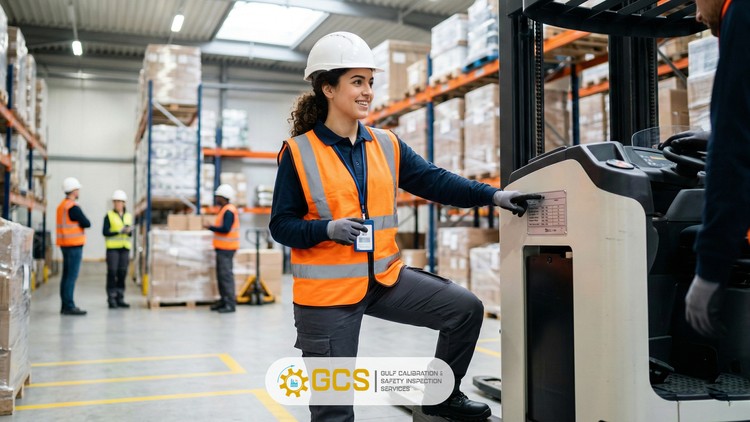
Comprehensive Operator Training for Safe, Skilled, and Responsible PIT Operation
⏱️ Length: 3.1 total hours
🔄 March 2026 update
Add-On Information:
Note➛ Make sure your 𝐔𝐝𝐞𝐦𝐲 cart has only this course you're going to enroll it now, Remove all other courses from the 𝐔𝐝𝐞𝐦𝐲 cart before Enrolling!
- Course Overview
- Evolution of Industrial Safety Standards: This course provides a high-level deep dive into the latest 2026 safety benchmarks, ensuring that operators are not just following outdated protocols but are aligned with the most recent ergonomic and mechanical safety advancements in the material handling industry.
- Regulatory Framework Alignment: The curriculum is specifically designed to harmonize with the Occupational Safety and Health Administration (OSHA) 1910.178 standards, providing a comprehensive understanding of how federal and local mandates translate to daily warehouse floor activities.
- Risk Mitigation Philosophy: Beyond simple machine operation, this training instills a proactive mindset focused on “Predictive Hazard Identification,” where operators learn to anticipate mechanical failures or environmental risks before they manifest into active workplace threats.
- Equipment Diversity: While many programs focus solely on standard forklifts, this course addresses the broader spectrum of Powered Industrial Trucks (PIT), including narrow-aisle reach trucks, order pickers, and electric pallet jacks, highlighting the unique physics associated with each class.
- Integration of Technological Advancements: Students will explore how modern PIT technology, such as telemetry systems, impact sensors, and automated speed governors, interact with the operator’s manual control to create a safer, data-driven work environment.
- Requirements / Prerequisites
- Foundational Workplace Literacy: Participants are expected to possess a basic understanding of industrial signage, universal safety symbols, and the ability to interpret technical manuals and equipment load charts provided by manufacturers.
- Physical and Sensory Readiness: Prospective operators should have sufficient peripheral vision, depth perception, and auditory acuity to detect warning signals, backup alarms, and the movement of personnel in high-traffic, noisy warehouse settings.
- Personal Protective Equipment (PPE) Compliance: All students must be familiar with the standard requirements for industrial attire, including the proper use of steel-toed boots, high-visibility vests, and, where applicable, hard hats or safety glasses depending on the specific facility’s hazard profile.
- Age and Legal Eligibility: In accordance with labor laws, participants must meet the minimum age requirements (typically 18 years) to operate heavy machinery in a commercial or industrial capacity within their specific jurisdiction.
- Baseline Professional Conduct: A prerequisite for this course is a commitment to a drug-free and alcohol-free workplace, as PIT operation requires peak cognitive function and unimpaired reaction times at all times during a shift.
- Skills Covered / Tools Used
- The Stability Triangle and Trapezoid: Operators will master the complex physics of the “Stability Triangle,” learning how the center of gravity shifts dynamically during movement and how to prevent tip-overs by maintaining the combined center of gravity within the machine’s base.
- Data Plate Deciphering: A critical skill taught is the precise reading of manufacturer data plates, which includes calculating net capacity versus rated capacity when using specialized attachments like side-shifters or rotators.
- Pre-Shift Inspection Protocols: Students will be trained in a rigorous, systematic “Circle Check” methodology, covering hydraulic fluid levels, chain tension, tire integrity, mast functionality, and the state of safety restraints.
- Energy Source Management: This module covers the safe handling of various power sources, including the correct sequence for battery charging to prevent “sulfation,” the safe exchange of Liquid Propane (LP) tanks, and the specific ventilation requirements for hydrogen gas dispersal during charging.
- Attachment Physics: The course introduces the mechanical changes that occur when using non-standard tools like carpet poles, drum handlers, or man-baskets, emphasizing how these tools alter the truck’s longitudinal and lateral stability.
- Communication Tool Utilization: Operators will learn to effectively use on-board communication tools and warehouse management systems (WMS) without allowing these digital interfaces to become distractions during active equipment operation.
- Benefits / Outcomes
- Enhanced Operational Efficiency: By mastering advanced maneuvering techniques, operators can move more goods in less time without compromising safety, directly contributing to the facility’s bottom-line productivity.
- Reduction in Liability and Insurance Costs: Proper training significantly lowers the frequency of “OSHA recordable” incidents, which can lead to reduced workers’ compensation premiums and a lower overall corporate liability profile.
- Equipment Longevity and Asset Protection: Skilled operators who understand the mechanical limits of their machines cause less “wear and tear,” resulting in fewer breakdowns, lower maintenance costs, and a longer lifecycle for expensive industrial fleets.
- Career Advancement and Portability: Completing this comprehensive awareness course provides operators with a valuable, recognized credential that enhances their professional resume and increases their employability across the logistics and manufacturing sectors.
- Cultivation of a Safety-First Culture: Graduates of this program become safety ambassadors on the floor, influencing their peers through exemplary behavior and contributing to a workplace culture where safety is viewed as a shared value rather than a chore.
- Psychological Confidence: Operators finish the course with a high degree of “situational confidence,” knowing they have the technical knowledge to handle emergency scenarios, such as brake failure or unexpected load shifts, with a calm and measured response.
- PROS
- Up-to-Date Content: The March 2026 update ensures that all included safety protocols reflect the most recent technological shifts in warehouse automation and machine design.
- Condensed High-Impact Learning: At 3.1 hours, the course maximizes information density, allowing for rapid deployment across large workforces without significant operational downtime.
- Universal Applicability: The principles taught are platform-agnostic, making the training relevant whether the facility uses Hyster, Toyota, Crown, or Raymond equipment.
- CONS
- Theoretical Limitation: As a safety awareness course, this program provides the vital intellectual framework but cannot replace the state-mandated requirement for on-site, machine-specific practical evaluation conducted by a qualified evaluator at the operator’s specific place of employment.
Learning Tracks: English,Health & Fitness,Safety & First Aid
Found It Free? Share It Fast!