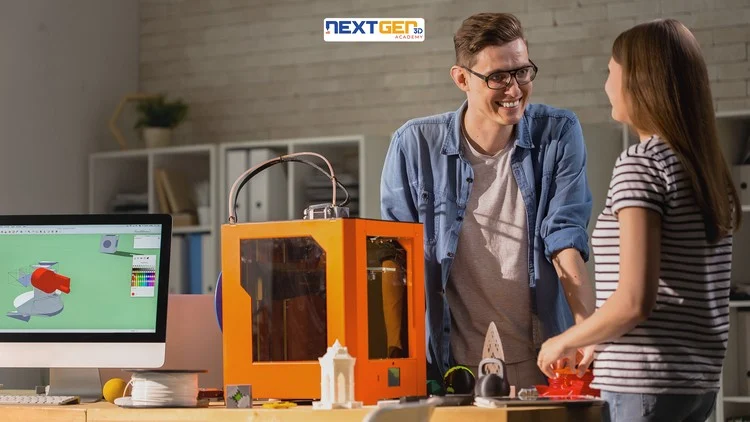
Theory only basic Understanding of CAD 3D – Geometry, STL Files, Mesh Modeling & Print Optimization (No Practical)
⏱️ Length: 2.5 total hours
👥 90 students
Add-On Information:
Note➛ Make sure your 𝐔𝐝𝐞𝐦𝐲 cart has only this course you're going to enroll it now, Remove all other courses from the 𝐔𝐝𝐞𝐦𝐲 cart before Enrolling!
Course Overview
- Explore fundamental theoretical principles driving successful 3D printing, building a robust conceptual framework for design and manufacturing.
- Delve into core CAD principles as a foundational discipline for additive manufacturing, independent of specific software interfaces.
- Uncover the intricate relationship between digital design specifications and physical object realization through detailed theoretical analysis.
- Examine critical design considerations preceding physical printing, emphasizing how theoretical knowledge prevents common errors and costly rework.
- Gain insight into the ‘why’ behind specific design choices in 3D printing, fostering a deeper understanding beyond mere operational instructions.
- Understand the strategic importance of pre-print analysis and validation, ensuring design intent translates accurately to physical output conceptually.
Requirements / Prerequisites
- A keen interest in additive manufacturing technology and how digital design interfaces with physical production processes is highly recommended.
- Familiarity with general computing concepts and navigating digital environments will be beneficial for efficiently absorbing theoretical content.
- No prior hands-on experience with specific CAD software is necessary; this course focuses purely on conceptual frameworks and abstract principles.
- An eagerness to learn the foundational logic and scientific principles governing 3D model preparation for diverse printing technologies is key.
- The ability to comprehend technical diagrams and conceptual models will aid in understanding complex ideas presented theoretically.
Skills Covered / Tools Used (Conceptual)
- Conceptual Modeling Acumen: Develop an advanced understanding of how abstract geometric shapes translate into tangible 3D printable objects, enhancing design foresight.
- Digital Manufacturing File Interpretation: Master the theoretical nuances of various digital manufacturing file formats, preparing you to diagnose and predict potential print issues conceptually.
- Additive Manufacturing Design Logic: Cultivate a robust internal logic for approaching design challenges specific to 3D printing, anticipating material behaviors and structural integrity.
- Strategic Optimization Principles: Acquire the conceptual tools to evaluate and strategize optimal model configurations for diverse 3D printing technologies and applications.
- Error Pathology Understanding: Learn the theoretical origins of common 3D model errors and how they manifest in printed parts, enabling proactive problem identification without practical exposure.
- Computational Geometry Comprehension: Grasp the foundational mathematical and computational concepts that underpin all modern CAD systems relevant to additive manufacturing processes.
- Material Interface Analysis (Theoretical): Understand how theoretical material properties influence critical design decisions, especially concerning features like wall thickness and stress distribution.
Benefits / Outcomes
- Enhanced Decision-Making: Equip yourself to make informed, theoretically sound decisions regarding 3D print file preparation and optimization, reducing reliance on trial-and-error.
- Improved Professional Communication: Articulate complex CAD and 3D printing concepts with clarity and precision, fostering better collaboration with designers, engineers, and fabricators.
- Future-Proofed Knowledge Base: Gain timeless theoretical knowledge that remains relevant irrespective of evolving software versions or specific printing hardware advancements.
- Foundation for Specialization: Build a strong conceptual base that serves as an excellent springboard for pursuing advanced practical CAD skills or specialized additive manufacturing roles.
- Critical Evaluation Capability: Develop the ability to critically assess external CAD models and printing parameters, ensuring theoretical quality control even without hands-on operation.
- Indirect Cost Reduction: By understanding theoretical optimal designs and error prevention, you indirectly contribute to minimizing material waste and failed prints in any future practical applications.
- Proactive Problem Anticipation: Cultivate an intuitive understanding of potential failure points in the 3D printing pipeline, allowing for early detection and theoretical mitigation strategies.
- Strategic Project Planning: Learn to conceptualize and plan 3D printing projects with a deeper appreciation for the digital design workflow, ensuring smoother execution from conception to completion.
PROS
- Pure Conceptual Depth: Offers an unparalleled focus on the ‘why’ and ‘how’ behind 3D printing design, building an unbreakable theoretical foundation without the distraction of software specifics.
- Vendor-Agnostic Learning: The principles taught are universally applicable across all CAD software platforms and 3D printing technologies, ensuring long-term relevance and adaptability.
- Efficient Knowledge Transfer: Provides a highly concentrated dose of critical theoretical information, ideal for busy professionals needing a rapid yet comprehensive understanding of core concepts.
- Strategic Mindset Development: Fosters a strategic, analytical approach to additive manufacturing challenges, positioning you to lead and innovate in the field.
- Accessibility for All Backgrounds: Ideal for individuals from diverse professional backgrounds who need to grasp the foundational logic of 3D printing without needing prior software proficiency.
- Cost-Effective Knowledge Acquisition: An economical way to acquire high-value conceptual knowledge that would otherwise require expensive software licenses and extensive practical training.
CONS
- Absence of Practical Application: As a theory-only course, it does not provide hands-on experience with CAD software or 3D printers, requiring supplementary practical learning for full proficiency and skill development.
Learning Tracks: English,Teaching & Academics,Engineering
Found It Free? Share It Fast!