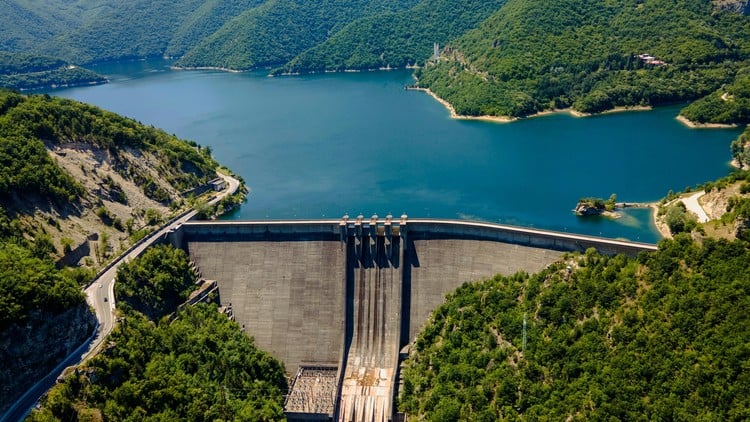
Discover the Challenges and Innovations of our Most Precious Resource Management
What You Will Learn:
- Learn the Importance of Managing Water Resources
- Discover Current Challenges in Water Resources Management
- Learn Innovations and Emerging Solutions for better Water Resources Management
- Understand the Importance of Water Governance
- Understand the Importance (IWRM) of Integrated Water Resources Management
Overview
Look, let’s be real for a second: most people think Water Resources Management is just about making sure the taps stay on and the toilets flush. But after spending a decade in the tech and infrastructure space, I’ve realized that water is actually the ultimate data challenge. This course isn’t your typical dry, academic lecture series. Instead, it’s a deep dive into how we balance the competing demands of agriculture, industry, and urban life in an era where “business as usual” is no longer an option.
What I appreciated most about this curriculum was the move away from theoretical fluff. It treats water as a finite asset that requires high-level asset management and risk mitigation strategies. We aren’t just looking at maps; we’re looking at the intersection of climate science, engineering, and sociology. The course pushes you to think about scalability and sustainability in a way that feels incredibly relevant to the current global shift toward ESG (Environmental, Social, and Governance) standards. It’s a beginner to advanced journey that manages to bridge the gap between “I care about the environment” and “I know how to engineer a solution for a 50-year drought.”
Prerequisites
You don’t need to be a hydraulic engineer to get value out of this, but you shouldn’t walk in totally green either. To really get the most out of the hands-on labs, a foundational understanding of environmental science or basic civil engineering helps. If you’ve dabbled in data analysis or have spent time working with geospatial data, you’ll find the technical modules much easier to digest. That said, the course does a solid job of ramping up the complexity, making it accessible for career-changers who are willing to put in the work.
Skills & Tools
This is where the course earns its keep. It’s not just about philosophy; it’s about job-ready skills. You’ll spend a significant amount of time mastering industry-standard tools that are currently in high demand. We’re talking about:
- GIS (Geographic Information Systems): Mapping water sources and predicting runoff patterns with precision.
- Hydrological Modeling Software: Using tools like HEC-RAS or MODFLOW to simulate real-world scenarios.
- Data Visualization: Learning how to present complex water data to stakeholders who might not have a technical background.
- Water Auditing: Developing the framework to assess efficiency in industrial and municipal settings.
- IWRM Frameworks: Applying Integrated Water Resources Management principles to real-world projects involving multiple stakeholders.
Career Benefits & Job Roles
If you’re looking for career growth, this niche is exploding. With climate volatility becoming the new normal, companies and governments are desperate for people who actually understand water security. This course acts as excellent certification prep for those looking to move into specialized roles. I’ve seen colleagues use this knowledge to pivot into high-paying positions such as:
- Water Resource Planner: Designing long-term strategies for municipal water districts.
- Environmental Consultant: Helping private firms meet regulatory compliance and sustainability goals.
- Sustainability Manager: Overseeing a corporation’s water footprint and ESG reporting.
- Hydrologist: Focusing on the movement and distribution of water across various terrains.
- Policy Advisor: Working within water governance to shape legislation and international water sharing agreements.
Pros
- Practical Application: The focus on real-world projects means you aren’t just memorizing definitions; you’re solving problems that look exactly like what you’ll see in the field.
- Comprehensive Governance Insight: Most technical courses skip the “people” part. This course hammers home the importance of water governance, which is usually where projects succeed or fail in the real world.
- Networking & Community: The peer-review segments and forum discussions connect you with professionals globally, providing a broader perspective on how different regions handle scarcity.
Cons
- The Learning Curve: Let’s be honest—the transition from the introductory policy modules to the technical hydrological modeling can feel like hitting a brick wall if you aren’t prepared for the math. It’s a bit of a “sink or swim” moment that could benefit from a few more bridging tutorials for those coming from a non-engineering background.