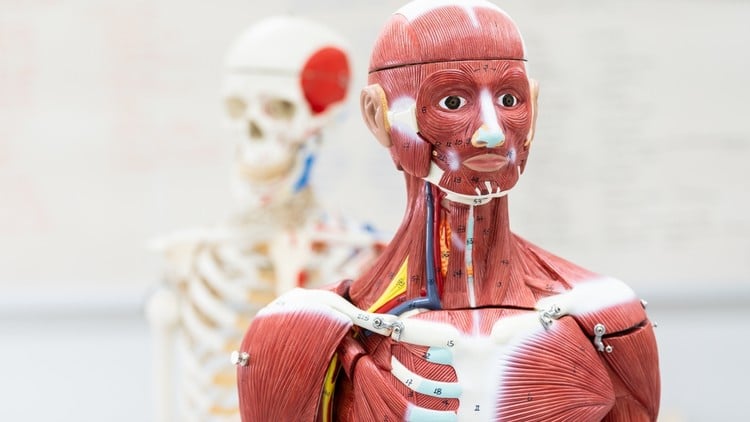
Master Human Anatomy, body systems, medical coding, billing and healthcare documentation for clinical documentation
What You Will Learn:
- Understand human anatomy as a complete body system framework
- Learn anatomical language, planes, positions, and orientation terms
- Identify body cavities, organs, cells, and tissue types
- Understand the skeletal, muscular, and nervous systems clearly
- Explore cardiovascular, respiratory, digestive, and urinary anatomy
- Recognize endocrine, lymphatic, immune, integumentary, and reproductive structures
- Connect anatomy knowledge with medical coding, billing, and healthcare documentation
- Build a stronger foundation for healthcare careers, compliance, and RCM work
Alright folks, let’s dive into this course, Human Anatomy for Medical Coding, Billing & Healthcare RCM. As someone who’s been navigating the tech and healthcare RCM landscape for a minute, I’m always on the lookout for training that truly bridges the gap between foundational knowledge and practical application. This course aims to do just that, promising to equip you with a solid grasp of human anatomy as it directly relates to the nitty-gritty of medical coding, billing, and revenue cycle management. Think of it as building the essential blueprint before you start constructing the house.
Overview
What struck me immediately about this course is its pragmatic approach. It doesn’t just throw anatomical terms at you; it actively links them back to why they matter for coders and billers. We’re talking about understanding how a specific anatomical location or a particular disease manifestation translates directly into a CPT or ICD-10 code. The emphasis on anatomical language, planes, and positions is crucial – it’s the universal language of healthcare documentation. Without this, trying to decipher a physician’s operative report or outpatient encounter notes is like trying to read a foreign language without a dictionary. This course promises to be that dictionary, and then some, by building a robust understanding of each body system, from the macroscopic down to the cellular level, and then drawing direct lines to its implications for clinical documentation and subsequent RCM processes.
Prerequisites
Honestly, this is designed with the beginner to intermediate RCM professional in mind. You don’t need to be a doctor to take this, but a general understanding of healthcare terminology will certainly give you a head start. If you’re completely new to the field and aiming for certification prep, this is a fantastic place to begin. No prior medical background is strictly required, but a willingness to learn and absorb new information is paramount. Think of it as foundational learning, the first stepping stone in your career growth.
Skills & Tools
The primary skill you’ll hone here is the ability to translate anatomical and physiological knowledge into actionable coding and billing decisions. You’ll learn to identify specific anatomical structures and understand their functional roles, which is critical for accurate code assignment. While the course itself is primarily knowledge-based, the skills gained are directly applicable to working with industry-standard tools like Electronic Health Records (EHRs) and coding software. The implicit skill development here is in critical thinking and problem-solving when faced with complex documentation. The course emphasizes understanding body systems, not just memorizing lists, which leads to a deeper comprehension of medical necessity and payer requirements. You’re building the brainpower to tackle the real-world projects you’ll encounter on the job.
Career Benefits & Job Roles
This is where the rubber meets the road. A strong foundation in anatomy is a non-negotiable for anyone serious about a career in medical coding, billing, or broader healthcare RCM. It’s essential for job-ready skills in roles such as:
- Medical Coder
- Biller
- Medical Records Clerk
- RCM Specialist
- Compliance Officer
Beyond just getting your foot in the door, this knowledge directly impacts your ability to perform accurately, which leads to fewer claim denials and improved revenue for healthcare organizations. This, in turn, opens doors for significant career growth and advancement opportunities.
Pros
- Comprehensive System Coverage: The course goes through each major body system in detail, ensuring a well-rounded understanding. It doesn’t skim over anything, which is great for building a truly solid foundation.
- Direct Application Focus: The explicit connection made between anatomical knowledge and coding/billing practices is a huge plus. It’s not just theory; it’s practical learning.
- Builds Confidence: Understanding the ‘why’ behind coding decisions through anatomy is incredibly empowering, especially for those new to the field or preparing for certification exams.
- Foundation for Advanced Topics: This course serves as an excellent launchpad for more specialized coding certifications or RCM roles that require deeper clinical knowledge.
Cons
If I had to pick one area where this course could be even stronger, it would be the inclusion of more hands-on labs or practical exercises that simulate real-world documentation review. While the course explains the connections well, more interactive scenarios or case studies where you have to apply the anatomy knowledge to decipher actual (anonymized) medical notes would elevate it from excellent to truly outstanding for solidifying those job-ready skills.