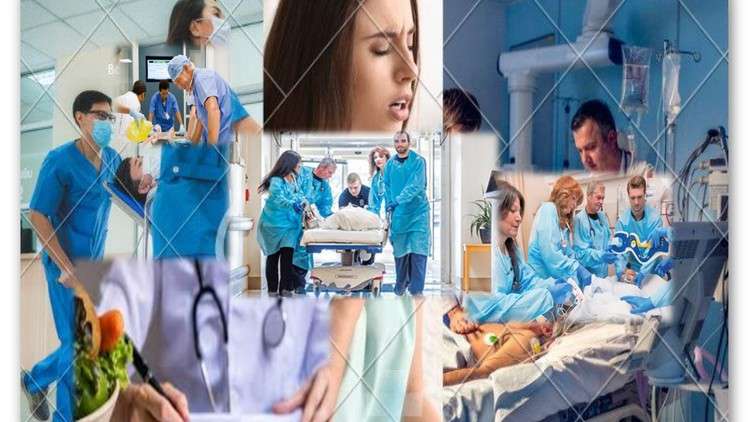
prehospital emergency medicine for professionals
What you will learn
The First Five Minutes and the Primary Survey
Airway Assessment and Management
Breathing Assessment and Management
Circulation Assessment and Management
Description
Emergency medicine is a challenging and rewarding field that requires quick thinking, and compassion. Emergency physicians play a vital role in providing life-saving care to patients in need. Emergency medicine is the medical specialty concerned with the care of illnesses or injuries requiring immediate medical attention. Emergency physicians, often called ER doctors, specialize in providing care for unscheduled and undifferentiated patients of all ages. They are trained to assess and treat a wide range of medical conditions, from minor injuries to life-threatening illnesses.
Dominique Jean Larry, a French surgeon and military doctor
practicing in the late 1700s, is often cited as the father of modern-day Prehospital Emergency Medicine (PHEM). His vision and commitment to provide care at the point of wounding, triage his patients on the basis of clinical need and transport them to battlefield hospitals in his flying ambulances was the blueprint of present-day PHEM
practice. In the face of adversity, he provided contemporary medicine where patients needed it most, and at the same time created innovative practices such as triage . pride for our
Such achievements remain inspirational today. The ‘roots’ of PHEM by this measure are admittedly short, especially when compared to those of hallowed medical establishments that can trace their practices and buildings back nearly 1000 years. With this comes
a need for PHEM to make up for lost ground. It is therefore with huge impacts
EMS is the extension of emergency medical care into the prehospital setting. Today’s EMS systems have their roots in legislative and clinical
developments of the 1960s and 1970s. The 1966 report “Accidental
Death and Disability—The Neglected Disease of Modern Society” highlighted the deficiencies of prehospital care of trauma victims, attributable to inadequate equipment and training. Until that time, more than
half of ambulance services were run by funeral homes because hearses
were among the few vehicles able to transport a stretcher. The National
Highway Safety Act of 1966 established the Department of Transportation and made it the lead agency responsible for upgrading EMS systems
A review of the 15 elements of EMS systems identified by the EMS Systems Act of 1973 (Table 1-1) provides insight into the structure of EMS systems and the challenges they face.
focus in emergency medicine:
•Trauma: This includes injuries
caused by
accidents, falls, violence, and other
events. Emergency physicians are
trained to stabilize patients with
traumatic injuries and provide lifesaving care.
Sepsis: This is a
life-threatening
condition that
occurs when the
body’s response to
an infection injures
its own tissues and
organs. Emergency
physicians are
trained to diagnose
and treat sepsis
quickly and
effectively.
Burn: Burn injuries
can be very serious
and require
specialized
care. Emergency
physicians are trained
to assess the severity
of burn injuries and
provide appropriate
treatment
Acute coronary
syndrome: This is a
group of conditions
that affect the blood
flow to the
heart, including heart
attacks and unstable
angina. Emergency
physicians are trained
to diagnose and treat
acute coronary
syndrome quickly to
prevent serious
complications
Poisoning: Poisoning can occur
from ingesting, inhaling, or
absorbing a harmful
substance. Emergency physicians
are trained to assess the type of
poisoning and provide the
appropriate antidote or treatment.
Content
Introduction
Course Name: Emergency Care for Medical Professionals
Caption: prehospital emergency medicine for professionals | Topics: The First Five Minutes and the Primary Survey, Airway Assessment and Management, Breathing Assessment and Management, Circulation Assessment and Management
Overview
Alright, fellow medical pros, let’s talk about “Emergency Care for Medical Professionals.” If you’re anything like me, you’ve seen your share of scenarios where seconds count and a solid, systematic approach isn’t just helpful, it’s non-negotiable. This isn’t just another checklist course; it’s a deep dive into the foundational pillars of prehospital emergency response, distilled into actionable, high-stakes maneuvers. The course takes you through the crucial initial moments, focusing on how to triage, assess, and stabilize patients effectively when every tick of the clock amplifies the gravity of the situation. It really hammers home the importance of a structured methodology – think less ‘winging it’ and more ‘precision surgical strike’ on patient instability. For anyone feeling a bit rusty or looking to truly sharpen their edge in critical situations, this program serves as an excellent accelerator, pushing you beyond theoretical knowledge into practical, life-saving application. It’s less about memorizing facts and more about developing the muscle memory for rapid, accurate decision-making under duress. This is definitely one of those offerings that can significantly bolster your overall clinical confidence and competence.
Prerequisites
Before you jump in, understand that this isn’t for the faint of heart or the completely uninitiated. The course title “for Medical Professionals” isn’t just a suggestion; it’s a hard requirement. You’ll need a solid background in healthcare – think actively practicing EMTs, paramedics, nurses, PAs, or even junior doctors. Basic Life Support (BLS) certification is a must, and honestly, some form of Advanced Cardiac Life Support (ACLS) or Prehospital Trauma Life Support (PHTLS) experience would be hugely beneficial to get the most out of the more nuanced discussions. While it provides a refresh and deepens understanding for many, it assumes a baseline level of anatomical, physiological, and pharmacological knowledge. If you’re coming in without that foundational clinical context, you might find yourself playing catch-up rather than truly engaging with the advanced problem-solving scenarios.
Skills & Tools
This course is all about equipping you with tangible, job-ready skills. You’ll become incredibly proficient in rapid patient assessment, mastering the “First Five Minutes” to identify immediate life threats. We’re talking expert-level Airway Assessment and Management, from basic adjuncts to advanced techniques, alongside methodical Breathing Assessment and Management that goes beyond simply looking at chest rise. Expect to refine your skills in lung auscultation, ventilatory support, and identifying respiratory distress. The Circulation Assessment and Management component is equally robust, covering shock recognition, hemorrhage control, and fluid resuscitation strategies. While the course primarily focuses on cognitive and decision-making skills, the learning environment encourages you to apply these concepts to real-world scenarios, making your existing physical assessment tools (stethoscope, pulse oximeter, capnography, etc.) far more effective. It also implicitly trains you to leverage industry-standard tools for documentation and communication, critical for seamless patient handovers.
Career Benefits & Job Roles
Taking this course is a smart strategic move for your career growth. For prehospital providers, it significantly elevates your proficiency, making you a more valuable asset in any emergency medical service. For hospital-based professionals, understanding the prehospital perspective can dramatically improve your ability to receive and manage critically ill or injured patients upon arrival. This level of expertise is crucial for roles such as lead paramedic, charge nurse in an emergency department, or even flight medic. It can directly contribute to your continuing education requirements and often serves as excellent preparation for various certification prep exams, enhancing your professional credibility. Furthermore, the systematic approach taught here empowers you to lead effectively in high-stress environments, opening doors to supervisory or educator roles within your organization. Ultimately, it’s about becoming a more competent, confident, and sought-after professional, capable of making a profound difference in patient outcomes, which is truly the highest career benefit of all.
Pros
- Systematic Approach & Practical Focus: The emphasis on “The First Five Minutes” and the structured Primary Survey provides an incredibly robust, repeatable framework for approaching any emergency. It’s not just theory; it’s designed for immediate, real-world application, directly translating into better patient care and boosting your confidence under pressure.
- Comprehensive Foundational Review: Even for experienced professionals, a deep dive into Airway, Breathing, and Circulation (ABC) fundamentals, taught with a focus on prehospital nuances, acts as an invaluable refresher and often unveils new insights or refines existing techniques. This isn’t just “beginner to advanced”; it ensures even advanced practitioners benefit from reinforcing core principles.
- Enhances Decision-Making Under Pressure: The course’s structure implicitly trains you to rapidly identify immediate life threats and prioritize interventions. This critical thinking skill is paramount in emergency medicine and is a direct output of mastering the systematic assessment process taught.
- Directly Applicable to Job Roles: The skills learned are immediately transferable to virtually any prehospital or emergency department setting. This isn’t academic fluff; it’s tangible knowledge that makes you more effective on the job from day one, proving true job-ready skills.
Cons
- While the content is stellar, the effectiveness for truly mastering physical skills (like advanced airway maneuvers or hemorrhage control techniques) is heavily reliant on supplementary hands-on labs or simulations. If the course is delivered primarily online without robust practical components, some learners might find themselves conceptually prepared but physically less proficient, requiring additional practice outside the curriculum to achieve full mastery.