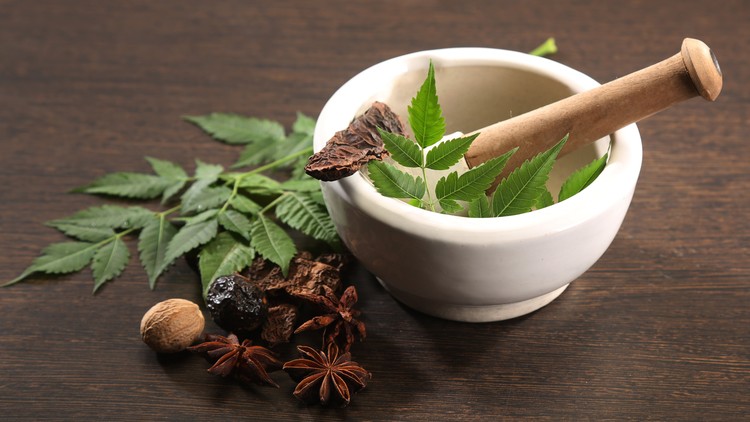
A course that helps you to understand the fundamentals concepts in Ayurveda, its origin, and scientific background.
What you will learn
A basic orientation on how to approach Ayurveda.
Did Ayurveda emerge from the higher Extra-terrestrials? The classical meaning, aim, definition and origin of Ayurveda
The Incredible Ancient Method of Scientific Research and Validation – Praman, still in use today!
The 8 Branches of Ayurveda – Did you know that Ayurveda had advanced plastic surgery, pediatrics and toxicology? Explore more
What is 3 Guna and 3 types of mental constitutions – The Balance, The Hyperactive and The Dull
What are 3 Dosha and their physical, physiological and psychological patterns
What is Padarth? (The one that can be named!!!)
What is Dravya? (The Substance)
The 9 Types of Basic Substances
The Five Great Elements (Panchmahabhuta) – what, how and why
Each Dosha explained with it physical, physiological and psychological impact
Vata Dosha explained – Why dryness and cold weather leads to joint pain or light, raw food to bloating? Learn the Vata impact through its properties
Pitta Dosha explained – How the Slightly oily, Light, Pungent, Hot, Sharp, Acidic, Fluid, Penetrating Pitta Dosha helps in digestion and heat management
Kapha Dosha explained – Why Heaviness always accompanies Slow, Cool, Slimy metabolic pattern, and why excess Sugar makes you fat, not proteins!
Abodes of Vata Dosha – Places where Vata works and may create imbalances like Large intestines, bones, ear and many more
Abodes of Pitta Dosha – Why eyes are more prone to inflammation, and why skin disorders are mostly inflammatory
Abodes of Kapha Dosha – Why the congestion mainly happens in the chest or nose gets blocked more frequently than ears, or eyes! and much more
Subtypes of Vata Dosha – The 5 special assistants to Central Vata that perform
Subtypes of Pitta Dosha – The 5 experts that handle digestion, blood formation, information processing, visual sensation and heat regulation through skin
Subtypes of Kapha Dosha – The 5 systems that moisten the food, enable taste buds, and cushion the chest, joints and sense organs
Signs of Dosha Imbalance
Agni – The Transformative Fire Inside
Koshthagni – The Central Furnace of the Body
Dhatuvagni – The Tissue Transformative Forces
Bhutagni – The Fire that transforms the 5 great elements
Dhatu – The Ayurvedic Tissue System (7 Dhatus distinctly explained)
Ojas – The Life Force
Prakriti: The 3 Primary Ayurvedic Body Constitutions, their formation and impact
Effect of mother’s diet and lifestyle on baby’s body type
All about the Vata Body Type – Why does the Vata people have an artistic bent, and a delicate digestion? lots of other interesting facts with reason
All about the Pitta Body Type – Know more about the radiant and sophisticated Pitta people, with great digestion and excess heat in both mind and body!
All about the Kapha Body Type – Explore the Loyal, slow and steady Kapha people who always win the race with great perseverance
Calculate Your Body Type
Rasa Panchak (5 Elements of Food)
Rasa – How 6 Rasa form from the 5 Great Elements? What are 63 Rasa combinations?
What is the Impact of each Rasa on the body?
What is Anurasa or the secondary taste?
What is Virya or Potency in Ayurveda?
What is Vipaka or the Post-Digestive Taste as per Ayurveda
18 Types of Incompatible Combinations according to Ayurveda
The Ayurvedic Dosha Cycle during the Day
Dinacharya – The Ideal Ayurvedic Routine
Ayurvedic Oral Hygiene – All about Dental Sticks, Oil Pulling and Herbal Tooth Powders
How to Prepare Simple Ayurvedic Oral Cleaning Preparations?
Ayurvedic Massage and tips for Vata, Pitta and Kapha specific body massage
Vyayam (Ayurvedic Concept of Exercise) – How to do, when to do and what to avoid
Snana (The Ayurvedic Bath) – General dos and don’ts, natural cleansing agent and when to avoid
Introduction to Ritucharya (Seasonal Ayurvedic Regimen)
Why take this course?
It seems you’ve provided a comprehensive overview of various Ayurvedic practices and their significance. Your outline covers important aspects such as daily routines (Dinacharya), oral hygiene, body massage, exercise, bathing, dosha balance, and the seasonal regimen (Ritucharya). This holistic approach to health and wellbeing is a cornerstone of Ayurvedic medicine, which focuses on prevention and establishing regular patterns in daily life to maintain good health.
Here are some additional points you might consider including in your course:
- Diet and Nutrition: Discuss the principles of Sattvic, Rajasic, and Tamasic foods and how they influence dosha balance. Explain the importance of eating habits like eating slowly, chewing food thoroughly, and not eating when upset or stressed.
- Mind-Body Connection (Citta-Pramana): Elaborate on the Ayurvedic understanding of the mind-body connection and how mental health affects physical health and vice versa.
- Pranayama (Breathwork): Introduce the various breathing techniques in Ayurveda, like Anulom Vilom (alternate nostril breathing), Bhastrika (bellows breath), and Kapalabhati (skull shining breath), and their benefits.
- Meditation and Contemplation (Dhyana): Discuss the role of meditation in Ayurveda for balancing the doshas and promoting overall well-being.
- Seasonal Eating (Rituvasa): Explain how to adjust diet and lifestyle with the changing seasons to stay in harmony with nature.
- Detoxification (Panchakarma): Provide an overview of this deep cleansing process, which is a critical aspect of Ayurvedic health practices for removing toxins from the body.
- Ayurvedic Herbs and Remedies: Discuss commonly used herbs and their properties, as well as how to prepare and use them safely.
- Yoga and Ayurveda: Explain the integration of yoga asanas with Ayurvedic principles to maintain health and treat various conditions.
- Ayurvedic Approach to Health Challenges: Discuss how to approach common health challenges from an Ayurvedic perspective, including lifestyle adjustments, herbal remedies, and when to seek additional care.
- Personalization of Treatment: Emphasize the importance of individualized treatment in Ayurveda, taking into account a person’s unique constitution (Prakriti), current imbalance (Vikriti), and lifestyle factors.
Remember to always encourage individuals to consult with healthcare professionals before making significant changes to their health regimen, especially if they have existing health conditions or are taking medications. Ayurveda is a holistic system that can complement conventional medicine but should not replace professional medical advice.
Alright, let’s talk about the ‘Advanced Certification in Ayurveda: Master Core Principles’ course. As someone who’s constantly evaluating learning platforms and how effectively they deliver on their promises, I approached this with a healthy dose of skepticism, especially with the “Advanced Certification” tag attached to what seems like a foundational curriculum. But after diving in, I’ve got some thoughts – and thankfully, mostly positive ones.
Overview
Despite the “Advanced” in the title, let’s be clear: this course is primarily a robust, comprehensive deep dive into the core principles of Ayurveda. Think of it less as an advanced masterclass for existing practitioners and more as an intensive certification prep course for serious beginners or those looking to formalize their foundational understanding. What truly impressed me was the structured approach to demystifying Ayurveda. It doesn’t shy away from the historical and even mythological origins, addressing questions like the “Extra-terrestrial” emergence with a grounded, classical perspective. This isn’t just theory; it’s about understanding the “why” and “how” behind an ancient system that continues to be relevant. You gain a solid grasp of concepts like Praman – Ayurveda’s ancient yet incredibly sophisticated scientific validation method, which frankly blew my mind with its parallels to modern scientific inquiry. It also broadens your perspective on the eight branches of Ayurveda, showcasing its incredible scope, from advanced surgery to toxicology, proving it was far more than just herbal remedies. For anyone looking to move from a casual interest to a structured understanding, this course provides the analytical framework needed to truly grasp the system, from 3 Guna (mental constitutions) to 3 Dosha (physical, physiological, and psychological patterns).
Prerequisites
This is where the “Advanced” title can be a little misleading in a good way. While it’s structured for a certification, you absolutely do not need prior in-depth knowledge of Ayurveda to jump in. The course is meticulously designed to take you from a beginner to advanced understanding of its foundational concepts. What you do need is an open mind, a genuine curiosity about holistic health, and a willingness to engage with concepts that might challenge conventional Western medical paradigms. If you’re someone who appreciates critical thinking and systematic learning, even in ancient traditions, you’ll feel right at home. No specific academic background or existing healthcare qualifications are necessary, making it accessible for a broad audience keen on personal development or a shift in their professional trajectory.
Skills & Tools
While this isn’t a coding bootcamp providing industry-standard tools like Python or Docker, the “tools” you gain here are equally powerful in the wellness domain: robust analytical frameworks and a deep understanding of human physiology and psychology through an Ayurvedic lens. You’ll develop skills in:
- Holistic Assessment & Pattern Recognition: Learning to identify Dosha and Guna imbalances provides a powerful framework for understanding health and disease patterns.
- Critical Thinking in Wellness: The exploration of Praman equips you with a method for evaluating evidence and knowledge, ancient or modern.
- Foundational Ayurvedic Principles: You’ll master the vocabulary and concepts necessary to read, discuss, and apply Ayurvedic wisdom effectively.
- Self-Care & Lifestyle Design: Applying these principles to your own life counts as a powerful real-world project, fostering personal well-being.
The course structure itself acts as a “tool” for efficient learning, guiding you through complex topics with clarity and coherence, making the certification prep process surprisingly engaging.
Career Benefits & Job Roles
For a tech professional like myself, thinking about career growth often means acquiring new, tangible skills. This certification, while not directly leading to a software development role, offers significant value for those interested in the burgeoning wellness industry or even enhancing their personal understanding for better life management. It equips you with job-ready skills to:
- Serve as an Entry-Level Ayurvedic Consultant or health educator, providing foundational guidance.
- Enhance roles like a Wellness Coach, Yoga Instructor, or Nutritionist by integrating a powerful holistic framework.
- Contribute to Health Tech or Wellness Product Development, understanding consumer needs from a complementary medicine perspective.
- Pursue further advanced studies in Ayurveda with a rock-solid foundation.
Even if you’re not planning a direct career pivot, the critical thinking and holistic perspective gained can inform leadership, stress management, and team dynamics in any professional setting. It broadens your problem-solving toolkit considerably.
Pros
- Comprehensive & Structured Foundation: The course excels at providing a deep, well-organized understanding of Ayurveda’s origins, philosophical underpinnings, and core concepts like Dosha and Guna, which is crucial for solid certification prep.
- Demystifying Ancient Wisdom: It bravely tackles complex historical narratives and ancient scientific methods (Praman), making them accessible and demonstrating their surprising rigor, elevating the discussion beyond mere folklore.
- Practical & Applicable Frameworks: Rather than just theoretical exposition, the course teaches you how to recognize and apply Ayurvedic patterns to understand individuals and health, offering genuinely useful job-ready skills for wellness roles.
- Excellent for Serious Beginners: Despite the “Advanced” label, this is ideal for those with no prior knowledge who are serious about understanding Ayurveda systematically and perhaps pursuing further studies or a new career path in wellness.
Cons
- Misleading “Advanced” Title: My one honest criticism is that the “Advanced Certification” title could set the wrong expectation. While it’s an advanced *course* in terms of depth for beginners, it’s primarily a foundational program designed for certification prep rather than requiring existing advanced knowledge. It’s truly a comprehensive start, not a capstone, which is fantastic for beginners but something to be aware of if you’re already an experienced Ayurvedic practitioner looking for cutting-edge specialization.