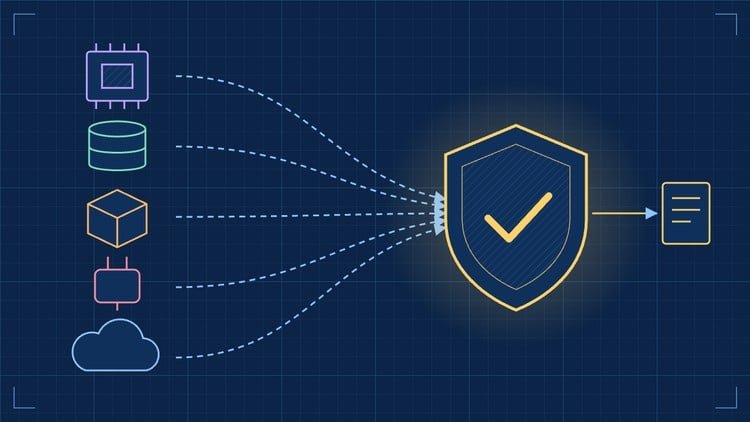
Secure third-party models, datasets, MCP servers and AI vendors, with hands-on labs on free tools you can run locally
What You Will Learn:
- Explain why model files can run code when they load, and choose safer formats and loaders
- Scan, pin, sign and verify models, and explain what a signature does not prove
- Protect training data with quarantine, hashes and provenance records
- Harden AI libraries and pipelines after real compromises such as LiteLLM and PyTorch nightly
- Vet MCP servers, skills and plugins, and detect a tool that changes after approval
- Build and validate an AI bill of materials in CycloneDX
- Assess AI vendors and check model licences
- Run one intake gate that combines all of it
Overview: Why Traditional DevSecOps Isn’t Enough Anymore
Look, I’ve been in the security trenches for over a decade, and if there’s one thing that keeps me up at night lately, it’s how fast we’re throwing industry-standard tools and untested models into production. We spent years finally getting a handle on the software supply chain—securing npm packages and hardening CI/CD pipelines—only for AI to come along and blow the doors wide open. Most teams are treating AI models like black boxes, but this course, “AI Supply Chain Security: Models, Data, Tools and Vendors,” treats them like what they actually are: complex, potentially malicious software artifacts.
What I appreciated most about this curriculum is that it doesn’t just repeat the same tired “AI ethics” talking points. It gets into the technical weeds of why a Hugging Face download can be just as dangerous as a random `.exe` from a forum. The course addresses the “Pickle” problem head-on—explaining how the very architecture of certain model formats allows for arbitrary code execution. It bridges the gap between traditional cybersecurity certification prep and the frontier of machine learning security. If you’re tired of high-level fluff and want to know how to actually build an AI Bill of Materials (AIBOM) that doesn’t suck, this is where you need to be. It’s a masterclass in shifting security left for the LLM era.
Prerequisites
- Fundamental Linux CLI: You should be comfortable navigating a terminal and running basic commands.
- Python Basics: You don’t need to be a senior dev, but you should know how to read a script and manage virtual environments.
- Container Basics: Familiarity with Docker is a plus, as many hands-on labs involve isolated environments.
- Security Mindset: A basic understanding of the OWASP Top 10 or general software supply chain risks will help you move faster.
Skills & Tools You’ll Master
This isn’t just theory; it’s a deep dive into job-ready skills that you can apply the Monday after you finish. You’ll get your hands dirty with industry-standard tools designed for the modern AI stack. We’re talking about generating and validating CycloneDX files to ensure your SBOMs are actually compliant. You’ll learn to use scanners that can peek inside model weights to detect hidden backdoors, and you’ll master Sigstore and Cosign for signing model artifacts—essential for any real-world projects involving sensitive data.
The course also covers the emerging Model Context Protocol (MCP), which is a massive blind spot for most security teams right now. You’ll learn how to vet these servers and ensure that a tool that was safe yesterday hasn’t been compromised via a “poisoned” update today. By the end, you’re not just a spectator; you’re building a unified intake gate that functions as a firewall for your AI ecosystem.
Career Benefits & Job Roles
The career growth potential here is massive because the talent gap in AI security is a canyon. Companies are desperate for people who can do more than just talk about AI—they need professionals who can secure it. This course prepares you for high-impact roles such as AI Security Engineer, DevSecOps Architect, and Product Security Lead.
If you are looking for certification prep that actually translates to the real world, this is a major checkbox. Being able to demonstrate that you can harden a PyTorch pipeline or quarantine corrupted training data makes you an immediate asset to any enterprise scaling their AI efforts. In a market where everyone is a “prompt engineer,” being the person who ensures those prompts don’t lead to a data breach is a very lucrative position to be in.
Pros
- Hyper-Practical Hands-on Labs: The labs run locally on free tools. No massive cloud bills or proprietary vendor lock-in; you learn the industry-standard tools that you can actually use in your day job tomorrow.
- Real-World Breach Analysis: I loved the breakdown of the LiteLLM and PyTorch nightly compromises. It grounds the lessons in reality rather than theoretical “what-if” scenarios.
- Comprehensive Scope: It covers the entire lifecycle—from the raw training data and model formats (like Safetensors vs. Pickle) to the final AI vendor assessment. It’s a beginner to advanced journey that feels cohesive.
Cons
- Fast-Paced Technicality: If you are strictly a non-technical manager, some of the labs might feel like a steep climb. It moves quickly through the hands-on labs, and while the instructions are clear, you’ll need to stay focused to keep up with the CLI-heavy sections.