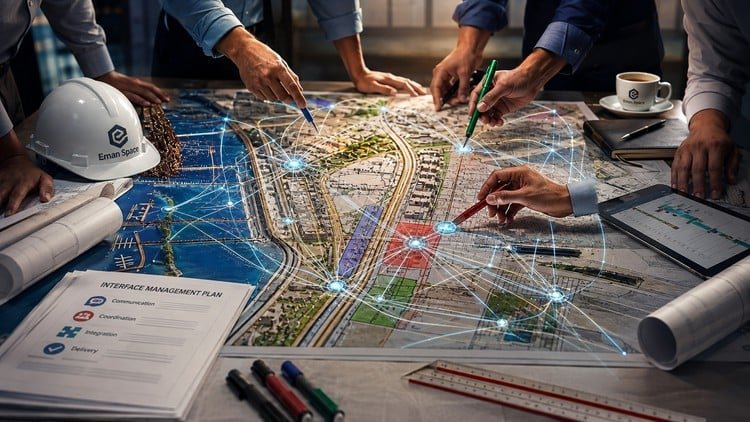
Introduction to Interface Management | Interface Types, Lifecycle, IMP, Interface Register & ICF for Complex Projects
What You Will Learn:
- Understand why interfaces become project delivery risks and how Interface Management differs from routine coordination.
- Identify and classify technical, physical, system, organizational, contractual, execution, information, and stakeholder interfaces in complex projects.
- Apply the Interface Management lifecycle: Identify, Define, Resolve, Implement, and Validate, with clear ownership, roles, responsibilities, and stakeholder map
- Understand how to use practical Interface Management tools, including theMP, Interface Register, Interface Matrix Control Form (ICF), Int
- Track interface issues, actions, dependencies, responsibilities, resolution status, and validation using structured Interface Management control tools.
- Show more
Alright, let’s talk brass tacks about ‘Practical Interface Management for Mega Projects (M1–M4)’. I’ve been around the block a few times on some truly massive capital projects, and if there’s one thing I can tell you, it’s that interfaces – those seemingly innocuous points where different scopes, systems, or teams meet – are often the silent killers of schedules and budgets. This course isn’t just another theoretical snooze-fest; it’s a solid dive into taming those beasts.
Overview
Anyone who’s managed a project larger than a backyard shed knows that coordination is key. But when you scale up to a “mega project” – think multi-billion dollar infrastructure, sprawling industrial complexes, or complex energy developments – traditional coordination efforts simply fall apart under the sheer weight of interdependencies. This course, ‘Practical Interface Management for Mega Projects’, steps in precisely where standard project management tools start to buckle. It’s not just about drawing lines on a Gantt chart; it’s about proactively identifying, classifying, and *managing* the inherent friction points that arise when dozens of contractors, thousands of components, and multiple regulatory bodies converge. What I found particularly valuable was the clear distinction it draws between routine coordination and actual Interface Management. It unpacks why interfaces aren’t just minor kinks but fundamental project delivery risks that, if neglected, lead to catastrophic cost overruns, delays, and often, outright project failure. This program is essentially a survival guide for navigating that intricate web, offering a structured, repeatable methodology to keep your mega project from becoming a mega headache.
Prerequisites
While the course materials are pretty comprehensive, I’d say you’ll get the most mileage out of this if you’re not walking in completely cold. Ideally, you should have at least a few years under your belt in project management, engineering, or a related technical discipline, particularly if that experience touched on large-scale initiatives. You don’t need to be a seasoned mega-project veteran, but a foundational understanding of project lifecycles, risk management, and stakeholder engagement will help you absorb the concepts faster. It’s designed to take you from a solid understanding of why interfaces are critical to applying advanced strategies, making it suitable for those looking to level up their game from a strong project background. Think of it less as a **beginner to advanced** course from zero, and more of a specialized **certification prep** for a critical project management niche.
Skills & Tools
This program doesn’t just preach; it equips. You’ll walk away with highly **job-ready skills** in systematically approaching interface challenges. It starts with identifying and classifying a wide array of interface types – from the obvious technical and physical ones to the trickier system, organizational, and contractual interfaces. Then, crucially, it teaches you the full Interface Management lifecycle: Identify, Define, Resolve, Implement, and Validate. This isn’t just academic; it’s about assigning clear ownership, roles, and responsibilities, all while building a robust stakeholder map. You’ll gain practical experience with **industry-standard tools** like the Interface Management Plan (IMP), the Interface Register, and the Interface Control Form (ICF). These aren’t abstract concepts; they’re the battle-tested mechanisms for tracking issues, actions, dependencies, and resolution statuses in **real-world projects**. The emphasis on structured control tools ensures you learn how to monitor and validate interface resolutions effectively, which is where many projects falter.
Career Benefits & Job Roles
For anyone serious about advancing their **career growth** in large-scale engineering, procurement, and construction (EPC) or capital projects, this course is a game-changer. Mastering interface management elevates you from a generalist to a specialist capable of tackling some of the most complex challenges in project delivery. You’ll be better positioned for roles such as Interface Manager, Senior Project Engineer, Project Controls Manager, or even Program Manager on multi-faceted projects. The ability to articulate and implement a structured approach to interface risks makes you an invaluable asset, especially in industries like oil & gas, renewables, infrastructure development, and manufacturing. This specialization can significantly boost your market value and open doors to leadership positions where the effective management of cross-functional dependencies is paramount. It’s about being the person who can untangle the Gordian knots that often plague large-scale endeavors.
Pros
- Highly Practical and Actionable: This isn’t just theory; the course is packed with frameworks, templates, and methodologies that you can immediately apply. It feels like a series of extended **hands-on labs** for managing complexity.
- Comprehensive Coverage of Interface Types: It goes beyond the obvious, delving into the nuanced layers of contractual, organizational, and information interfaces, which are often overlooked but critical failure points.
- Focus on Risk Mitigation: The course directly addresses why interfaces become risks and provides a structured approach to mitigating them, directly translating to improved project predictability and reduced financial exposure.
- Clear Ownership and Accountability: A strong emphasis on defining roles, responsibilities, and the interface management lifecycle ensures that no interface issue falls through the cracks, a common problem on sprawling projects.
Cons
- While the course is comprehensive, truly embedding these **job-ready skills** and becoming proficient with the **industry-standard tools** requires significant personal application and experience beyond the course material. It lays an excellent foundation, but real mastery demands proactive engagement with **real-world projects** to continually practice and refine the techniques taught. Don’t expect to be an interface guru overnight without putting in the extra mileage.