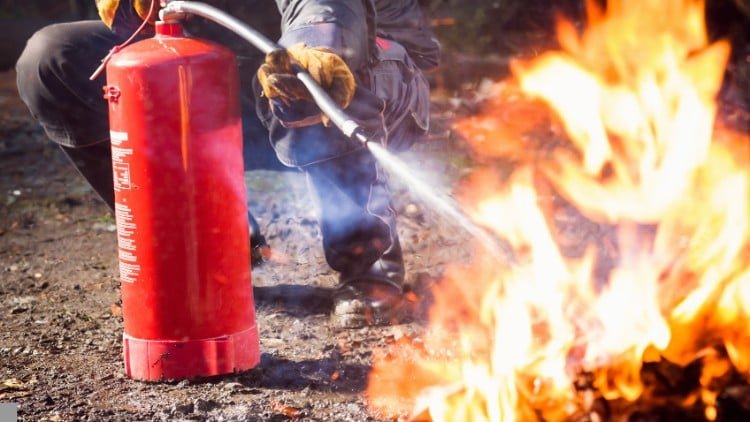
Master fire safety, risk assessment, PASS technique, and extinguisher selection to handle workplace emergencies safely.
What You Will Learn:
- Master how fire behaves, spreads through buildings, and grows from a small spark into an emergency.
- Spot everyday workplace fire hazards and run risk assessments before an incident ever happens.
- Make the right call under pressure: know instantly when it’s safe to fight a fire versus when to evacuate.
- Pick the exact right extinguisher type (Water, Foam, CO₂, Dry Powder, Wet Chemical) for specific classes of fire.
- Execute the PASS technique safely and handle fire blankets like a pro during real situations.
- Set up proper extinguisher placement, travel distances, and maintenance routines for total workplace compliance.
Overview
Let’s be real, most of us probably think we know how to use a fire extinguisher: pull pin, aim, squeeze, sweep. Simple, right? Well, after diving into ‘Fire Extinguisher Training,’ I can confidently say that while the basics are there, the depth of knowledge and practical application this course delivers is genuinely surprising and incredibly valuable. It’s not just about squirting foam; it’s a holistic approach to understanding fire as a threat, preventing its occurrence, and reacting decisively when it does happen.
My biggest takeaway wasn’t just mastering the PASS technique (which, no kidding, is more nuanced than you’d think), but the profound shift in perspective. You move from passively hoping a fire never breaks out to actively scanning your environment for hazards, running mental risk assessments, and developing a calm, logical response framework. This course essentially turns you into a proactive safety champion, equipping you with the confidence to differentiate between a minor incident you can tackle and a full-blown emergency demanding immediate evacuation. It’s less about memorizing steps and more about cultivating a crucial set of job-ready skills that every single workplace benefits from. You gain an intuitive understanding of the unseen dynamics of a blaze, from the initial ignition to how different materials feed its growth – knowledge that’s absolutely critical for any responsible professional.
Prerequisites
Honestly, the barrier to entry here is refreshingly low. You don’t need a background in emergency services or engineering. Basic literacy, an eagerness to learn, and a willingness to participate in practical exercises are really all that’s required. If you’ve got a pulse and a desire to contribute to a safer workplace, you’re good to go. While there’s no complex coding or advanced theoretical physics involved, a proactive mindset and an understanding of your own workplace environment will certainly help you contextualize the lessons quickly. It truly takes you from a beginner to advanced level of awareness in fire safety, regardless of your starting point.
Skills & Tools
This course is a goldmine for practical skills. You’ll master nuanced risk assessment techniques, moving beyond theoretical checklists to real-time hazard identification. Decision-making under pressure becomes a structured process, not a panicked reaction. Of course, the core skill is flawless execution of the PASS technique and competent handling of fire blankets. You’ll also gain expertise in distinguishing between various fire classes (A, B, C, D, K) and, critically, selecting the *exact* right extinguisher type for each. We’re talking about getting hands-on with the actual industry-standard tools: Water, Foam, CO₂, Dry Powder, and Wet Chemical extinguishers. Beyond direct fire suppression, you learn about optimal extinguisher placement, travel distances, and essential maintenance routines for total workplace compliance. These aren’t just abstract concepts; they’re immediately applicable, giving you genuine real-world projects to tackle in your own environment.
Career Benefits & Job Roles
While this course doesn’t lead to a specific “Fire Safety Officer” title directly, its impact on your career growth and value as an employee is significant. For anyone in management, HR, facilities, office administration, or even team leadership roles, these skills are invaluable. Demonstrating proactive safety knowledge makes you a more responsible, reliable, and well-rounded professional. It’s a fantastic addition to any resume, signalling to potential employers that you’re not just focused on your primary role, but also on the well-being and safety of your colleagues and the organization’s assets. Being the person who knows when to fight, when to flee, and how to effectively manage a potentially catastrophic situation elevates your standing. It contributes to a safer work environment, reduces liability, and ultimately, builds a more resilient business, making you an indispensable asset.
Pros
- Unparalleled Practicality & Hands-On Experience: This isn’t just theory. The simulated hands-on labs with various extinguisher types and fire scenarios are incredibly effective. You actually get to feel the weight, hear the discharge, and practice the technique, which is absolutely crucial for building muscle memory and confidence under pressure.
- Clarity in Crisis Decision-Making: The course excels at demystifying the “fight or flight” dilemma. It provides a clear, logical framework for assessing a fire’s scope and knowing instantly whether it’s safe to engage or if evacuation is the only sensible option. This clarity alone is worth the price of admission.
- Comprehensive Knowledge Beyond the Basics: It goes way beyond just operating an extinguisher. Understanding fire behaviour, risk assessment, proper placement, maintenance, and the specific applications of each extinguisher type provides a truly holistic education. It feels like genuine certification prep for being a workplace safety advocate, even if it’s not a formal external cert.
- Boosts Workplace Confidence & Reduces Panic: Knowing you have the skills to potentially mitigate a small fire, or at least confidently direct an evacuation, significantly reduces anxiety about workplace emergencies. This newfound confidence is infectious and can positively influence colleagues.
Cons
- While the simulations are excellent and realistic for training purposes, they can never fully replicate the sheer unpredictability, intensity, and sensory overload of an actual, rapidly escalating live fire. This isn’t a flaw of the course itself, but an inherent limitation of any simulated training environment. It requires the trainee to consciously bridge that gap with imagination and a commitment to taking the lessons seriously.