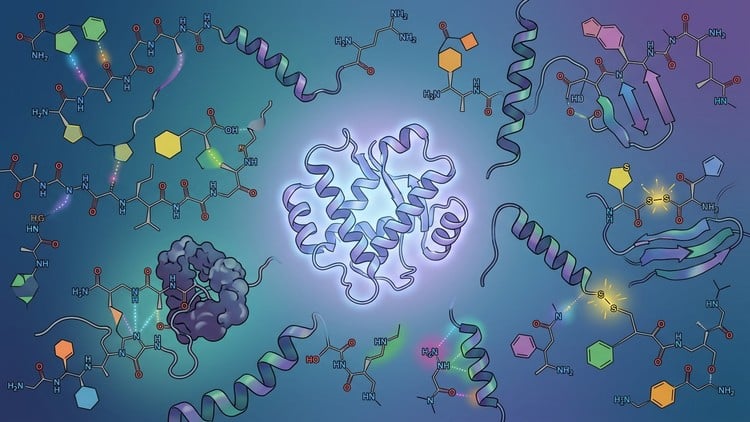
Pass your MCAT easily. Test your knowledge on amino acids, enzymes, and lab tools with simple, detailed explanations.
What You Will Learn:
- You will learn how amino acids act in water and how their charges completely change at different pH levels.
- You will understand exactly how proteins fold into 3D shapes and what holds them together tightly and safely.
- You will easily read enzyme speed graphs and see exactly how different medicines slow them down safely.
- You will learn how to sort and test proteins entirely using lab tools like gels and bead columns safely.
- You will comfortably answer tricky medical scenario questions to help you pass the MCAT easily and cleanly.
An Unfiltered Look at the 2026 MCAT Biochemistry Practice Tests
Look, I’ve spent the better part of a decade reviewing certification prep materials across various technical and scientific disciplines. If there is one thing I have learned, it’s that most study guides are either too shallow to be useful or so dense they feel like reading a brick. When I dug into the MCAT Biochemistry Practice Tests 2026: Amino Acids & Protein, I was looking for that “Goldilocks” zone—the perfect balance of high-level theory and the kind of job-ready skills you need to actually perform under pressure. This isn’t just about memorizing the Krebs cycle; it’s about understanding the “why” behind the molecular machinery.
What struck me immediately is how this course treats biochemistry like a system to be debugged. In the tech world, we value real-world projects and the ability to troubleshoot complex environments. This course applies that same logic to the human body. It’s designed for the 2026 testing cycle, which means it’s tuned to the latest AAMC trends. Instead of just throwing facts at you, it focuses on the “behavior” of molecules. You aren’t just learning what an amino acid is; you’re learning how it “reacts” to a changing environment. This is beginner to advanced training that doesn’t hold your hand too much but also doesn’t leave you stranded in the middle of a complex titration curve.
In my opinion, the real value here isn’t just the practice questions—it’s the logic behind the explanations. Many students treat the MCAT like a hurdle to jump over, but this course frames it as the first step in career growth for future physicians and researchers. It bridges the gap between undergraduate theory and the high-stakes clinical reasoning required in medical school. If you want to stop guessing on the industry-standard tools of the trade—like chromatography and electrophoresis—this is the deep dive you’ve been looking for.
What You Need to Know First
Before you jump into these practice tests, don’t expect to start from absolute zero. While the course is comprehensive, it functions best as a certification prep accelerator. You should have a baseline understanding of:
- General Chemistry: Specifically, you need to understand acid-base chemistry and pKa values, or the amino acid sections will feel like a foreign language.
- Introductory Biology: A basic grasp of cell structure and the central dogma of molecular biology is essential.
- Organic Chemistry: Knowing your functional groups is non-negotiable here; if you can’t spot a carboxyl or an amide, you’re going to struggle with the folding logic.
Developing the Right Skills and Tools
This course goes beyond simple multiple-choice questions. It forces you to interact with industry-standard tools and techniques that you’d find in any high-end pathology or research lab. You’ll develop proficiency in:
- Enzyme Kinetics Interpretation: You’ll get comfortable with Michaelis-Menten plots and Lineweaver-Burk graphs, treating them like data dashboards.
- Protein Purification Logic: This is where the hands-on labs feel comes in. You’ll learn to navigate Size-Exclusion, Ion-Exchange, and Affinity Chromatography as if you were physically standing at a bead column.
- Analytical Techniques: Mastering SDS-PAGE and Isoelectric Focusing (IEF) is a core component, moving you from a theoretical understanding to a practical, diagnostic mindset.
- Clinical Correlation: You’ll learn to apply biochemical principles to medical scenarios, which is basically the “troubleshooting” phase of the exam.
Career Benefits & Job Roles
While the immediate goal is passing the MCAT, the job-ready skills gained here have a much longer shelf life. Mastering these concepts is the bedrock for career growth in several high-impact fields:
- Medical Doctor (MD/DO): Understanding protein misfolding and enzyme inhibition is literally the basis of pharmacology and pathology.
- Biomedical Researcher: The lab tool sections prepare you for real-world projects in drug discovery and proteomics.
- Genetic Counselor: Grasping how protein mutations manifest at a structural level is key to explaining complex conditions to patients.
- Biotech Consultant: Being able to read the “language” of proteins allows you to navigate the business side of life sciences with technical authority.
The Pros: Why This Works
- Nuanced Explanations: It doesn’t just tell you that you’re wrong; it explains the “trap” you fell into. This is vital for certification prep because it builds a mental map of how the test-makers think.
- Focus on Logic Over Rote: The emphasis on how charges shift at different pH levels is brilliant. It turns a “memorization” task into a logical calculation.
- Modernized Scenario-Based Questions: The questions feel current. They mimic the “passage-based” style of the MCAT perfectly, forcing you to extract data from real-world projects and clinical snippets.
The Cons: An Honest Critique
If I have one gripe, it’s that the course can be incredibly intense on the mathematical side of enzyme kinetics. For a student who is more “big picture” and less “data-driven,” the sudden shift into slope calculations and intercept analysis can feel like hitting a wall. I would have liked to see a bit more “re-entry” material for those who haven’t looked at a graph in a few years, but for those aiming for a top-percentile score, this level of rigor is probably a necessity.