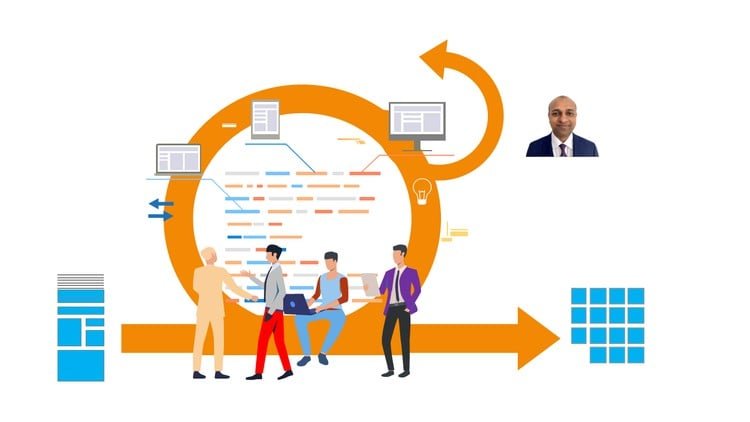
Scrum Master Course by Agile Enterprise Coach, London
What You Will Learn:
- Scrum Master Course (SMC)
- This is an exam for assessment and Its not a course with theory or videos
- Scrum Master Validation, Assessment and Course.
- Preparing for exams at other leading Scrum institute like Scrum dot org (unofficial assessment)
- Exam readiness for PSM 1 exam by Scrum dot Org (unofficial)
An Unfiltered Look at the Scrum Master Validation and Assessment
Let’s be real for a second—the market is absolutely flooded with “Scrum Master” courses that promise to make you an expert in a weekend by having you watch twelve hours of dry, pre-recorded videos. Most of us in the tech trenches don’t have time for that fluff. We need to know if we actually understand the Scrum Guide well enough to survive a high-pressure environment. That’s exactly where the Scrum Master Course by Agile Enterprise Coach in London deviates from the script. Unlike the typical beginner to advanced tutorials, this is strictly a high-level Scrum Master Validation and assessment platform. It’s a baptism by fire designed for one thing: certification prep.
I’ve seen too many brilliant developers and project managers fail the official PSM 1 exam by Scrum dot Org because they mistook “reading the guide” for “mastering the framework.” This assessment isn’t a hand-holding session; it’s a rigorous stress test. It functions as an unofficial assessment that mirrors the complexity and the “gotcha” logic of the actual industry-standard exams. If you’re looking for someone to explain what a Sprint is for the first time, look elsewhere. But if you want to sharpen your job-ready skills and ensure you aren’t throwing your exam fee down the drain, this is the reality check you need.
Who Should Actually Sign Up? (Prerequisites)
Don’t just jump into this expecting to learn from scratch. To get any value out of this assessment, you need to have your ducks in a row first. It’s meant for those who are already deep into their career growth journey and need that final nudge. Before clicking ‘start,’ you should have:
- A rock-solid understanding of the 2020 Scrum Guide. If you haven’t read it at least three times, you’re going to struggle here.
- Basic familiarity with industry-standard tools like Jira or Azure DevOps, as the context of the questions often assumes you know how a digital board functions.
- Previous exposure to real-world projects, even if you weren’t the lead. Having a mental map of how a Daily Scrum actually feels makes the theoretical questions much easier to navigate.
- A thick skin. You will likely fail your first attempt at this assessment, and that’s exactly the point—it’s about finding the gaps in your logic before the stakes are real.
Mastering the Tools and Agile Logic
Even though there are no “lessons” in the traditional sense, the act of taking this assessment builds a very specific set of job-ready skills. You aren’t just memorizing definitions; you’re learning the “Scrum Master stance.” The assessment pushes you to think like a servant leader rather than a project manager. You’ll find yourself grappling with scenarios that test your ability to handle hands-on labs style logic—deciding how to manage a rogue Product Owner or what to do when a Sprint Goal is in jeopardy.
By grinding through these questions, you become intimately familiar with industry-standard tools of thought: empirical process control, the nuances of the three pillars (transparency, inspection, and adaptation), and the exact accountability of each role. It’s a mental workout that prepares you for the psychological fatigue of the 60-minute official exam. You’re essentially building the muscle memory required to process complex Agile scenarios at lightning speed.
Career Benefits and the Job Market Reality
In the current tech climate, just saying “I know Agile” on your CV is worthless. Recorders and hiring managers are looking for Scrum Master Validation that holds weight. Successfully clearing a rigorous assessment like this—and subsequently the PSM I—is a major catalyst for career growth. It moves your resume from the “maybe” pile to the “interview” pile for several high-paying roles:
- Agile Coach: Moving beyond a single team to influence organizational culture.
- Project Lead/Delivery Manager: Using Scrum principles to ensure high-velocity delivery without burnout.
- Senior Scrum Master: Handling multiple squads and complex real-world projects in enterprise environments.
The ROI here is clear. The cost of this assessment is a fraction of the cost of failing the official exam. By ensuring exam readiness, you’re effectively fast-tracking your path to a salary bump and more senior responsibilities.
The Pros: Why This Works
- High Fidelity Questions: The phrasing and logic used in this assessment are strikingly similar to what you’ll face in the unofficial assessment for PSM 1. It cuts through the fluff and focuses on the “tricky” parts of the framework.
- Immediate Gap Analysis: It doesn’t just tell you that you’re wrong; it forces you to revisit the Scrum Guide with a more critical eye, which is the best form of certification prep available.
- Mental Stamina: Doing a full-length, timed assessment prepares you for the pressure of the real thing, ensuring you don’t panic when the clock starts ticking during the actual Scrum dot Org exam.
The Cons: An Honest Critique
- The “No-Frills” Barrier: If you are a visual learner who needs hands-on labs, videos, or interactive workshops to grasp concepts, the lack of any theoretical content here will be frustrating. It is strictly a testing engine, which might feel “cold” to those expecting a comprehensive Scrum Master Course experience.