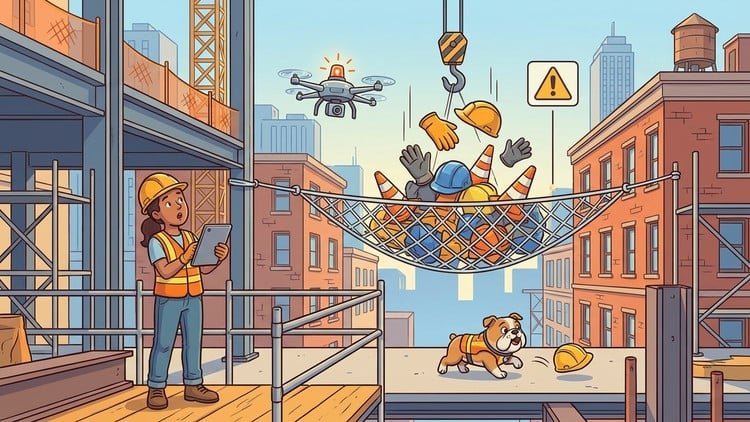
Exam-style test questions with clear answers to help you get ready for your NYC SST certification exams
What You Will Learn:
- Understand how the NYC SST program works, who needs a card, and how to earn and renew it.
- Spot and prevent the Focus Four hazards: falls, struck-by, electrocution, and caught-in.
- Answer exam-style questions on OSHA 1926 rules, fall protection, and NYC building codes.
- Learn what site safety plans, incident reporting, and supervisor duties require on NYC job sites.
- Build test-day confidence by practicing safe tool use, emergency plans, and violation scenarios.
An Insider’s Take on Navigating the 2026 NYC SST Landscape
If you have spent any time in the New York City tech or construction ecosystem, you know that bureaucracy is the one thing we build better than skyscrapers. I’ve seen plenty of certification prep courses in my time, from AWS to PMP, but the NYC Site Safety Training (SST) Practice Tests 2026 hits different because the stakes are physical. In NYC, a Stop Work Order is the ultimate “blue screen of death,” and these practice tests are designed to ensure you—and your crew—never see one. What I appreciate here is the lack of fluff. This isn’t just a generic safety quiz; it’s a localized, high-fidelity simulation of the specific regulatory hurdles the NYC Department of Buildings (DOB) throws at us. Whether you are a project manager or a field lead, this course treats the SST card as a vital asset in your professional stack rather than just another plastic card in your wallet.
The 2026 update is particularly sharp. It reflects the latest pivots in Local Law 196 and the evolving demands of the NYC Building Code. Let’s be honest: most safety manuals are about as exciting as a terms-of-service agreement. However, these practice tests function like real-world projects, forcing you to apply logic to Focus Four hazards rather than just memorizing dates. It bridges the gap between theoretical compliance and the grit of a 50-story job site. In my experience, if you can’t navigate these questions under pressure, you aren’t ready for the high-stakes environment of a Manhattan build.
Prerequisites for the Hustle
Before you dive into this certification prep, you need to have your basics in order. This isn’t exactly a “Day 1” course for someone who has never stepped onto a site. To get the most out of these tests, you should ideally have:
- A valid OSHA 30-Hour Construction or OSHA 10-Hour card, as this serves as the foundational “operating system” for safety.
- A basic understanding of NYC’s unique construction terminology—if you don’t know what a supported scaffold is vs. a suspended scaffold, you’ll struggle.
- A working knowledge of how site safety plans look on paper.
- A commitment to career growth; this is for people who want to be job-ready for supervisor or specialist roles in a city that demands perfection.
The Toolkit: Skills & Industry-Standard Tools
While this is a digital practice suite, it equips you with a mental toolkit that mirrors the industry-standard tools used by the most elite site safety managers. You aren’t just learning to pass a test; you are learning job-ready skills that keep people alive. You will master:
- Navigating Chapter 33: Think of the NYC Building Code as the source code for the city. These tests help you debug complex safety scenarios using industry-standard tools like site safety plans and incident reporting logs.
- Hazard Identification: You’ll move from beginner to advanced levels in spotting “Focus Four” issues—specifically electrocution and caught-in risks—before they lead to a violation.
- Violation Mitigation: Learning how to handle DOB inspectors and understanding the nuances of Site Safety Training requirements to avoid “unachievable” deadlines.
- Emergency Response: Practicing the logic of emergency action plans through hands-on labs (mental simulations) that prepare you for the chaos of a real site incident.
Career Benefits & Job Roles
Let’s talk money. In NYC, your career growth is directly tethered to your credentials. If you don’t have your SST, you are a liability, not an asset. Mastering these practice tests opens doors to high-paying roles such as:
- Site Safety Coordinator: A role that requires a deep understanding of the site safety plans you’ll study here.
- Construction Superintendent: Where supervisor duties and liability management are your daily bread and butter.
- Competent Person: Specifically for fall protection or scaffolding, where industry-standard tools meet high-level responsibility.
- Project Manager: For those who need to understand why their budget is being eaten up by safety compliance (and how to optimize it).
The Pros: Why This Works
- High-Fidelity Scenarios: The questions don’t feel like they were written by a robot; they feel like they were written by someone who has actually been screamed at on a job site. This is top-tier certification prep.
- Up-to-Date for 2026: NYC updates its rules faster than a smartphone OS. These tests include the most recent SST card renewal and earning requirements, so you aren’t studying obsolete 2022 data.
- Immediate Feedback Loop: The “clear answers” part of the caption isn’t an exaggeration. It explains why an answer is right, which is how you actually build job-ready skills.
- Confidence Builder: It eliminates the “exam-day jitters” by mirroring the actual testing environment you’ll face at a DOB-approved training provider.
The Cons: An Honest Critique
- Heavy on NYC Specifics: If you are looking for a general safety course for work in, say, Ohio, this is overkill. It is hyper-focused on the NYC building codes, which might feel a bit too niche if you aren’t planning on working within the five boroughs. I’d love to see more interactive video components to break up the text-heavy sections.