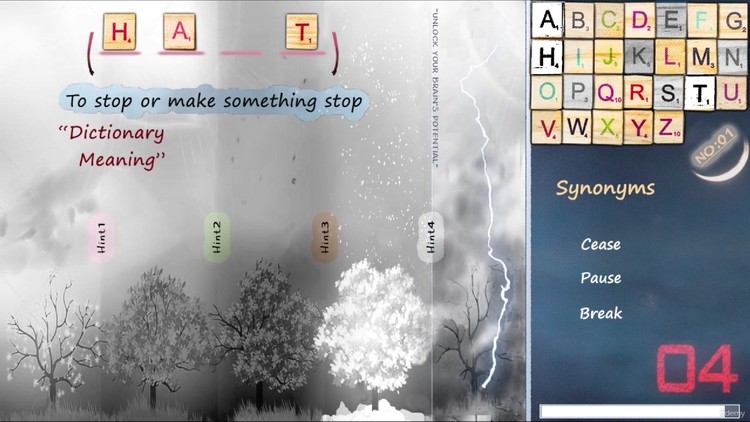
Can you guess in 60 seconds or do you need a tour worldwide?
What You Will Learn:
- Never forget these verbs forever
- Master English vocabulary
- Produce target word rapidly
- Catch up word accurately with visual memory
- You will learn 100 amazing advanced verbs
The Lowdown on ‘Guess me & Watch me/Advanced Verbs 1’
In the tech world, we often get caught up in the latest industry-standard tools, obsessing over whether we should be mastering Rust or deepening our cloud architecture knowledge. But here’s a reality check from someone who’s spent a decade in the trenches: your ability to ship code is only half the battle. If you can’t articulate your vision during a high-stakes sprint or influence stakeholders during a demo, you’re hitting a hard ceiling. This is why I dove into “Guess me & Watch me/Advanced Verbs 1.” It’s not your typical, dry academic lecture; it’s more like a high-intensity hands-on lab for your vocabulary.
Most language courses feel like legacy software—clunky, slow, and outdated. This course, however, operates on a “rapid deployment” model. The core philosophy is built around visual memory and rapid-fire recall. Instead of memorizing a list of words from a dusty PDF, you’re forced to engage with the material in a 60-second “guess or tour” format. It mimics the high-pressure environment of a live system failure where you need to pull the right solution out of your head instantly. I found the “worldwide tour” aspect particularly refreshing because it provides a global context, making the 100 advanced verbs feel less like abstract data points and more like job-ready skills you can use in a diverse, international workspace.
Prerequisites
You don’t need a Ph.D. in linguistics, but this isn’t a “Hello World” level course for total beginners. To get the most out of this, you should have a solid intermediate grasp of English. Think of it as certification prep for your communication skills. You need a functioning webcam (if you’re doing the interactive bits) and, more importantly, the mental bandwidth to handle fast-paced transitions. If you’re comfortable reading technical documentation but struggle to find the “punchy” verb to describe a system optimization in a meeting, you’re in the right place.
Skills & Tools
While the primary “tool” is your own brain, the course utilizes specific cognitive frameworks that feel very similar to real-world projects in tech. You’ll be developing:
- Rapid Word Production: The ability to bypass the “mental translation” lag and output the target word immediately.
- Visual Anchoring: Using spatial and visual cues to “cache” definitions in your long-term memory.
- Contextual Accuracy: Learning exactly where these advanced verbs fit so you don’t sound like an AI-generated thesaurus.
- Auditory Mapping: Catching nuances in pronunciation so you can identify these words in a noisy environment (like a crowded office or a glitchy Zoom call).
Career Benefits & Job Roles
For anyone eyeing career growth into leadership roles—like Senior Dev, Project Manager, or Solutions Architect—communication is your most valuable asset. This course prepares you for several specific scenarios:
- Lead Engineers: Use precise verbs to describe technical debt or system bottlenecks during hands-on labs or peer reviews.
- Product Managers: Negotiate features with clarity, moving from beginner to advanced levels of persuasion.
- Technical Sales: Pitching industry-standard tools requires a level of verbal sophistication that builds trust with C-suite executives.
- International Consultants: The “worldwide” perspective helps you navigate cross-cultural communication hurdles that often trip up less experienced pros.
Pros
- Gamified Pressure: The 60-second “guess me” mechanic is brilliant. It creates a “sink or swim” environment that forces job-ready skills to stick. It’s the closest thing to a “coding challenge” but for your speech.
- Zero Fluff: As a tech professional, I hate wasting time. This course delivers 100 high-impact verbs without the usual filler content found in traditional ESL modules.
- Visual Synergy: The way it leverages visual memory is actually backed by cognitive science. It helps you “see” the word in action, which is far more effective for long-term retention than rote memorization.
Cons
- Steep Learning Curve: The pace is aggressive. If you’re having an “off day” or you’re low on coffee, the rapid-fire format can feel a bit overwhelming. It doesn’t leave much room for slow-paced reflection, so you really have to be “on” to get the full value.