Mastering Techniques for Precision Manufacturing of Metal Components
What you will learn
The course covers various metal forming processes, such as rolling, forging, extrusion, wire and bar drawing, cutting, and bending.
Participants will be able to comprehend the advantages and disadvantages of each metal forming process and the types of products that can be manufactured.e
You’ll learn the pros and cons of each process and the types of products you can make, empowering you to make informed decisions for your projects.
In-depth coverage of the rolling process, including stages, analysis of flat rolling, side view of the process, and various types of rolling mills
he forging processes section covers open and impression die forging, flashless forging, differences between forging and machining processes and die terminology
In the extrusion process section, you’ll examine different types, advantages and disadvantages, analysis, and common defects.
Wire and bar drawing processes will be explored, including analysis and how different parts can be made using the process.
Sheet metalworking processes, including cutting and bending, will be covered, along with different types of processes, giving you a broad understanding.
The practical knowledge gained from this course is applicable to various industries, including manufacturing, engineering, and construction.
With this course, you’ll be able to make informed decisions on the most suitable processes for your products.
Description
The course on Metal Forming Processes-Bulk Deformation & Sheet Metalworking is of great importance as it is a critical area of study for students interested in pursuing careers in manufacturing, engineering, and materials science. Metal forming processes are used in various industries, including automotive, aerospace, construction, and more, making it an essential aspect of modern production processes.
By taking this course, students will gain a comprehensive understanding of the principles, theories, and applications of bulk deformation and sheet metalworking. They will learn about the different techniques used to shape metal and how to select appropriate materials for specific applications. This knowledge is crucial for designing, analyzing, and optimizing metal forming processes, which are essential for producing high-quality products at a lower cost.
In addition, this course will provide students with hands-on experience, including practical exercises and case studies. This hands-on experience will equip students with the skills needed to work effectively in real-world manufacturing environments. Overall, the course on Metal Forming Processes-Bulk Deformation & Sheet Metalworking is a valuable addition to any student’s curriculum and offers excellent career prospects in the manufacturing industry.
This course introduces students to the fundamental principles of metal forming, including bulk deformation and sheet metalworking. The course will cover a variety of metal forming processes, including rolling, forging, extrusion, wire and bar drawing, cutting, and bending. Students will learn about the advantages and disadvantages of each process, as well as the types of products that can be manufactured using them.
The course will begin with an in-depth look at the rolling process. Students will learn about the different stages involved in producing a product using the rolling process, as well as the analysis of flat rolling. They will also explore the side view of the rolling process and the various types of rolling mills.
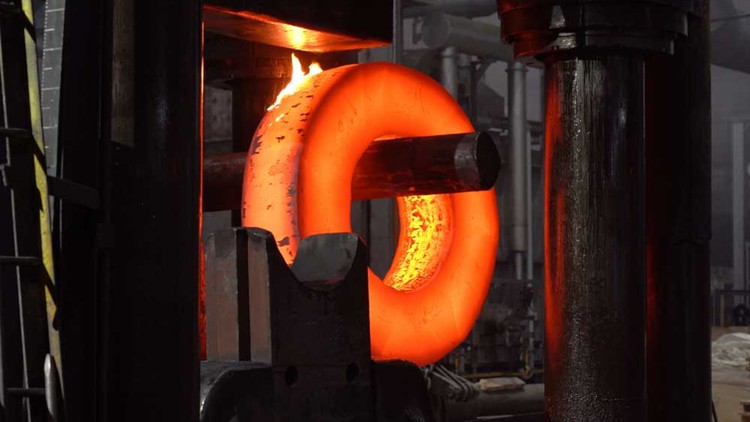
Next, the course will cover forging processes. Students will gain an understanding of the types of products that can be made using the forging process, including the analysis of open-die forging and impression-die forging. They will also examine the difference between forging and machining processes, the flashless forging process, and the terminologies associated with forging dies. The course will also cover forging equipment, including forging hammers and forging presses.
The extrusion process is another important metal-forming process that will be covered in the course. Students will learn about the advantages and disadvantages of extrusion, as well as the different types of extrusion processes, including direct extrusion, in-direct extrusion, hot extrusion, impact extrusion, and continuous extrusion. The course will also explore the analysis of the extrusion process, as well as common defects that can occur in extruded parts.
Wire and bar drawing is another metal-forming process that will be covered in the course. Students will learn about the analysis of the drawing process and how different parts can be made using this process.
The course will also cover sheet metalworking processes, including cutting and bending. Students will learn about the analysis of the cutting process, as well as other cutting operations such as cutoff and parting, slotting perforation and notching, and trimming shaving, and fine blanking. They will also gain an understanding of bending sheet metal and the types of bending processes, including V bending and edge bending.
Content
- Course Overview
- Delve into the foundational principles and advanced applications of metal forming, a cornerstone of modern manufacturing.
- Explore the transformation of raw metal into functional components through controlled plastic deformation.
- Understand the critical role of process selection in achieving desired material properties, dimensional accuracy, and surface finish.
- Gain insights into the interplay between material science, mechanical engineering, and manufacturing economics in metal forming.
- Analyze the fundamental mechanics governing bulk deformation and sheet metal operations, from microscopic grain structure changes to macroscopic component design.
- Develop an appreciation for the intricate design and operational considerations of specialized metal forming machinery.
- Investigate the environmental and sustainability aspects of metal forming processes, including energy efficiency and material waste reduction.
- Explore the integration of computer-aided design (CAD) and computer-aided manufacturing (CAM) with metal forming operations.
- Requirements / Prerequisites
- A foundational understanding of basic engineering principles, including mechanics of materials and strength of materials.
- Familiarity with introductory manufacturing processes is beneficial but not strictly required.
- Access to a computer with internet connectivity for online resources and potential simulations.
- Skills Covered / Tools Used
- Analytical Skills: Ability to analyze stress-strain relationships, material behavior under load, and process parameters.
- Problem-Solving: Identifying and rectifying issues related to material defects, tool wear, and dimensional inaccuracies.
- Process Selection: Judgement to choose the most appropriate forming method for specific applications and materials.
- Design Interpretation: Understanding engineering drawings and specifications to execute forming operations.
- Material Characterization: Recognizing how forming processes influence material properties like hardness, ductility, and strength.
- Software: Potential exposure to simulation software for process modeling and optimization (specific software may vary).
- Benefits / Outcomes
- Enhanced Manufacturing Competence: Equip yourself with the knowledge to design, select, and optimize metal forming operations for diverse industries.
- Improved Product Quality: Achieve superior dimensional precision, surface finish, and mechanical integrity in manufactured metal parts.
- Cost Optimization: Make informed decisions that reduce material waste, energy consumption, and tooling costs.
- Career Advancement: Gain a competitive edge in roles related to manufacturing engineering, product design, and production management.
- Innovation Potential: Foster the ability to develop novel forming techniques or adapt existing ones for new applications.
- Comprehensive Understanding: Develop a holistic view of how metal forming contributes to the creation of everyday products and complex industrial equipment.
- PROS
- Provides a robust theoretical and practical foundation for a critical manufacturing discipline.
- Offers a broad overview of various forming techniques, facilitating informed decision-making.
- Highlights the practical implications of process selection on product performance and cost-effectiveness.
- CONS
- Requires a solid grasp of underlying engineering principles for full comprehension.