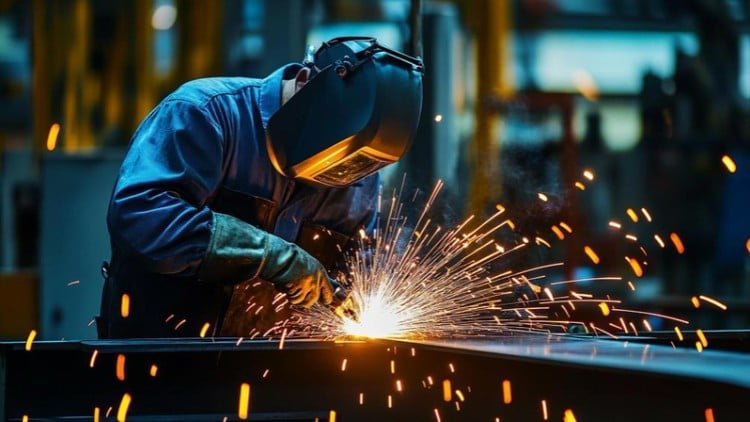
Learn hot work hazards, fire prevention, permit-to-work systems, PPE, Fire Watch responsibilities and emergency response
What You Will Learn:
- Understand hot work activities, fire hazards, ignition sources, and the Fire Triangle in workplace environments.
- Identify combustible materials, flammable vapours, gas cylinder hazards, and hidden fire risks during hot work operations.
- Understand hot work permit systems, risk assessments, workplace preparation, and essential fire prevention controls.
- Recognise appropriate PPE requirements and explain the responsibilities of Fire Watch personnel.
- Apply safe work practices to reduce fire risks during welding, cutting, grinding, and other hot work activities.
- Recognise fire emergencies, understand evacuation procedures, and identify appropriate emergency response actions.
- Show more
Overview: More Than Just Not Starting a Fire
I’ve spent over a decade in technical environments, ranging from high-density data centers to heavy industrial manufacturing plants. If there is one thing I have learned, it is that a single spark in the wrong place can derail a multi-million dollar infrastructure project faster than any software bug ever could. This Hot Work Fire Safety Training isn’t your typical “tick-the-box” corporate compliance slog. It’s a deep dive into the high-stakes reality of working with heat, sparks, and flame in environments that are often less safe than they look.
What I appreciated most about this curriculum is that it moves beyond the obvious. We all know welding is hot. What most people don’t grasp is the “invisible” danger—the flammable vapors lingering in a poorly ventilated corner or the way heat conducts through a steel beam to ignite combustible materials in the next room over. This course forces you to look at the Fire Triangle not as a theoretical diagram from a textbook, but as a live, volatile equation you are responsible for balancing every time you pick up a torch or a grinder. It’s about building a mental framework for industrial fire prevention that stays with you long after the video ends.
The training treats hot work as a holistic system. It’s not just about the person doing the cutting; it’s about the Permit-to-Work ecosystem, the communication between the operator and the Fire Watch, and the rigorous workplace preparation required before a tool even touches a surface. For anyone looking to gain job-ready skills in modern construction or facility management, this is the blueprint for staying employed and keeping your team alive.
Prerequisites
One of the best things about this program is its accessibility. It is designed for everyone from beginner to advanced levels. You don’t need a degree in fire science or a decade of welding experience to get started. However, a basic understanding of industrial environments and a healthy respect for power tools definitely helps. If you are already working toward a professional certification in safety or trade-related fields, you will find this content integrates seamlessly with what you are already learning on the ground.
Skills & Tools
This isn’t just theory; it’s about mastering industry-standard tools and protocols that are used by top-tier firms globally. You will walk away with a toolkit of skills that include:
- Risk Assessment & Hazard Identification: Learning how to spot “hidden” risks like thermal bridging and dust accumulation.
- Permit-to-Work Systems: Navigating the administrative but essential safety compliance documents that authorize high-risk activities.
- Atmospheric Testing: Understanding when and how to check for flammable vapors or oxygen-enriched environments.
- PPE Selection: Going beyond the basics to choose the right gear for specific real-world projects, from leather spats to specialized respiratory protection.
- Emergency Response: Developing the muscle memory needed to react to a fire emergency without panicking, including the proper use of different fire extinguisher types.
Career Benefits & Job Roles
Let’s talk numbers and career growth. In the current market, safety-conscious professionals are in high demand. Companies are tired of paying massive insurance premiums and facing OSHA fines. By completing this certification prep, you’re essentially labeling yourself as a “low-risk, high-value” asset. Whether you’re a Site Safety Officer, a Maintenance Technician, or a Project Manager, having this on your resume is a major differentiator.
Common job roles that benefit from this training include:
- HSE (Health, Safety, and Environment) Coordinator: Overseeing site-wide safety protocols.
- Welding & Fabrication Specialist: Ensuring your technical craft meets industry-standard tools and safety benchmarks.
- Facility Manager: Protecting the physical assets of a corporation from preventable disasters.
- Construction Site Supervisor: Managing sub-contractors and ensuring high-risk environments are handled correctly.
Pros
- Practical Over Theoretical: The course uses real-world projects and scenarios that mirror what actually happens on a job site, not just sanitized laboratory examples.
- Fire Watch Clarity: It provides the best breakdown of Fire Watch responsibilities I’ve seen, emphasizing that this role is a critical safety pillar, not just a “stand-around” job.
- Holistic Approach: It covers everything from gas cylinder hazards to the final post-work inspection, leaving no gaps in the safety timeline.
- Career Velocity: This is pure skill-up material that provides immediate job-ready skills you can use on day one to impress a foreman or safety director.
Cons
If I have one honest gripe, it’s that I would have liked to see more hands-on labs or interactive VR simulations. While the video content and assessments are top-notch, hot work is a tactile profession. If you’re taking this online, you’ll need to make sure you pair this knowledge with some actual time on the shop floor under a mentor to truly feel the “heat” of the lessons being taught.