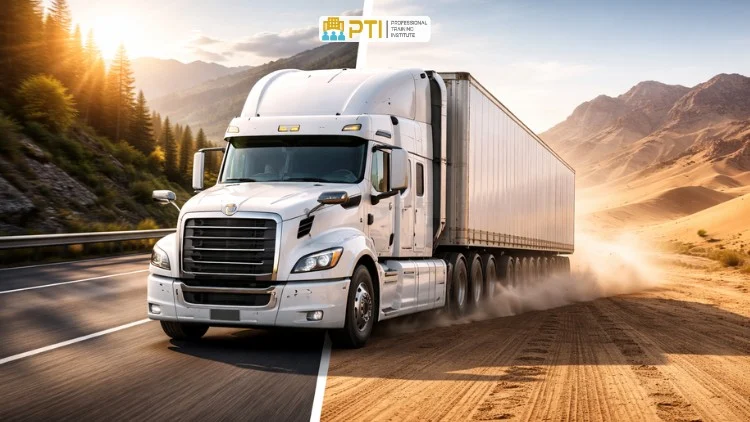
Professional Certification Course for Safe Heavy Vehicle Operation on Blacktop and Graded Desert Roads For all Employees
⏱️ Length: 6.4 total hours
👥 22 students
Add-On Information:
Note➛ Make sure your 𝐔𝐝𝐞𝐦𝐲 cart has only this course you're going to enroll it now, Remove all other courses from the 𝐔𝐝𝐞𝐦𝐲 cart before Enrolling!
- Course Overview
- Advanced Terrain Transition Mastery: This specialized program focuses on the cognitive and physical shift required when transitioning heavy haulage units from high-traction asphalt surfaces to unpredictable, low-friction graded desert tracks, ensuring seamless operational continuity.
- Psychological Resilience in Isolation: We delve into the mental preparation necessary for operators who spend significant hours in remote desert environments, focusing on situational awareness, fatigue mitigation strategies, and the psychology of solo long-haul decision-making.
- Environmental Stewardship and Eco-Driving: The curriculum emphasizes the reduction of the industrial carbon footprint by teaching techniques that minimize soil disturbance in sensitive arid ecosystems while optimizing fuel consumption through momentum management.
- Strategic Risk Architecture: Participants will explore a proactive framework for identifying logistical hazards before they manifest, moving beyond basic reactive driving to a state of predictive threat assessment tailored for high-stakes industrial corridors.
- Holistic Fleet Integration: This course bridges the gap between individual driving skill and corporate logistical efficiency, demonstrating how professional vehicle handling directly impacts the broader supply chain and organizational bottom line.
- Requirements / Prerequisites
- Documented Licensure Status: All candidates must present a valid, government-issued heavy vehicle operator’s permit that corresponds to the specific gross vehicle weight (GVW) categories relevant to their professional role.
- Biometric and Physical Readiness: Due to the high-temperature environments and the physical demands of desert vehicle recovery, students should possess a level of physical fitness suitable for manual tasks such as tire management and equipment deployment.
- Technical Literacy: A baseline understanding of mechanical terminology and the ability to interpret technical manuals or digital dashboard readouts is essential for navigating the advanced diagnostics covered in the session.
- Mandatory Safety Gear: Participants are required to bring industry-standard Personal Protective Equipment (PPE), including high-visibility vests, reinforced footwear, and climate-appropriate headwear for the practical outdoor components.
- Language Proficiency: A functional command of the instructional language is necessary to ensure that emergency communication protocols and technical safety briefings are fully understood and can be executed under pressure.
- Skills Covered / Tools Used
- Telematics and Fleet Analytics Integration: Mastery of on-board electronic logging devices and telematics software to monitor real-time vehicle health, driving behavior patterns, and geofencing parameters for desert navigation.
- Thermal Thermodynamics Management: Specialized techniques for monitoring and managing tire heat buildup and engine cooling systems when operating under the extreme thermal stress characteristic of blacktop highways in arid regions.
- Kinetic Recovery and Self-Extrication: Hands-on training with kinetic recovery ropes, heavy-duty sand ladders, and hydraulic jacking systems specifically designed for unsticking multi-ton vehicles from soft sand or silt.
- Satellite-Aided Topography Analysis: Utilization of GPS and GIS mapping tools to interpret terrain contours and identify safe passage through non-demarcated desert routes where traditional road signs are non-existent.
- Predictive Braking and Kinetic Energy Control: Advanced application of engine braking and retarder systems to manage the massive kinetic energy of loaded trailers on undulating desert grades and high-speed highway interchanges.
- On-Board Diagnostic (OBD) Troubleshooting: Practical use of handheld diagnostic scanners to identify electronic sensor failures or mechanical irregularities in the field, reducing the need for costly remote recovery services.
- Benefits / Outcomes
- Substantial Maintenance Cost Mitigation: Graduates will demonstrate “soft-footprint” driving habits that significantly reduce wear on tires, braking components, and suspension systems, leading to lower total cost of ownership for the fleet.
- Enhanced Corporate Insurance Profile: Completing this professional certification often qualifies organizations for reduced insurance premiums by proving a commitment to high-level risk management and driver competency.
- Professional Career Accreditation: Employees receive a recognized certification that validates their expertise in dual-terrain heavy vehicle operation, enhancing their professional standing and internal promotion opportunities.
- Operational Continuity and Reliability: By reducing the frequency of accidents and mechanical breakdowns in remote areas, the course ensures that critical deliveries and industrial projects stay on schedule.
- Emergency Response Autonomy: Drivers gain the confidence to handle minor mechanical failures and terrain-based obstacles independently, reducing the reliance on external support teams in hazardous environments.
- PROS
- Expert-Led Field Simulations: The course provides high-fidelity practical sessions that mirror real-world desert emergencies, offering a safe environment to master high-risk maneuvers.
- Tailored Industrial Relevance: Unlike generic driving courses, this curriculum is specifically engineered for the unique challenges of the oil, gas, and construction logistics sectors.
- Small Group Learning Dynamics: With a limit of 22 students, the program ensures personalized feedback from instructors and ample hands-on time with specialized recovery tools.
- CONS
- High Cognitive Intensity: The condensed 6.4-hour timeframe requires a high level of concentration and may necessitate supplementary follow-up materials for full retention of complex technical data.
Learning Tracks: English,Teaching & Academics,Teacher Training
Found It Free? Share It Fast!