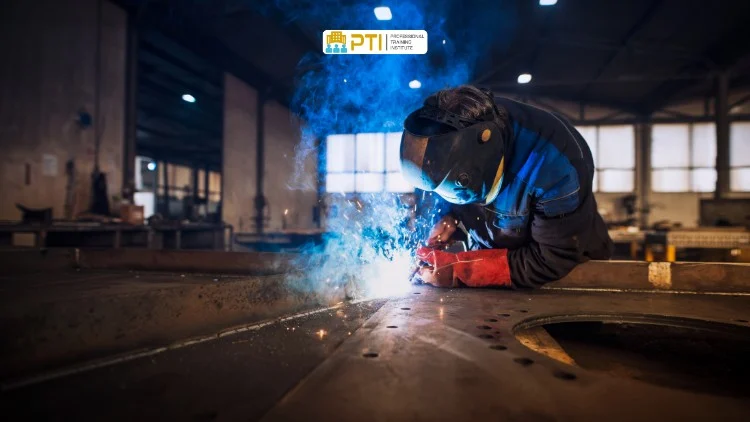
Master Welding Engineering: Processes, Metallurgy, Codes, Inspection & Advanced Manufacturing Techniques
⏱️ Length: 5.5 total hours
👥 31 students
🔄 May 2026 update
Add-On Information:
Note➛ Make sure your 𝐔𝐝𝐞𝐦𝐲 cart has only this course you're going to enroll it now, Remove all other courses from the 𝐔𝐝𝐞𝐦𝐲 cart before Enrolling!
- Course Overview
- The Engineering Aspects of Welding Fundamentals program is a comprehensive deep dive into the scientific principles and industrial applications that govern the joining of materials. Unlike standard vocational training, this course focuses on the physics of the arc, the thermodynamics of heat transfer, and the fluid dynamics of the weld pool. Students will investigate the thermal cycles associated with various joining methods and how these cycles dictate the final mechanical properties of a structure.
- The curriculum explores the microstructural evolution of metals, specifically focusing on the grain growth in the heat-affected zone (HAZ) and the formation of crystalline structures during solidification. By analyzing the cooling rates and their impact on hardness and ductility, learners gain a scientific perspective on why certain alloys behave differently under thermal stress.
- A significant portion of the course is dedicated to structural integrity and the mechanics of materials. This includes an examination of residual stress distributions and the implementation of mitigation strategies such as vibration stress relief or thermal aging. The course also bridges the gap between theoretical engineering and project management, providing insights into production scheduling, consumable procurement, and the economics of high-volume manufacturing.
- Lastly, the course addresses the environmental and sustainability aspects of modern welding engineering. This involves evaluating the carbon footprint of different processes, the recyclability of consumables, and the implementation of energy-efficient power sources to reduce industrial waste and overhead costs.
- Requirements / Prerequisites
- Prospective students should possess a foundational understanding of physics, particularly in the areas of electricity, magnetism, and heat transfer, to grasp the complexities of arc stability and energy density.
- A basic grasp of chemistry and stoichiometry is highly beneficial, as it aids in understanding gas-metal reactions, flux compositions, and the oxidation-reduction processes occurring within the weld zone.
- Familiarity with introductory calculus and trigonometry is recommended for performing calculations related to joint geometry, stress analysis, and thermal gradient modeling.
- Learners should have a preliminary knowledge of engineering graphics or technical drawing, enabling them to visualize three-dimensional assemblies and interpret complex fabrication blueprints.
- Access to a computer with simulation software capabilities is encouraged, as certain modules may involve modeling thermal distribution or mechanical load testing.
- Skills Covered / Tools Used
- Thermal Profile Modeling: Mastery of calculating peak temperatures and cooling times (t8/5) to predict the phase transformations in high-strength steels.
- Carbon Equivalence (CE) Analysis: Utilizing mathematical formulas to determine the weldability of carbon steels and assessing the necessity for pre-heat or post-weld heat treatment (PWHT).
- Power Source Characterization: Understanding the difference between constant current (CC) and constant voltage (CV) power supplies and their specific roles in stabilizing different arc types.
- Advanced Metrology Tools: Using laser scanners, digital pyrometers, and ultrasonic thickness gauges to ensure dimensional accuracy and material consistency.
- Consumable Selection Logic: Developing a technical framework for choosing filler metals based on dilution ratios, alloying elements, and mechanical compatibility with the base metal.
- Finite Element Analysis (FEA) Basics: Applying simplified FEA concepts to predict how thermal expansion will impact the structural alignment of complex assemblies.
- Cost Estimation Spreadsheets: Creating detailed models to calculate deposition rates, duty cycles, and the total cost of weld per foot, including gas and labor variables.
- Benefits / Outcomes
- Participants will achieve a high-level technical competency that allows them to transition from manual operations to engineering-led oversight, making them invaluable assets in heavy industry.
- The course empowers learners to troubleshoot systemic failures in production lines by identifying root causes related to metallurgy or electrical fluctuations rather than just surface-level symptoms.
- Graduates will be prepared to lead quality assurance (QA) teams, providing the technical justification for procedural changes and ensuring that all fabrication meets rigorous global safety standards.
- Successful completion provides a competitive advantage in sectors such as aerospace, nuclear energy, and subsea construction, where the margin for error is non-existent and technical expertise is highly compensated.
- The program fosters a precision-oriented mindset, enabling students to optimize manufacturing workflows, significantly reduce scrap rates, and improve the overall lifespan of welded components.
- PROS
- Comprehensive Scientific Depth: The course moves beyond “how-to” and explains the “why” behind every engineering decision, providing a robust theoretical foundation.
- Industry-Neutral Application: The principles taught are applicable across multiple sectors, from automotive assembly to large-scale infrastructure projects.
- Up-to-Date Content: Includes the latest trends in digitalization and Industry 4.0, ensuring students are prepared for the future of smart manufacturing.
- Logical Progression: The module structure builds complexity incrementally, making it accessible for those moving from trade roles into engineering positions.
- CONS
- Heavy Theoretical Workload: The intense focus on mathematical modeling and metallurgical theory may prove challenging for students who prefer hands-on practice over conceptual analysis.
Learning Tracks: English,Teaching & Academics,Engineering
Found It Free? Share It Fast!