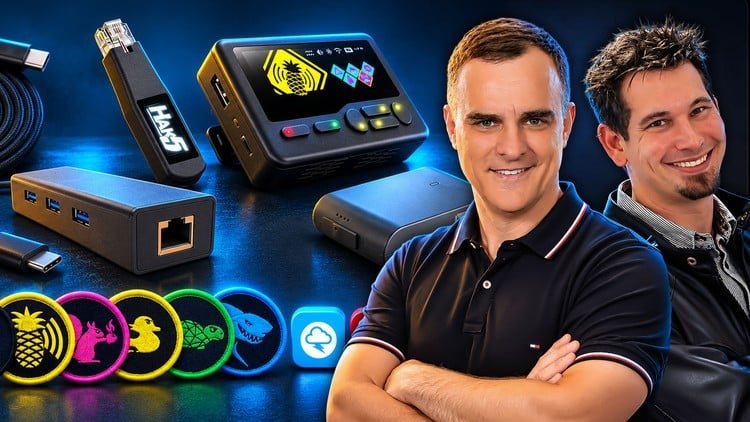
Hacking Gadgets Every Cybersecurity Pro Should Know
What You Will Learn:
- Learn about the various Hak5 Ethical hacking devices from the creator himself
- Learn about Rubber Ducky, WiFi Pineapple and other hacking tools used in the real world
- Learn about the hacking tools seen in movies and TV shows like Mr Robot, Bourne Identity and more
- Learn to differentiate between the different Hak5 tools so you know which to purchase
Ethical Hacking Devices from Hak5 That You Should Know About: A Pragmatist’s Review
Alright, let’s talk Hak5. As someone who’s been in the trenches of cybersecurity for a while, I’ve seen trends come and go, and the allure of specialized hardware for ethical hacking is definitely a persistent one. This course, “Ethical Hacking Devices from Hak5 that you should know about,” promises to demystify the popular lineup from Hak5, positioning it as essential knowledge for any aspiring or seasoned cybersecurity professional. The fact that it’s taught by the creator himself adds a certain undeniable authenticity, and I was keen to see if it lived up to the hype.
Overview
Forget the sensationalism you see on TV. This course cuts through the Hollywood gloss and dives straight into the practical applications of Hak5’s arsenal of devices. We’re talking about the tools that form the backbone of many penetration testing engagements, not just the flashy gadgets you might spot in a spy thriller. It’s a focused look at hardware that can significantly accelerate reconnaissance, exploit development, and post-exploitation phases. The emphasis is on understanding the “why” behind each device and its specific use cases, which is crucial when you’re not just playing around but actually trying to secure systems.
Prerequisites
This isn’t a “learn to code by building a toaster” kind of course. To get the most out of this, you’ll want a foundational understanding of networking concepts – TCP/IP, subnetting, Wi-Fi protocols are all fair game here. Some familiarity with command-line interfaces (CLI) is also highly recommended, as many of these devices rely heavily on them for configuration and operation. If you’re a complete beginner to IT, you might find yourself a bit lost, but for anyone eyeing a career in cybersecurity, this level of prerequisite knowledge is generally expected as part of their certification prep or early foundational learning.
Skills & Tools
The star of the show, of course, is the Hak5 ecosystem. You’ll get an intimate look at the legendary Rubber Ducky, a USB device that masquerades as a keyboard to execute pre-programmed commands. Then there’s the ubiquitous WiFi Pineapple, a powerful Wi-Fi auditing and man-in-the-middle tool that’s a staple in any ethical hacker’s toolkit. The course also touches upon other devices, highlighting their unique functionalities and how they integrate into broader attack or defense scenarios. What I appreciated was the distinction between them – knowing which tool to deploy for which task is the hallmark of a skilled professional. The course aims to equip you with this discernment, moving beyond just identifying the devices to understanding their tactical value. It’s about building job-ready skills that translate directly to real-world projects.
Career Benefits & Job Roles
Let’s be blunt: knowing your way around industry-standard tools like these can significantly boost your resume. For aspiring penetration testers, security analysts, or even network engineers looking to strengthen their defensive posture, this knowledge is invaluable. It demonstrates a hands-on aptitude that many employers actively seek. This course can be a stepping stone to more advanced certifications and provides the practical experience that complements theoretical knowledge. Think about it: having tangible experience with devices often seen in certification prep labs and real-world penetration tests positions you far ahead of the curve. It’s about demonstrating proficiency and a commitment to continuous learning, essential for career growth in cybersecurity.
Pros
- Creator-Led Authenticity: Learning directly from the source provides unparalleled insight into the design philosophy and intended use of these tools.
- Practical Focus: The course emphasizes real-world applications, moving beyond theoretical concepts to actionable knowledge.
- Tool Differentiation: Crucially, it helps you understand which tool is best suited for which scenario, preventing costly and ineffective purchases.
- Industry Relevance: These are not niche gadgets; they are widely recognized and utilized industry-standard tools in penetration testing.
Cons
My one honest critique is that while the course teaches you *about* the devices and their capabilities, the extent of actual, in-depth, hands-on lab work might be limited. You’ll understand the principles and applications, but to truly master these tools, you’ll still need to invest significant time in your own hands-on labs and practice. The course provides the roadmap, but the journey of mastery still requires your personal dedication to experimentation and application.