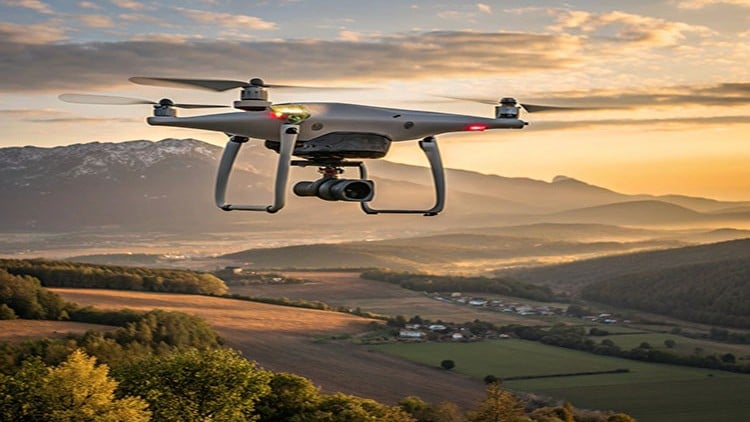
A Practical Introduction to Drones, Aerial Photography, and Smart Flight Control
What you will learn
Introduction to Drones
types and component of drones
Flight Physics and Stability
Remote Control Systems & Flight Controllers
– Drone Safety & Airspace Rules
Battery Management & Drone Maintenance
Overview: Beyond the “Toy” Mentality
Look, I’ve seen plenty of tech enthusiasts dive into the drone world headfirst, only to watch their expensive investment turn into a heap of plastic and carbon fiber within twenty minutes of unboxing. Most people approach drones as toys, but the Drone Hobby for Absolute Beginners course shifts that perspective immediately. Having spent years in the tech sector, I appreciate that this isn’t just a “how-to-fly” guide; it’s a foundational deep dive that treats UAVs as the sophisticated pieces of aerospace engineering they actually are.
What I found refreshing about this curriculum is that it doesn’t hold your hand in a condescending way. Instead, it bridges the gap from beginner to advanced concepts by explaining the “why” behind the hardware. You aren’t just memorizing button layouts; you’re learning how flight controllers translate digital signals into physical movement. This course takes the anxiety out of that first flight by replacing guesswork with technical competence. It transitions smoothly from the excitement of unboxing to the gravity of airspace regulations, ensuring you don’t end up on the wrong side of a federal fine. It’s an honest, ground-up approach that treats the hobby as a gateway to a serious technical discipline.
Prerequisites: What Do You Actually Need?
The beauty of this course is that the barrier to entry is surprisingly low, though I’d argue you need a specific mindset more than a specific piece of gear. You don’t need a $2,000 Cine-drone on day one. In fact, I’d recommend not buying high-end hardware until you’ve cleared the first few modules. Here is what you should bring to the table:
- A Capable Computer: You’ll need something that can run basic flight simulators and industry-standard tools for firmware updates.
- Basic Spatial Awareness: If you can navigate a 3D environment in a video game, you’re halfway there.
- Patience for Troubleshooting: Drones involve a lot of battery management and software calibration; you need a “tinkerer” mentality.
- A Clear Open Space: Eventually, you’ll need a legal place to practice, but for the theory portion, a desk and an internet connection are your primary tools.
Skills & Tools: Mastering the Tech Stack
This course goes far beyond the remote control. You’re introduced to the ecosystem of UAV technology that professionals use daily. While many hobbyists struggle with basic connectivity, you’ll be diving into hands-on labs that cover everything from ESC (Electronic Speed Controller) calibration to understanding telemetry data. You get a front-row seat to how autonomous navigation works, which is a massive leap from the standard “manual” flying most beginners settle for.
I was particularly impressed by the focus on real-world projects. You aren’t just flying in circles; you’re learning how to plan a flight path and manage LiPo battery cycles—skills that are critical if you ever want to move into aerial photography or industrial inspection. You’ll become familiar with GCS (Ground Control Station) software, which is a staple in the professional drone world.
Career Benefits & Job Roles: Turning a Hobby into a Paycheck
Let’s be real: the “hobbyist” label is just a starting point. The career growth potential in the UAV sector is exploding. By mastering the job-ready skills taught here, you are essentially laying the groundwork for certification prep (like the FAA Part 107 in the US). Companies are screaming for people who understand UAV propulsion systems and path planning for roles that didn’t exist ten years ago.
Completing this course puts you on a trajectory for several high-paying roles, including:
- Drone Surveying Technician: Using autonomous navigation to map construction sites or agricultural land.
- UAV Maintenance Engineer: Applying your knowledge of flight controllers and electronics to repair and optimize commercial fleets.
- Aerial Cinematographer: Transitioning from basic flight to high-end real-world projects for film and real estate.
- Precision Agriculture Specialist: Managing UAV technology to monitor crop health and irrigation.
Pros: Why This Course Stands Out
- Technical Depth: It doesn’t shy away from the UAV engineering side. Understanding aerodynamics makes you a much more reactive and safe pilot.
- Safety First: The emphasis on drone safety and legal compliance is top-notch. It protects your investment and your reputation.
- Scalability: The curriculum moves seamlessly from beginner to advanced, making it a “one-stop-shop” for your first year in the hobby.
Cons: The Honest Truth
If there’s one downside, it’s that the UAV propulsion and aerodynamics sections can feel a bit “math-heavy” for someone who just wants to take pretty pictures of their backyard. It requires a genuine interest in the engineering side of things to stay engaged during the more theoretical modules. If you’re looking for a quick “10-minute hack” video, this isn’t it—this is a serious deep dive.