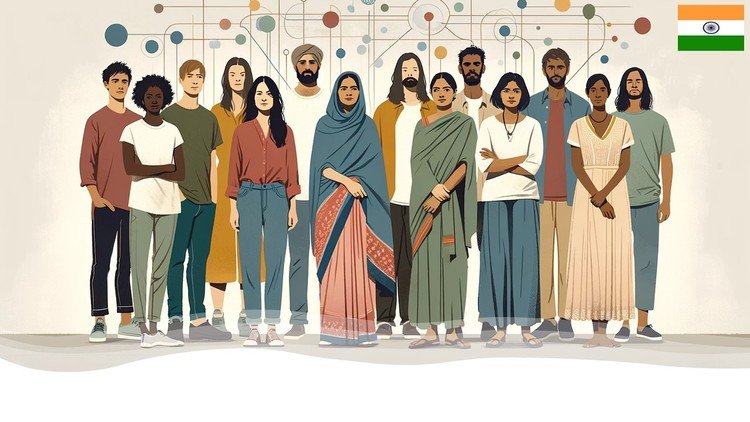
Diversity and Inclusion in the Workplace in हिंदी: Practical Approaches, Managing Unconscious Biases and Best Practices
What You Will Learn:
- Discover the key concepts and importance of workplace diversity and inclusion
- Develop strategies to address and reduce unconscious biases
- Address and overcome common challenges associated with diversifying the workplace environment.
- Implement actionable strategies to increase diversity and inclusion in workplace practices
- Participate in interactive exercises to identify both conscious and unconscious influences that influence daily interactions and decision making.
- Show more
Overview: Why This Course Actually Matters for the Modern Tech Professional
Look, I’ve spent over a decade navigating the cubicles and Slack channels of various tech giants, and if there’s one thing I’ve learned, it’s that your hard skills will get you through the door, but your emotional intelligence and ability to lead diverse teams will keep you in the room. I recently sat through the ‘Diversity, Inclusion & Unconscious Bias in Hindi (हिंदी)’ course, and honestly, it’s a breath of fresh air in an industry that usually treats “soft skills” like an afterthought.
Usually, these modules feel like corporate “check-the-box” exercises imported directly from a US-centric HR handbook. This one feels different. Because it’s delivered in Hindi, it strips away the layers of jargon that often distance Indian professionals from the core message. It speaks to the nuances of our specific work culture—the subtle hierarchies, the regional biases, and the communication gaps that we often ignore. This isn’t just about being “politically correct”; it’s about building job-ready skills for global leadership. When you understand how unconscious bias stalls a sprint or ruins a real-world project, you start looking at team dynamics through a much sharper lens.
Prerequisites: What You Need Before You Start
The beauty of this program is that it doesn’t require a background in HR or psychology. It’s designed for anyone from a fresh junior developer to a seasoned project manager.
- A foundational understanding of workplace professional etiquette.
- An open mind to challenge your own preconceived notions (this is the hardest part).
- Fluency in Hindi, as the course leans heavily into the linguistic nuances of inclusion.
- Basic familiarity with corporate structures and team-based environments.
Skills & Tools: Mastering the Human Element
While we’re used to industry-standard tools like Jira or GitHub, this course treats “inclusion” as a tool itself. You aren’t just learning theories; you’re engaging in what I’d call hands-on labs for the human brain.
- Unconscious Bias Mitigation: Learning to spot the “affinity bias” that leads us to hire people exactly like ourselves.
- Inclusive Leadership: Techniques to ensure every voice is heard during agile ceremonies and brainstorming sessions.
- Conflict Resolution: Navigating the friction that naturally arises when diverse viewpoints clash.
- Strategic Implementation: Moving beyond talk and actually baking inclusion into standard operating procedures (SOPs).
- Self-Assessment Frameworks: Using interactive exercises to benchmark your own progress from beginner to advanced levels of cultural competency.
Career Benefits & Job Roles: Leveling Up Your Trajectory
If you think this is just for HR professionals, you’re missing the bigger picture of career growth. In today’s market, tech leads and engineering managers are expected to manage global, distributed teams. Being certified in D&I (this serves as excellent certification prep for broader management credentials) makes you a high-value asset.
- Engineering Managers: Essential for building high-performing, psychologically safe teams.
- HR & People Ops: Provides the framework to design better recruitment and retention policies.
- Product Managers: Helps in building inclusive products that cater to a diverse user base, avoiding “bias in AI” or exclusionary UX designs.
- Freelance Consultants: D&I is a booming niche; this course provides the hands-on experience needed to advise startups.
The Pros: What Really Works
- Cultural Contextualization: By using Hindi, the course bypasses the “lost in translation” feeling of Western D&I training. It feels relevant to the Indian corporate landscape.
- Actionable Frameworks: It’s not all high-level philosophy. The real-world projects and scenarios help you understand exactly what to say when you spot bias in a meeting.
- Interactive Methodology: The exercises aren’t boring. They force you to engage with your own unconscious influences, which is a key step for anyone eyeing a senior leadership role.
- Accessibility: It bridges the gap for professionals who are more comfortable learning complex social dynamics in their native language, making the training more effective and “sticky.”
The Cons: An Honest Critique
The only real drawback is that the course can occasionally feel a bit “generalist” when it comes to the legalities. While it nails the behavioral side, I would have liked to see more deep dives into the specific legal frameworks of Indian labor laws regarding workplace discrimination. It covers the “how” and “why” beautifully, but a bit more “law” would make it a complete 360-degree package.