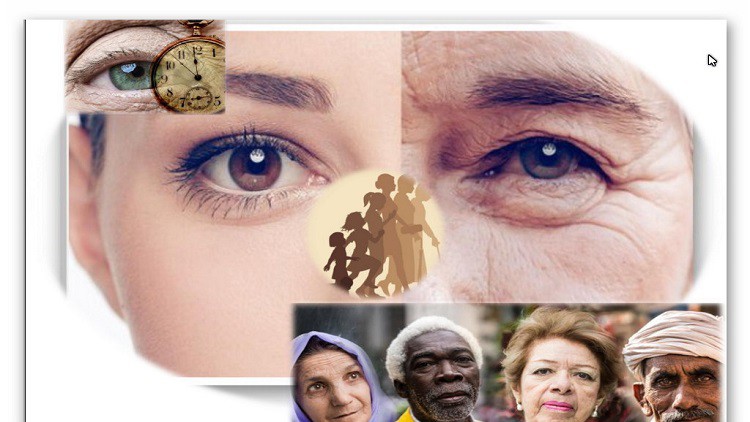
Geriatric medicine
What you will learn
Cellular Aging and Genomic Instability
Mitochondrial Dysfunction and Telomere Attrition
Epigenetic Alterations and Loss of Proteostasis
Cellular Senescence and Stem Cell Exhaustion
Anomalies of the Aging Brain: Dementia (Alzheimer’s Disease)
Pathology of Alzheimer’s Disease
Geriatric medicine introduction
prescribing for older people
Delirium
Fall
Vertigo
syncope
stroke
incontinence
Description
Aging is a gradual, continuous process of natural change that begins in early adulthood. During early middle age, many bodily functions begin to gradually decline.
People do not become old or elderly at any specific age. Traditionally, age 65 has been designated as the beginning of old age. But the reason was based in history, not biology. Many years ago, age 65 was chosen as the age for retirement in Germany, the first nation to establish a retirement program. In 1965 in the United States, age 65 was designated as the eligibility age for Medicare insurance. This age is close to the actual retirement age of most people in economically advanced societies.
When a person becomes old can be answered in different ways:
- Chronologic age is based solely on the passage of time. It is a person’s age in years. Chronologic age has limited significance in terms of health. Nonetheless, the likelihood of developing a health problem increases as people age, and it is health problems, rather than normal aging, that are the primary cause of functional loss during old age. Because chronologic age helps predict many health problems, it has some legal and financial uses.
- Biologic age refers to changes in the body that commonly occur as people age. Because these changes affect some people sooner than others, some people are biologically old at 65, and others not until a decade or more later. However, most noticeable differences in apparent age among people of similar chronologic age are caused by lifestyle, habit, and subtle effects of disease rather than by differences in actual aging.
- Psychologic age is based on how people act and feel. For example, an 80-year-old who works, plans, looks forward to future events, and participates in many activities is considered psychologically younger.
Most healthy and active people do not need the expertise of a geriatrician (a doctor who specializes in the care of older people) until they are 70, 75, or even 80 years old. However, some people need to see a geriatrician at a younger chronologic age because of their medical conditions.
Normal aging
People often wonder whether what they are experiencing as they age is normal or abnormal. Although people age somewhat differently, some changes result from internal processes, that is, from aging itself. Thus, such changes, although undesired, are considered normal and are sometimes called “pure aging.” These changes occur in everyone who lives long enough, and that universality is part of the definition of pure aging. The changes are to be expected and are generally unavoidable. For example, as people age, the lens of the eye thickens, stiffens, and becomes less able to focus on close objects, such as reading materials (a disorder called presbyopia). This change occurs in virtually all older people. Thus, presbyopia is considered normal aging. Other terms used to describe these changes are “usual aging” and “senescence.”
exactly what constitutes normal aging is not always clear. Changes that occur with normal aging make people more likely to develop certain disorders. However, people can sometimes take actions to compensate for these changes. For example, older people are more likely to lose teeth. But seeing a dentist regularly, eating fewer sweets, and brushing and flossing regularly may reduce the chances of tooth loss. Thus, tooth loss, although common with aging, is an avoidable part of aging.
Also, functional decline that is part of aging sometimes seems similar to functional decline that is part of a disorder. For example, with advanced age, a mild decline in mental function is nearly universal and is considered normal aging. This decline includes increased difficulty learning new things such as languages, decreased attention span, and increased forgetfulness. In contrast, the decline that occurs in dementia is much more severe. For example, people who are aging normally may misplace things or forget details, but people who have dementia forget entire events. People with dementia also have difficulty doing normal daily tasks (such as driving, cooking, and handling finances) and understanding the environment, including knowing what year it is and where they are. Thus, dementia is considered a disorder, even though it is common later in life. Certain kinds of dementia, such as Alzheimer disease, differ from normal aging in other ways as well. For example, brain tissue (obtained during autopsy) in people with Alzheimer disease looks different from that in older people without the disease. So the distinction between normal aging and dementia is clear.
Sometimes the distinction between functional decline that is part of aging and functional decline that is part of a disorder seems arbitrary. For example, as people age, blood sugar levels increase more after eating carbohydrates than they do in younger people. This increase is considered normal aging. However, if the increase exceeds a certain level, diabetes, a disorder, is diagnosed. In this case, the difference is one of degree only.
Healthy (successful) aging
Healthy aging refers to postponement of or reduction in the undesired effects of aging. The goals of healthy aging are maintaining physical and mental health, avoiding disorders, and remaining active and independent. For most people, maintaining general good health requires more effort as they age. Developing certain healthy habits can help, such as
- Following a nutritious diet
- Avoiding cigarette smoking and excessive alcohol use
- Exercising regularly
- Staying mentally active
The sooner a person develops these habits, the better. However, it is never too late to begin. In this way, people can have some control over what happens to them as they age.
Some evidence suggests that in the United States, healthy aging is on the rise:
- A decrease in the percentage of people aged 75 to 84 who report impairments
- A decrease in the percentage of people over age 65 with debilitating disorders
- An increase in the oldest old—people age 85 and older, including those who have reached 100 (centenarians)
Aging is a natural process of structural decay that all living organisms undergo. It is caused by intrinsic processes (e.g., genomic instability and telomeric attrition) and interactions with the environment (e.g., exposure to sunlight and toxins). As aging is related to and dependent upon living and interacting with the environment, it has been associated with chronology since antiquity.
as human beings get older, the aging process results in many organic changes that must be anticipated and differentiated by the physician from the actual manifestations of a disease. For example, deposition of materials in the arterioles over the years can slightly increase systemic vascular resistance and ultimately blood pressure. On the other hand, the processes related to aging can play a major role in the pathophysiology of degenerative conditions such as Alzheimer’s disease, Huntington’s disease, and Parkinsonism.
For optimal comprehension, the medical student should be familiarized with organelles and their functions, genome replication, epigenetics, the basics of stem cells, and intercellular communication.
Content
Introduction
the Aging Brain
Geriatric medicine
prescribing in older people
Delirium
incontinence
Alright, let’s talk about the ‘Geriatric Medicine Masterclass’. As someone who’s spent a fair bit of time in the trenches, constantly looking for ways to level up and really make an impact, I approached this course with a critical eye. Is it just another rehash of standard medical texts, or does it actually deliver something genuinely valuable for those serious about patient care and understanding the intricate dance of aging? The short answer: it’s the latter, with an emphasis on depth that frankly surprised me.
Overview
If you’re expecting a superficial sweep across the basics of caring for older adults, you’re looking at the wrong masterclass. This isn’t a “Geriatrics 101.” This program dives deep into the very core mechanisms of aging, exploring concepts like Cellular Aging and Genomic Instability and the intricate role of Mitochondrial Dysfunction and Telomere Attrition. It’s about understanding *why* our bodies age the way they do, right down to the molecular level, rather than just treating the symptoms. It meticulously unpacks topics like Epigenetic Alterations and Loss of Proteostasis and how Cellular Senescence and Stem Cell Exhaustion contribute to age-related decline. For me, this foundational understanding is crucial because it allows for a much more nuanced approach to clinical practice. We’re talking about connecting the dots between basic science and complex clinical presentations, especially when grappling with conditions like Dementia (Alzheimer’s Disease), where the course dedicates significant time to its pathology. It’s less about memorizing facts and more about building a robust framework for critical thinking in a rapidly evolving field.
Prerequisites
Let’s be real: this isn’t for the faint of heart or the complete novice. While there’s a “Geriatric medicine introduction,” the immediate jump into topics like genomic instability suggests a need for a solid biomedical foundation. You’ll want a strong grasp of basic biology, cell biology, and biochemistry. Clinical experience, even if nascent, is a huge plus because it helps contextualize the heavy scientific theory into practical patient scenarios. Think of it as requiring a bachelor’s in a science-related field, preferably with some medical exposure, before you truly reap the benefits. It’s designed to take you from a strong intermediate understanding of medical science to an advanced specialist level in geriatrics.
Skills & Tools
This masterclass equips you with a formidable toolkit. Beyond the theoretical understanding of aging mechanisms, you’ll hone your ability to critically assess complex geriatric syndromes. You’ll gain advanced skills in areas like prescribing for older people, a notorious minefield where polypharmacy and altered pharmacokinetics demand precise judgment. The modules on Delirium and Fall prevention are practically hands-on labs for clinical decision-making, providing frameworks and diagnostic tools to manage these prevalent and often devastating conditions. You’ll learn to apply industry-standard tools for assessment and intervention, ensuring your practice is evidence-based and aligned with current best practices. This translates directly into highly sought-after job-ready skills, particularly for those working in acute care, long-term care, or community settings.
Career Benefits & Job Roles
For anyone serious about making a significant impact in the care of older adults, this masterclass is a powerful accelerator for career growth. It positions you as an expert capable of tackling the most challenging aspects of geriatric care, from complex multi-morbidities to cutting-edge interventions. This specialization is invaluable for physicians, advanced practice nurses (NPs, PAs), pharmacists, and even clinical researchers looking to deepen their understanding of gerontology. It can significantly boost your profile for leadership roles in geriatric units, long-term care facilities, or specialized clinics. Furthermore, the in-depth knowledge gained serves as excellent certification prep for specialty board exams in geriatric medicine or related fields, providing a competitive edge in a growing demographic. You’re not just learning; you’re developing expertise that directly contributes to improved patient outcomes and policy advocacy.
Pros
- Unparalleled Scientific Depth: This course doesn’t shy away from the hard science. The deep dive into molecular biology of aging, from genomic instability to mitochondrial dysfunction, provides a foundational understanding rarely achieved in other clinical courses. This robust scientific underpinning allows for a truly holistic and forward-thinking approach to geriatric care, positioning you ahead of the curve.
- Direct Clinical Relevance: Despite the heavy science, the curriculum masterfully bridges theory with practice. Modules on prescribing for older people, recognizing and managing Delirium, and comprehensive strategies for Fall prevention are immediately applicable. This focus on pragmatic, high-impact clinical issues ensures that the learning translates directly into improved patient care and demonstrably enhances your job-ready skills.
- Holistic Problem-Solving: Instead of treating isolated symptoms, the course empowers you to understand the interconnectedness of age-related changes. This fosters a comprehensive, problem-solving mindset, allowing you to develop more effective and personalized care plans for complex geriatric patients, moving from reactive treatment to proactive management.
- Future-Proofing Knowledge: By grounding the curriculum in the fundamental biology of aging, this masterclass equips you with knowledge that remains relevant as research progresses. You’re not just learning current guidelines; you’re learning the principles that inform future treatments and interventions, setting you up for sustained career growth in a rapidly evolving specialty.
Cons
- Significant Time and Effort Investment: Let’s not sugarcoat it – this is a masterclass, and it demands masterclass-level commitment. The sheer volume and complexity of the material, especially the deep dives into cellular and molecular biology, mean this isn’t something you can breeze through. If you’re not prepared to dedicate substantial time for focused study, review, and critical thinking, you might find yourself overwhelmed. It’s a journey from beginner to advanced, but that journey requires a serious trek.