DESIGN OF STEEL-FRAMED COMMERCIAL; BUILDING (G+3 STORY MULTI-PURPOSE BUILDING) PART-II
What you will learn
Connection Design of all possible locations of Part-I
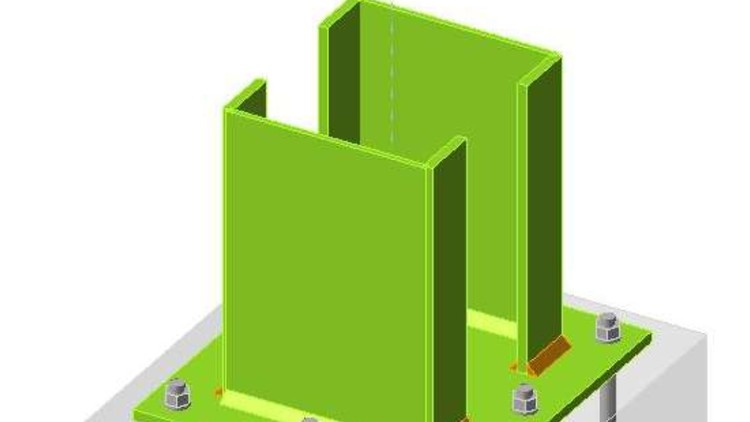
Baseplate Design, Beam Column Connection Design
Bracing Connection, Beam Splicing, Column Splicing
Steel Drafting and Drawings- GA, Section, Plan, Elevation Generation
The Reality of Moving from Analysis to Actual Construction
If you have been in the structural engineering game for a minute, you know that a beautiful 3D model in a FEA package means absolutely nothing if the joints can’t be fabricated or if the bolts shear under the first sign of lateral loading. Most academic courses stop right after the analysis phase, leaving you with a “theoretical” building. That’s exactly why I jumped into the Advance Professional Course in Steel Commercial (Part-II). While Part-I focused on the skeletal framework of a G+3 multi-purpose building, Part-II is where the real engineering happens. It’s about the “connective tissue” of the structure.
This isn’t just another dry lecture series; it feels more like a hands-on lab session with a senior mentor looking over your shoulder. We move past the macro-level of beams and columns and dive deep into the micro-level of Baseplate Design and Beam-Column connections. If you’ve ever stared at a set of shop drawings and wondered why a specific stiffener was placed at a certain height, this course provides those “aha!” moments. It bridges the massive gap between being a “software operator” and a legitimate structural design professional.
Prerequisites for Success
Don’t think you can just waltz into Part-II without having your fundamentals locked down. To really get your money’s worth out of this beginner to advanced transition, you need:
- A solid completion of Part-I or an equivalent understanding of Steel Commercial Building modeling and analysis.
- A firm grasp of structural mechanics—you need to understand shear force and bending moment diagrams intuitively.
- Basic proficiency in industry-standard tools like AutoCAD; while the course teaches drafting, knowing your way around a command line helps you focus on the engineering rather than the software.
- An understanding of local building codes (like AISC or IS codes), as connection design is heavily dictated by these standards.
Mastering the Skills & Tools of the Trade
The curriculum is laser-focused on job-ready skills. We aren’t just drawing lines; we are simulating how forces transfer through Beam Splicing and Column Splicing. One of the most valuable segments for me was the deep dive into Bracing Connections. In a G+3 commercial setup, managing lateral loads is everything, and seeing how those gusset plates are actually designed (not just slapped on) was a game-changer.
The course also leans heavily into the Steel Drafting and Drawings phase. You learn to generate GA (General Arrangement) drawings, sections, and elevations. In the real world, your design is only as good as the drawings you send to the fabricator. Learning to produce clean, error-free Section and Plan generation is what separates the juniors from the seniors in this industry.
Career Benefits & Job Roles
Investing in this level of certification prep is a direct play for career growth. In the current market, firms are tired of hiring graduates who can’t read a connection detail. By completing real-world projects like this G+3 commercial building, you position yourself for high-demand roles such as:
- Structural Steel Detailer: Focusing on the granular details that keep buildings standing.
- Steel Design Engineer: Taking ownership of the entire design-to-detail workflow.
- Project Engineer (Steel Structures): Managing both the design team and the fabrication shop.
- BIM Modeler (Structural): Leveraging your knowledge of connections to create high-LOD models.
The High Points: What I Loved
- Practicality over Theory: This course focuses on what actually works on-site. The discussion on Column Splicing was particularly enlightening regarding practical site constraints.
- Comprehensive Drafting: Most courses skip the “boring” part of drawing generation. This course embraces it, ensuring you can actually produce a submittable drawing package.
- Logical Progression: The flow from Baseplate Design to complex splicing feels natural and builds your confidence as you go.
- Industry Relevant: The focus on a G+3 multi-purpose building makes the real-world projects feel authentic, as this is a very common project scale in the commercial sector.
The Honest Truth: The One Catch
If I have to be critical, the learning curve is steep. This isn’t a “passive watching” type of course. If you aren’t prepared to spend hours iterating on your connection design and fixing your GA drawings, you will fall behind. It requires a significant time commitment that might be tough for those already working 40+ hours a week, but the payoff in job-ready skills is worth the sweat equity.