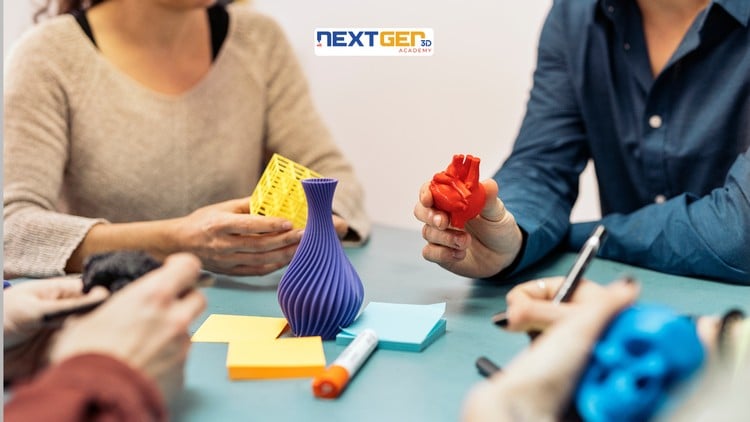
Diagnose defects, stop warping & stringing, apply SPC & QA methods, and master FDM troubleshooting with real cases
What You Will Learn:
- Identify, classify, and diagnose dimensional, surface, and structural 3D printing defects
- Eliminate warping, stringing, oozing, and layer shifting through proven root-cause solutions
- Optimize retraction, temperature, bed adhesion, and mechanical settings for reliable prints
- Apply Statistical Process Control, control charts, and Cpk to maintain process stability
- Implement pre-print, in-process, and post-print quality assurance and inspection workflows
- Build documentation and traceability systems used in regulated, professional manufacturing
Alright folks, let’s talk about getting serious with 3D printing. I recently dove into a course called ‘3D Printing Failure Analysis & Process Optimization’, and I’ve got some thoughts to share. As someone who’s been in the trenches with additive manufacturing for a while, I was looking for something that went beyond the basic “how-to” and really dug into the ‘why’ behind the problems we all face. This course promised that, and honestly, it delivered.
Overview
This isn’t your introductory “print your first benchy” kind of course. It’s geared towards folks who have some experience under their belt and are hitting those frustrating walls with print quality, consistency, and reliability. The core of it is about developing a systematic approach to understanding and eliminating those pesky defects that plague FDM printing – think warping, stringing, and all the other nightmares. What really stood out was the emphasis on moving from reactive troubleshooting to proactive process control. They don’t just show you how to fix a problem; they teach you how to prevent it from happening in the first place. It’s about building a robust printing process, not just a single good print. The inclusion of Statistical Process Control (SPC) and Quality Assurance (QA) workflows, especially for those aiming for certification prep or working in regulated environments, is a major differentiator. This is where the course really shows its teeth, bridging the gap between hobbyist printing and professional manufacturing.
Prerequisites
To get the most out of this course, I’d say you should have a foundational understanding of 3D printing concepts. You don’t need to be a guru, but being familiar with your printer’s basic operation, slicing software, and common materials like PLA and PETG is crucial. If you’re still figuring out how to load filament or level your bed, you might find yourself a bit overwhelmed. A basic grasp of geometry and data interpretation will also be helpful, especially when you get into the SPC sections.
Skills & Tools
By the end of this course, you’ll walk away with a solid toolkit of job-ready skills. You’ll be able to:
- Effectively identify, classify, and diagnose a wide range of dimensional, surface, and structural 3D printing defects.
- Develop and implement proven root-cause solutions for common issues like warping, stringing, oozing, and layer shifting.
- Systematically optimize key printer settings such as retraction, temperature, bed adhesion, and mechanical configurations for consistent, reliable prints.
- Understand and apply Statistical Process Control (SPC) methods, including control charts and capability analysis (Cpk), to maintain process stability and reduce variability.
- Implement comprehensive quality assurance and inspection workflows covering pre-print, in-process, and post-print stages.
- Build essential documentation and traceability systems, which are absolutely vital for professional manufacturing environments.
The course utilizes practical examples and real-world projects, which really helps solidify the learning. While specific software recommendations weren’t explicitly stated as required for entry, having access to your preferred slicing software and some basic spreadsheet tools (like Excel or Google Sheets) for data analysis will be beneficial. The emphasis on industry-standard tools and methodologies is clear.
Career Benefits & Job Roles
For anyone looking to advance their career in additive manufacturing, this course is a no-brainer. It equips you with the analytical and problem-solving skills that are in high demand. You’ll be a more valuable asset to any company utilizing 3D printing, whether it’s for rapid prototyping, tooling, or end-use part production. Potential job roles include:
- 3D Printing Technician/Operator with enhanced troubleshooting capabilities.
- Manufacturing Engineer specializing in additive processes.
- Quality Assurance Specialist for additive manufacturing.
- Process Engineer focused on optimizing 3D printing workflows.
- Additive Manufacturing Specialist or Manager.
This kind of training directly translates into career growth and makes you stand out in the job market.
Pros
- Deep Dive into Root Causes: The course excels at getting to the *why* behind failures, rather than just offering quick fixes. This leads to genuine understanding and long-term solutions.
- Industry-Standard Methodologies: The integration of SPC, QA, and documentation best practices elevates this beyond a typical hobbyist course and prepares you for professional manufacturing environments.
- Practical, Case-Based Learning: The use of real cases makes the concepts tangible and applicable to situations you’ll likely encounter.
- Scalable Skills: The principles taught are not just for FDM; they provide a framework for process improvement applicable across various manufacturing disciplines.
Cons
If I had to pick one honest con, it would be that the beginner to advanced promise might be slightly stretched. While it’s accessible to those with some foundational knowledge, someone completely new to 3D printing might need to supplement with a basic introductory course first to fully grasp the context of the more advanced topics. It’s definitely more of an intermediate to advanced skill-builder.