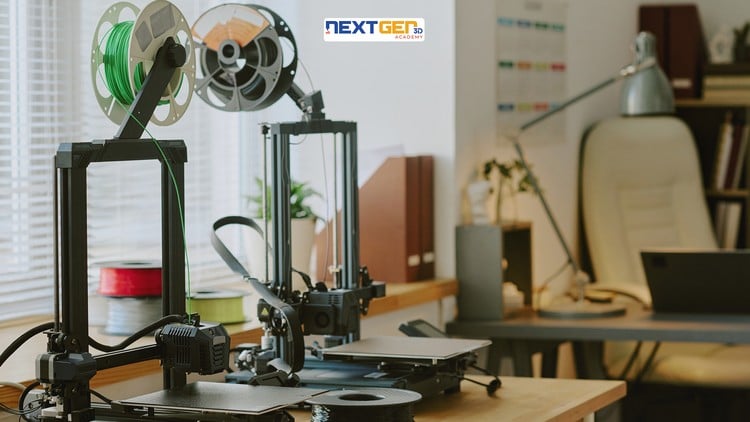
Learn 3D Printer Electronics, Marlin & Klipper Firmware, Stepper Motor Tuning, Troubleshooting, and Hardware
What You Will Learn:
- Understand 3D printer control board architecture
- Learn how firmware processes G-code and controls motion
- Compare different firmware systems like Klipper and RepRapFirmware
- Configure and optimize Marlin firmware
- Master stepper motor fundamentals and torque behavior
- Learn microstepping and its impact on print quality
- Set and tune stepper motor current correctly
- Troubleshoot common electronics issues in 3D printers
- Understand real-time systems and motion planning algorithms
Alright, fellow tinkerers and aspiring 3D printing gurus. I recently wrapped up the ‘3D Printer Electronics Mastery: Boards, Motors Theory’ course, and I’ve got some thoughts to share. As someone who’s spent a fair bit of time wrestling with PCBs and torque specs, I was looking for something that could bridge the gap between “plug and play” and actually understanding what makes these machines tick. This course definitely aims to do that, and for the most part, it hits the mark.
Overview
This isn’t your average “assemble a kit” kind of course. The creators here are clearly diving deep into the electronics and the firmware that orchestrates everything. They tackle the control board architecture – the brain of the operation – and break down how that fancy G-code actually translates into precise movements. What I particularly appreciated was the comparative analysis of different firmware systems. You know, everyone talks about Marlin and Klipper, but understanding the underlying philosophies and where they excel (or don’t) is crucial for making informed decisions, especially when you’re looking at building or significantly modifying a printer. They really get into the nitty-gritty of stepper motors, which is often an overlooked area. We’re talking about torque, microstepping, and how to properly tune the current – these are the things that separate a “good” print from a “great” print, and honestly, can save you a ton of frustration down the line. The troubleshooting section is also a godsend. Instead of just guessing, you get a structured approach to diagnosing common electronic gremlins.
Prerequisites
This is where honesty is key. While the course aims to take you from beginner to advanced, I wouldn’t recommend this for someone who’s never even seen a 3D printer before. A basic understanding of electronics – think Ohm’s Law, simple circuits – would be incredibly beneficial. Even better if you’ve dabbled with Arduino or similar microcontrollers. You don’t need to be a licensed engineer, but some foundational knowledge will make the concepts click much faster. If you’re coming in cold, be prepared to put in extra time researching some of the fundamental electronic principles they touch upon.
Skills & Tools
By the end of this, you’re looking at developing some seriously job-ready skills. You’ll gain practical experience with configuring and optimizing firmware like Marlin, which is still the backbone for a massive number of printers. The Klipper and RepRapFirmware comparisons are eye-opening for anyone looking to push performance boundaries. Understanding stepper motor tuning, microstepping, and current settings directly translates into improved print quality and reliability – a huge win for any professional or serious hobbyist. You’ll also be equipped to tackle common hardware and electronic troubleshooting, which is invaluable. The course emphasizes industry-standard tools, though what you can actually *use* will depend on your setup and ambition. Having a multimeter is a must. For the more advanced tuning and analysis, things like an oscilloscope could be on the radar, but that’s probably beyond the scope of this specific course’s immediate requirements. They do a decent job of simulating real-world projects through the explanations and case studies.
Career Benefits & Job Roles
This course could be a serious stepping stone for career growth. If you’re aiming for roles in 3D printer repair, custom printer design, R&D for additive manufacturing companies, or even firmware development, this is a fantastic foundation. It provides the theoretical knowledge and practical insights needed for roles like 3D Printer Technician, Application Engineer (3D Printing), or even junior Firmware Engineer. The focus on troubleshooting and optimization makes you a more valuable asset to any team working with 3D printing technology. Think of it as adding a specialized certification prep to your resume, without the formal exam.
Pros
- Deep Dive into Firmware & Hardware: Goes beyond surface-level explanations to truly explain the ‘why’ behind 3D printer electronics.
- Practical Stepper Motor Expertise: The detailed breakdown of stepper motor theory, tuning, and microstepping is incredibly valuable for print quality.
- Troubleshooting Skills: Provides a systematic approach to diagnosing and fixing common electronic issues, saving time and money.
- Comparative Firmware Analysis: Offers critical insights into different firmware architectures, aiding in informed decision-making for upgrades or builds.
Cons
Honestly, my main critique would be that the hands-on labs, while present conceptually, could be more robustly integrated. While the theoretical explanations are excellent, actual guided practical exercises with specific hardware setups (even if simulated) would elevate this from a great theory course to an exceptional practical skills course. As it stands, you’re doing a lot of the practical application yourself after absorbing the information.