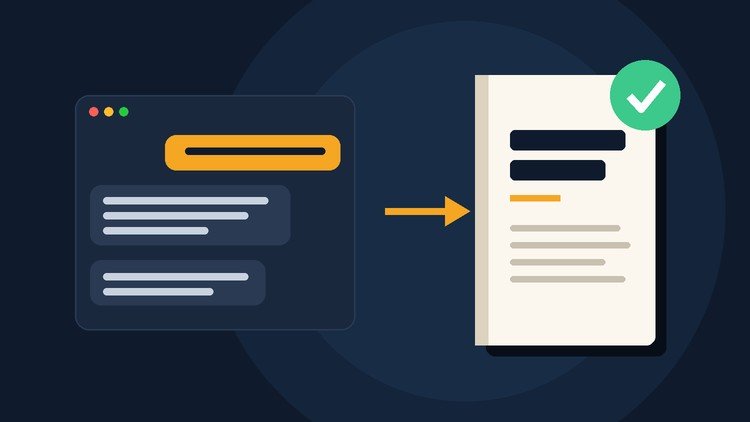
Your Kindle book written, designed and ready to publish in 1 hour, following the 2026 Amazon KDP rules
What You Will Learn:
- Write a complete, readable Kindle eBook with Claude using one master prompt and smart feedback
- Follow Amazon KDP’s 2026 rules on AI disclosure, weekly title limits, brand names and quality
- Create a professional cover, inside graphics, and correct front and back matter
- Price, describe and keyword your book, then upload and publish it on KDP with Claude’s help
Overview: Navigating the 2026 AI-Publishing Landscape
Let’s be honest: the era of “churn and burn” AI publishing is dead. If you’ve spent any time in the KDP ecosystem recently, you know that Amazon has finally tightened the screws. The 2026 rules aren’t just suggestions; they are gatekeepers designed to purge low-effort garbage. This course, ‘Amazon KDP Self-Publishing with Claude,’ caught my eye because it doesn’t promise a “get rich quick” miracle. Instead, it treats AI-assisted writing as a high-level hands-on lab in prompt engineering and content strategy.
The core philosophy here is interesting. While most creators are still fighting with ChatGPT’s “robotic” tone, this course pivots to Anthropic’s Claude, which, in my experience as a tech lead, handles nuanced prose and creative flow much more naturally. The “one master prompt” approach isn’t about laziness; it’s about creating a complex, multi-layered instruction set that acts as a real-world project blueprint. It forces the AI to maintain a consistent voice from the introduction to the back matter, avoiding the disjointed feel that plagues most AI-generated eBooks. What I appreciated most was the focus on the “smart feedback” loop—treating the AI as a junior writer that you, the senior editor, are mentoring toward job-ready skills in publishing.
The course tackles the 2026 compliance hurdles head-on. With Amazon now enforcing strict weekly title limits and requiring transparent AI disclosure, the strategy taught here shifts from quantity to quality. It’s about building a legitimate brand, not just a list of keywords. You aren’t just learning to click buttons; you are learning to navigate industry-standard tools to produce something that actually provides value to a reader.
Prerequisites
- A basic understanding of the Amazon KDP dashboard (though the course does a decent walkthrough for beginner to advanced users).
- An active Anthropic Claude account (Pro is recommended for higher token limits during the “one-hour” sprint).
- A clear niche or topic idea—this isn’t a “find my niche” course; it’s an execution framework.
- Basic familiarity with graphic design tools like Canva or Photoshop for the cover-generation segment.
Skills & Tools Covered
- Advanced Prompt Engineering: Developing “Master Prompts” that function like certification prep for your AI, ensuring it understands tone, structure, and KDP compliance.
- Claude 3.5/4 Architecture: Leveraging the specific strengths of Claude for long-form narrative and logical consistency.
- KDP Metadata Optimization: High-level keyword research and category selection to ensure organic visibility.
- Regulatory Compliance: Navigating the 2026 AI disclosure mandates and quality-control checks to avoid account shadow-banning.
- Visual Asset Creation: Using AI image generators and layout tools to create real-world projects that look professional on a Kindle Paperwhite.
Career Benefits & Job Roles
You might think KDP is just for hobbyists, but the career growth potential here is massive for tech professionals. Mastering this workflow demonstrates a high level of job-ready skills in AI orchestration. If you can prompt an AI to write a coherent, 30,000-word technical manual, you have effectively mastered a form of high-level systems architecture. This expertise is directly applicable to roles such as Content Strategist, Prompt Engineer, or Technical Documentation Lead.
Furthermore, having a published library acts as a professional portfolio. In the tech world, being a “published author” on a specific stack—say, Kubernetes or Python—is better than any certification prep course. It establishes you as an authority in your field, opening doors for speaking engagements and high-level consulting gigs. You are essentially using KDP as a platform to showcase your hands-on labs experience to a global audience.
Pros
- Efficiency Without Trash: The “one-hour” goal is ambitious, but the framework is robust enough to get you 90% of the way there without sacrificing the “readability” of the final product.
- Compliance-First Mindset: In an industry where people are losing their accounts daily, the focus on the 2026 rules is a literal lifesaver. It teaches you how to be an industry-standard publisher who respects the platform.
- Claude-Centric: Most courses are stuck on GPT-4. Claude’s superior “human” tone makes the editing process significantly faster, moving you from beginner to advanced output almost instantly.
- Holistic Workflow: It doesn’t stop at the text. Covering the cover design, front/back matter, and the actual upload process makes this a complete real-world project.
Cons
- The “One Hour” Hook: While the logic is sound, a total beginner might struggle to hit the 60-minute mark if they haven’t pre-vetted their niche. Realistically, for your first time, expect to spend 3-4 hours to ensure your job-ready skills are actually reflected in the quality.