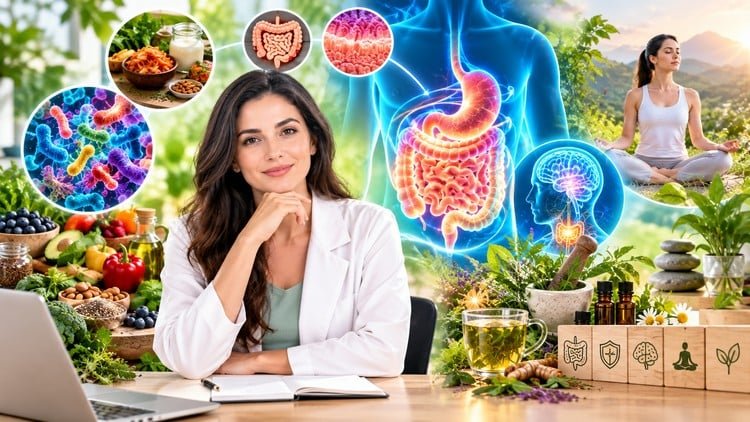
Master functional gut health diagnostics, microbiome optimization, SIBO eradication, and clinical coaching frameworks
What You Will Learn:
- Master Gastrointestinal Anatomy & Physiology: Understand upper and lower GI mechanics, digestion, enzymatic breakdown, and the enteric nervous system.
- Decode the Human Microbiome: Analyze eubiosis, dysbiosis, core bacterial phyla, short-chain fatty acids, and mucosal barrier dynamics.
- Navigate Functional Diagnostics: Learn to interpret comprehensive stool analyses , SIBO breath tests, organic acid tests (OAT), and advanced biomarker panels
- Implement Therapeutic Protocols: Design customized elimination diets, low-FODMAP protocols, targeted botanical antimicrobials, and mucosal healing frameworks.
- Resolve Complex Clinical Presentations: Master evidence-based protocols for SIBO/IMO, parasite eradication, biofilm disruption, female hormone balancing
- Integrate Lifestyle & Somatic Medicine: Utilize vagal nerve regulation, circadian biology, sleep optimization, and environmental toxin reduction.
- Show more
The “Debugging” Approach to Human Biology: Why This Certification Matters
Let’s be real for a second. The wellness industry is saturated with “influencers” pushing green powders and generic probiotics like they’re some kind of magical hotfix for a broken production environment. As someone who has spent over a decade in high-level tech architecture, I’ve learned to spot the difference between a band-aid and a root-cause solution. When I stumbled upon the Advanced Certified Clinical Gut Health & Microbiome Coaching program, I wasn’t looking for “woo-woo” fluff; I wanted a data-driven framework to understand the most complex system I’ve ever encountered: the human GI tract.
This course isn’t just another line on your LinkedIn profile; it’s a deep dive into “biological engineering.” It moves beyond the basic “eat more fiber” advice and plunges into the actual mechanics of eubiosis versus dysbiosis. What struck me most was the shift from theory to hands-on labs. You aren’t just reading about bacteria; you’re learning to analyze comprehensive stool analyses and interpret SIBO breath tests as if they were error logs in a legacy codebase. For an experienced tech professional looking to pivot or an existing practitioner wanting to level up, this is the industry-standard for clinical gut health.
Prerequisites for Success
While this program scales from beginner to advanced, don’t expect to sleepwalk through the modules. You don’t need a medical degree, but a baseline comfort with biochemistry and systemic logic is a huge plus.
- A fundamental understanding of human biology (or a willingness to Google your way through the Krebs cycle).
- A “data-first” mindset—this is about clinical diagnostics, not intuition.
- Basic familiarity with the wellness industry landscape is helpful for the career growth modules.
The Clinical Tech Stack: Skills & Tools
In tech, we have our IDEs and monitoring tools. In this certification, your toolkit is built around functional diagnostics and evidence-based protocols. This is where the job-ready skills really manifest.
- Diagnostic Fluency: Mastering GI-MAP, Organic Acid Tests (OAT), and advanced biomarker panels to identify systemic imbalances.
- Protocol Architecture: Designing customized elimination diets and low-FODMAP frameworks that actually work, rather than generic templates.
- Botanical Programming: Utilizing targeted botanical antimicrobials and biofilm disruptors to clear infections like SIBO/IMO and parasites.
- Somatic Regulation: Implementing vagal nerve regulation and circadian biology to optimize the “hardware” (the body) for the “software” (the microbiome) to thrive.
Career Benefits & Job Roles
The ROI on this certification prep is significant because the demand for “Microbiome Specialists” is skyrocketing. We are seeing a massive shift where consumers are tired of the 15-minute GP visit and are looking for clinical coaching frameworks that offer real results.
- Functional Medicine Consultant: Partner with MDs to handle the high-touch coaching and protocol implementation they don’t have time for.
- Private Practice Owner: Build a boutique coaching business focused on complex clinical presentations like autoimmune issues or chronic fatigue.
- Corporate Wellness Architect: Design science-backed health programs for high-performance teams in the tech and finance sectors.
- Health-Tech Advisor: Use your job-ready skills to consult for startups building the next generation of microbiome testing kits.
Why This Course Hits Different (The Pros)
- No Fluff, All Science: The depth of the microbiome optimization modules is staggering. You’re learning about short-chain fatty acids and mucosal healing at a level that rivals post-grad coursework.
- Real-World Projects: The program forces you to work through case studies. You’re not just memorizing phyla; you’re “debugging” a hypothetical patient’s female hormone balancing issues through the lens of the gut-estrogen axis.
- The Coaching Framework: Most courses give you the science but fail on the delivery. This one provides a clinical coaching framework that teaches you how to actually manage a client’s psychology, ensuring they stick to the therapeutic protocols.
The Honest Truth (The Cons)
If I have one gripe, it’s the cognitive load. This is not a “weekend certification.” The sheer volume of information regarding enzymatic breakdown and enteric nervous system mechanics can be overwhelming if you’re coming from a non-science background. It’s a steep learning curve that requires a serious time commitment—so don’t expect to breeze through it between Zoom meetings.
In summary, if you want to move beyond the surface level and become a legitimate authority in functional gut health, this is the certification prep you need. It turns you from a “health coach” into a “biological systems analyst.”