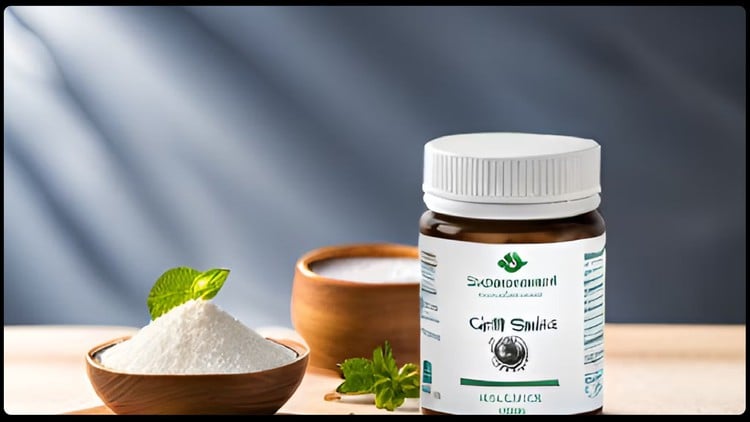
Unlocking the Healing Power of Schuessler Cell Salts for Practitioners and Health Enthusiasts
What You Will Learn:
- Understanding the Biochemical Theory of Dr. Schuessler.
- In-depth Knowledge of the Twelve Tissue Salts.
- Application and Preparation Techniques.
- Treatment Protocols.
- Integrating Schuessler Cell Salts into Practice.
The Micro-Nutrient OS: Why I Dived into Cell Salts
Look, I spend most of my day staring at AWS consoles and debugging lines of Python, so when I say I found a Professional Accredited Schuessler Cell Salt Certification that actually makes sense to a logical, systems-oriented brain, you know I’m not just blowing smoke. Most holistic courses feel like they’re written by people who haven’t updated their UI since 1998, but this certification prep was a surprise. I approached this like I would a new industry-standard tool: I wanted to understand the underlying architecture of human biochemistry.
Schuessler’s theory isn’t just “woo-woo” magic; it’s basically troubleshooting the body at the hardware level. Instead of just patching symptoms (the “software bugs”), you’re looking at the inorganic salts that act as the fundamental building blocks of our cellular functions. This course takes you through a beginner to advanced journey that feels less like a lecture and more like a deep-dive technical manual for the human bio-machine. It’s about 12 specific minerals—the “logic gates” of our health—and how their deficiencies lead to systemic crashes. If you’re tired of the “take a multivitamin and hope for the best” approach, this is the hands-on labs equivalent for internal health.
Prerequisites for the Systems Thinker
You don’t need a medical degree to start, but you do need a brain that enjoys patterns. From my perspective, the only real prerequisite is a solid foundation in “systems thinking.” If you can understand how a lack of RAM slows down a server, you can understand how a lack of Magnesia Phosphorica messes with nerve signals. While the course is marketed toward practitioners, I’d argue that any health enthusiast with a penchant for data-driven wellness will get a lot out of it. It helps if you have a basic grasp of biology, but the course does a great job of certification prep by leveling the playing field for everyone in the introductory modules.
Hard Skills and Industry Tools
This isn’t just theory; it’s about job-ready skills. By the end of the modules, you aren’t just reciting definitions; you’re performing facial diagnostics—which is basically the “error log” of the human body.
- Diagnostic Pattern Recognition: Learning to spot mineral deficiencies through physical markers (the ultimate visual debugging).
- Dilution Logic: Understanding the 6x potency and why the “micro-dose” approach is more about signaling than brute-force supplementation.
- Repertory Mastery: Using industry-standard tools and reference guides to build a treatment protocol that actually sticks.
- Deployment Strategies: Knowing when to use individual salts versus complex combinations for real-world projects (i.e., actual human cases).
Career Growth and Job Roles
Let’s talk career growth. In a world where everyone is a “health coach,” having a Professional Accredited Schuessler Cell Salt Certification gives you a niche edge that most people lack. You’re moving away from generic advice and into specialized biochemical balancing.
- Holistic Consultant: Adding a scientific layer to your existing practice to increase client retention.
- Wellness Architect: Building bespoke mineral protocols for high-performance individuals who want data-backed results.
- Clinical Support: Working alongside naturopaths or integrative MDs who need someone fluent in the Schuessler system.
- Retail Nutrition Specialist: Using your job-ready skills to provide actual value in a supplement or pharmacy environment rather than just reading labels.
The Pros: Why This Course Hits the Mark
- Logic-Driven Curriculum: The course is structured like a well-documented API. It moves from the “Why” (Biochemical theory) to the “How” (Application) without losing the thread. It’s perfect for those who hate fluff and want in-depth knowledge.
- Accreditation Value: This isn’t a certificate you print at home and hide in a drawer. The professional accreditation means it carries weight for insurance and professional associations, which is a massive plus for career growth.
- Real-World Projects: The inclusion of case studies acts as hands-on labs. You’re forced to apply the 12 salts to complex scenarios, which bridges the gap between “I read the book” and “I can fix the problem.”
- Versatility: Whether you’re a massage therapist or a tech lead looking for a side hustle, the beginner to advanced pipeline ensures you aren’t overwhelmed but also aren’t bored.
The Cons: The Honest Truth
If I have one gripe, it’s the UI of the learning platform itself. While the content is top-tier and the certification prep is rigorous, the aesthetic feels a bit dated. If you’re used to high-end, sleek SaaS interfaces, you might find the layout a bit clunky. However, if you can look past the “legacy system” look of the portal, the data inside is gold. It’s a classic case of “don’t judge a book by its cover”—or a course by its CSS.