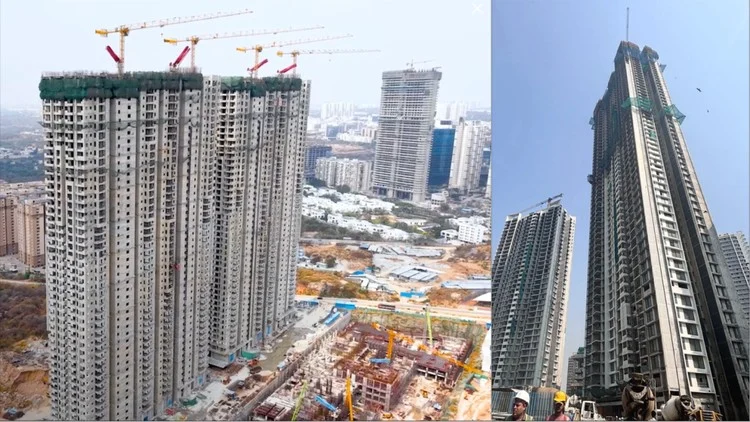
Learn Mivan Formwork, Aluform Drawings, Cycle Planning, QA/QC, High-Rise Site Execution and Practical Construction Skill
⏱️ Length: 4.5 total hours
👥 37 students
🔄 May 2026 update
Add-On Information:
Note➛ Make sure your 𝐔𝐝𝐞𝐦𝐲 cart has only this course you're going to enroll it now, Remove all other courses from the 𝐔𝐝𝐞𝐦𝐲 cart before Enrolling!
- Course Overview
- This masterclass serves as a comprehensive bridge between academic civil engineering theory and the high-speed realities of modern urban infrastructure development. As global demand for affordable housing surges, the shift from traditional timber and plywood shuttering to sophisticated aluminum formwork systems (Mivan) has become an industry necessity.
- Participants will explore the strategic transition toward industrialization in the construction sector, focusing on how modular systems allow for the rapid scaling of high-rise residential townships and commercial skyscrapers.
- The curriculum investigates the mathematical and physical logic behind monolithic casting, where walls and slabs are poured simultaneously to create a joint-less, robust structural cage that excels in seismic performance.
- Through detailed modules, the course emphasizes the “Time-Cost-Quality” triangle, teaching students how to balance the high initial capital expenditure of aluminum sets against the long-term savings gained from massive repetitions and reduced finishing labor.
- The training provides a global perspective, looking at how Mivan technology is implemented across different international markets, including the Middle East, Southeast Asia, and India, ensuring the knowledge is geographically versatile.
- This is not just a technical guide but a management blueprint, highlighting how digital integration and logistical precision are the true drivers of success in high-volume construction environments.
- Requirements / Prerequisites
- A foundational understanding of Reinforced Cement Concrete (RCC) design principles and the chemical properties of concrete mixes is essential for grasping the curing and striking times discussed.
- Prospective students should possess a basic ability to interpret general architectural layouts and structural overlays to understand how formwork interacts with building design.
- An introductory knowledge of construction site safety protocols and the use of Personal Protective Equipment (PPE) is recommended, as the course touches upon high-risk high-rise operations.
- Candidates should have a degree or diploma in Civil Engineering, Construction Management, or Architecture, or have at least one year of practical experience in site supervision or masonry works.
- A functional grasp of basic geometry and mathematical calculations is required for estimating material volumes, wastage percentages, and calculating the load-bearing requirements of props.
- Access to a computer or tablet capable of viewing high-resolution technical drawings and site photographs is necessary to fully engage with the visual case studies provided.
- Skills Covered / Tools Used
- Laser Leveling and Total Station Integration: Learning the precision techniques required to maintain perfect verticality and horizontal alignment across forty or more stories of construction.
- Monolithic Casting Management: Mastering the coordination of large-scale concrete pours where walls, beams, and floor slabs are cast in a single, seamless operation to eliminate construction joints.
- Wall Tie and PVC Sleeve Systems: Gaining expertise in the hardware that holds panels together against the intense hydrostatic pressure of wet concrete, ensuring no bulging or leakage occurs.
- Kicker and Rocker Assembly: Understanding the critical “starting” components of the formwork that ensure the next floor remains perfectly aligned with the cast of the floor below.
- Prop and Re-Propping Schedules: Designing the support systems that allow for the safe removal of formwork panels while ensuring the newly cast floor remains structurally supported until it reaches full strength.
- Advanced Shuttering Oil Application: Selecting and applying chemical release agents that preserve the lifespan of expensive aluminum panels while ensuring a “fair-faced” concrete finish.
- Tower Crane Logistics: Planning the vertical and horizontal movement of formwork bundles and concrete buckets to maximize the efficiency of onsite heavy machinery.
- Expansion and Construction Joint Handling: Learning to manage the unique challenges of building separation and movement joints within a rigid modular formwork environment.
- BIM and 3D Conflict Resolution: Utilizing building information modeling to identify clashes between structural steel and formwork panels before the equipment ever reaches the site.
- Benefits / Outcomes
- Drastic Reduction in Project Delivery Timelines: Graduates will be able to implement workflows that achieve a 4-to-8 day slab-to-slab cycle, significantly outperforming traditional methods.
- Superior Surface Quality Achievement: By mastering Aluform, professionals can deliver concrete finishes so smooth they require minimal skimming, effectively eliminating the need for expensive external plastering.
- High-Rise Structural Integrity: Gain the skills to build structures that are inherently more resistant to earthquakes and environmental stressors due to their monolithic, joint-free nature.
- Operational Cost Efficiency: Learn how to amortize the cost of aluminum formwork over hundreds of repetitions, proving the financial viability of the technology to stakeholders.
- Specialized Career Advancement: Position yourself as a niche expert in a high-demand field, making you a preferred candidate for top-tier international construction firms.
- Manpower Optimization: Develop strategies to lead smaller, more specialized teams that can assemble and disassemble modular systems with mechanical precision, reducing the reliance on massive labor forces.
- Waste and Debris Mitigation: Implement “green” construction practices by using reusable aluminum instead of disposable timber, leading to cleaner, safer, and more sustainable work sites.
- Resource Allocation Mastery: Develop the ability to forecast material and labor needs with pinpoint accuracy, preventing costly downtime or over-ordering of concrete.
- PROS
- Future-Proof Technology: The course focuses on 2026-updated industry standards, ensuring the skills learned are at the cutting edge of global construction trends.
- Practical Site Simulation: Uses real-world scenarios and high-definition site footage to provide an immersive experience that goes beyond theoretical textbooks.
- Niche Professional Edge: Provides specialized knowledge in Aluform that is often omitted from standard university engineering degrees, giving students a competitive market advantage.
- Multidisciplinary Focus: Integrates elements of structural engineering, logistics, financial planning, and safety management into a single masterclass.
- CONS
- Digital Limitation: As an online course, it lacks the physical, tactile experience of manually handling and pinning heavy aluminum panels in a live site environment.
Learning Tracks: English,Teaching & Academics,Engineering
Found It Free? Share It Fast!