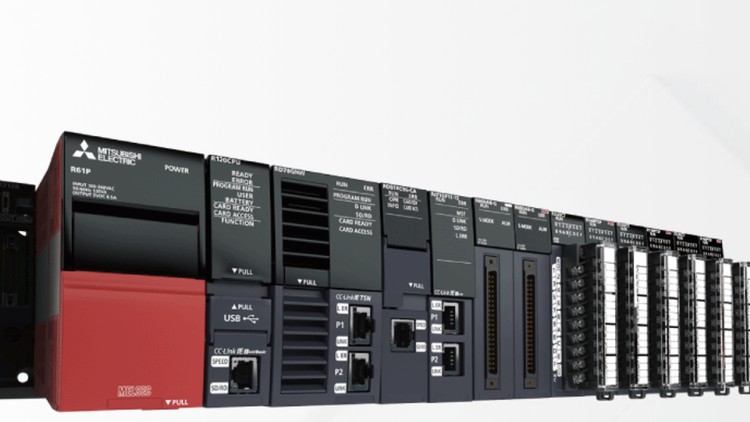
This course covers a Mitsubishi GX Works 3 PLC programming for Automation Industry from basics.
What you will learn
• By the end of this course, you will be able to create a Mitsubishi GX Works 3 PLC program from scratch.
• Students will be exposed to variety of PLC interface options such as Digital Inputs/Outputs, Analog signals, Specialized thermocouple and Temperature controll
• Students will be confident enough to be able to create a Gx Works 3 program using with/without labels, create communications with variety of network component
• Students will wide variety of programming techniques, mode control, Robot control logic, VFD control, commonly used instructions and many more.
• Students will be able to create alarm functionality and some complicated programming methods such as indirect addressing, program calls and Standby program fu
Why take this course?
🚀 Mastering PLC Programming with Mitsubishi GX Works 3 🏭
Course Headline:
This course covers a Mitsubishi GX Works 3 PLC programming for Automation Industry from basics to advanced concepts.
Course Overview:
Dive into the intricacies of industrial automation with our specialized online course focusing on Mitsubishi’s GX Works 3 software, the gold standard in PLC programming. This comprehensive course is tailored for both novices and seasoned professionals seeking to enhance their expertise in designing, implementing, and troubleshooting complex automation systems.
What You’ll Learn:
- Introduction to PLCs: Get acquainted with the basics of Programmable Logic Controllers (PLCs), understand their significance in industrial settings, and learn about their components. 🤖
- GX Works 3 Basics: Navigate through the user-friendly environment of GX Works 3, set up your projects, configure PLC hardware, and become familiar with the powerful tools at your disposal. 🧪
- Programming Essentials: Grasp the core concepts of ladder logic programming, including configuring timers, counters, handling arithmetic operations, and effectively manipulating data to create robust and efficient control systems. 🔧
Why Choose This Course?
- Hands-On Experience: Engage with real-world scenarios in a simulated industrial environment, allowing you to apply your knowledge directly to Mitsubishi PLCs and GX Works 3 software. 🛠️
- Career Advancement: Stand out in the job market by adding industry-specific skills in PLC programming to your resume—skills that are highly sought after by industries worldwide. 🎓
Who Should Attend?
This course is designed for:
- Industrial Engineers: who want to refine their understanding of PLC systems and applications.
- Technicians: seeking to add PLC programming as a new skillset.
- Automation Specialists: who aim to deepen their knowledge and expertise of Mitsubishi PLCs.
- And anyone keen on mastering the intricacies of PLC programming with Mitsubishi GX Works 3! 👩💼👨💻
Duration:
Embark on a comprehensive learning journey spanning 2.5 hours, which includes both theoretical lessons and practical hands-on experience with Mitsubishi PLC programming principles—all designed to provide you with a solid foundation in the subject matter. ⏳
Join Us Today!
Don’t let your industrial automation aspirations wait any longer. Enroll now and take the first step towards becoming an expert PLC programmer using Mitsubishi GX Works 3. Elevate your career to new heights with cutting-edge knowledge and skills that are in high demand across various industries. 🎢
Enroll now and transform your technical expertise with our specialized online course on Mitsubishi GX Works 3 PLC programming! Let’s get started on this exciting learning journey together. 🚀✨
Overview
Alright, let’s cut to the chase regarding the ‘Mitsubishi GX Works 3’ course. If you’re serious about the automation industry, you know Mitsubishi Electric PLCs—especially their iQ-R and iQ-F series—are robust, powerful workhorses found globally. GX Works 3 is the integrated development environment (IDE) that brings these systems to life. My take? This course isn’t just a basic software tutorial; it’s a deep dive designed to make you genuinely productive with one of the most critical industry-standard tools for industrial control.
What immediately stands out is the promise to get you programming a Mitsubishi GX Works 3 PLC from scratch. That’s a fundamental, non-negotiable skill. The curriculum clearly aims for practical application, covering everything from foundational digital I/O to intricate analog signals, specialized thermocouples, and even sophisticated temperature control. This isn’t theoretical fluff; it’s about arming you with the tangible, job-ready skills needed for actual automation tasks in real-world projects. It promises a comprehensive journey from a curious beginner to someone confident in tackling legitimate automation challenges, fostering significant career growth.
Prerequisites
While the course aims for basics, a few foundational pieces will really help you hit the ground running. First, a rudimentary grasp of electrical principles—understanding voltage, current, and how basic sensors and actuators operate—is highly beneficial. You don’t need an EE degree, but basic circuit logic helps. Second, a logical, problem-solving mindset is crucial; PLC programming is inherently sequential and logic-driven. Any prior exposure to industrial automation concepts, like control loops or motor control, will give you a significant head start. Basic computer literacy is, of course, assumed.
Skills & Tools
Completing this course means you’re not just familiar with commands; you’ll wield a robust toolkit of practical skills. You’ll master Mitsubishi GX Works 3, proficiently developing ladder logic programs, structuring your code effectively (with or without labels), and navigating the IDE for optimal efficiency. The course exposes you to a wide array of interface options: Digital Inputs/Outputs, precise Analog signals, and specialized components like thermocouples for critical temperature control. Crucially, you’ll learn to establish communications with various network components, which is vital for modern integrated systems.
The curriculum also delves into advanced integrations like Robot control logic and VFD control, pushing this beyond typical entry-level training. You’ll grasp essential programming techniques including mode control, robust alarm functionality, and complex methods like indirect addressing, program calls, and the Standby program function—all critical for scalable and maintainable solutions. As for tools, you’ll be extensively using the Mitsubishi GX Works 3 IDE. The nature of the course also implies working with simulated Mitsubishi PLCs (e.g., iQ-R, FX5U) and virtually interacting with peripheral hardware—valuable for practicing hands-on labs.
Career Benefits & Job Roles
Let’s be clear: knowing how to program a prevalent PLC like Mitsubishi’s is a significant asset in today’s rapidly evolving automation landscape. This course directly contributes to substantial career growth across manufacturing, automotive, food & beverage, and pharmaceutical sectors. You’ll acquire highly coveted job-ready skills that translate directly into tangible contributions on the factory floor or in process facilities, making you an immediate asset for real-world projects.
This expertise is ideal for roles such as Automation Engineer, Controls Engineer, and dedicated PLC Programmer. The inclusion of robot control logic and VFD integration also positions you well for roles like Robotics Integrator or System Integrator. Even advanced Maintenance Technicians will find this invaluable for troubleshooting and modifying control logic. While not a direct certification prep course for a singular PLC cert (as those are rare), it absolutely builds the foundational knowledge and practical experience essential for any vendor-specific certifications or demonstrating proficiency to potential employers.
Pros
- Comprehensive & Practical Curriculum: This course offers a robust journey from beginner to advanced, promising to take you from creating a Mitsubishi GX Works 3 program from scratch to tackling complex functions like analog signals, network communications, robot control, and indirect addressing. This breadth ensures you acquire practical, job-ready skills, preparing you for diverse real-world projects, and building confidence in developing and maintaining sophisticated automation systems.
- Focus on Industry-Standard Tools: Learning GX Works 3 means you’re mastering the primary IDE for a major global PLC vendor. Mitsubishi PLCs are ubiquitous, especially in Asia and parts of Europe and North America, making proficiency here directly translate to marketability and significant career growth. The course’s emphasis on features like network component communication and VFD control directly addresses modern industrial needs, ensuring your skills are highly relevant using industry-standard tools.
- Advanced Programming Techniques Covered: Many introductory PLC courses shy away from truly complex topics. The inclusion of indirect addressing, program calls, alarm functionality, and standby program functions sets this course apart. These are not just “nice-to-haves” but crucial techniques for developing scalable, maintainable, and robust control systems, pushing you into the realm of advanced, professional PLC development and problem-solving.
Cons
- Potential Lack of Physical Hardware Access: My biggest honest critique for almost any comprehensive PLC programming course is the lack of explicit mention regarding physical hardware. While GX Works 3 offers excellent simulation capabilities, there’s simply no substitute for connecting to a live PLC, wiring real-world sensors and actuators, and experiencing the nuances of physical I/O troubleshooting and commissioning. For true mastery and effective certification prep for practical roles, hands-on labs with actual Mitsubishi PLCs and peripherals are invaluable. Without this, students might miss crucial troubleshooting and integration experience vital for tackling complex real-world projects with complete confidence.