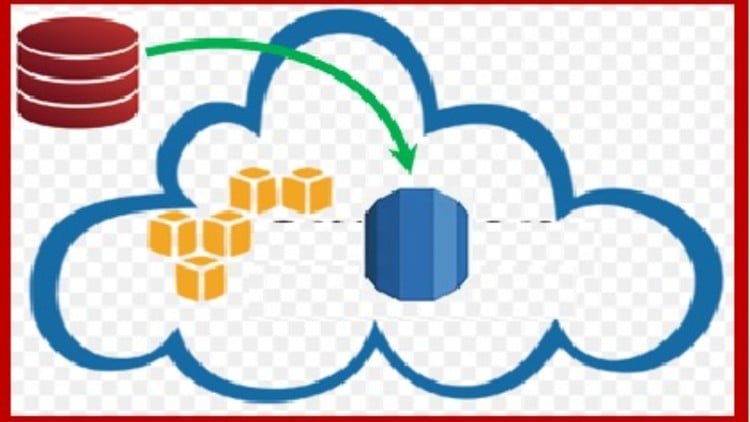
Learn step-by-step how to migrate Oracle 12c to AWS RDS 19c using Data Pump export/import
What You Will Learn:
- Understand the key differences between Oracle 12c on-premises and AWS RDS 19c.
- Prepare an Oracle 12c database environment for migration.
- Perform an AWS RDS setup and configure the target Oracle 19c instance.
- Use Oracle Data Pump expdp/impdp effectively for database migration.
- Handle pre-migration tasks such as user management, schema analysis, and object dependencies.
- Ensure data integrity and validate the post-migration Oracle RDS environment.
- Understand the S3 integration in RDS instance
- Understand the Parameter and Option groups
Overview
Alright, let’s talk about ‘Migrate on-prem Oracle 12c Database to AWS RDS 19c instance.’ If you’ve been working with databases for any length of time, you know the push to the cloud isn’t just a trend; it’s a strategic imperative. This course dives headfirst into one of the most common, yet often complex, migration scenarios facing enterprises today: moving a legacy, on-premises Oracle 12c database to a managed AWS RDS 19c environment. It’s about understanding architectural shifts, performance implications, and security nuances inherent in true cloud migration. I found this course particularly valuable because it doesn’t just skim the surface. It digs into the nitty-gritty of preparing your source environment, meticulously setting up the target RDS instance, and most importantly, leveraging Oracle Data Pump for a robust, reliable data transfer. This isn’t just about moving data; it’s about modernizing your infrastructure, reducing operational overhead, and positioning yourself for significant career growth in the cloud era. It’s a foundational course for anyone serious about becoming a proficient cloud DBA or solution architect.
Prerequisites
To get the most out of this course, you shouldn’t be starting from zero. While it covers a lot of ground, a solid foundation will accelerate your learning. I’d recommend having:
- Familiarity with Oracle DBA fundamentals: You should be comfortable with basic SQL, database architecture concepts, and interacting with Oracle via the command line (SQL*Plus, RMAN basics).
- Basic understanding of AWS concepts: Knowing your way around the AWS Management Console, understanding services like VPC, EC2, and S3 at a high level will be a significant advantage. You don’t need to be an AWS expert, but conceptual familiarity helps.
- A willingness to get your hands dirty: This course is heavily practical, so a mindset ready for hands-on labs and configuration work is crucial.
Without this foundational knowledge, you might find yourself catching up on core concepts rather than focusing on the migration specifics.
Skills & Tools
This course is packed with immediately applicable job-ready skills. By the end, you’ll be well-versed in:
- Oracle Data Pump mastery: You’ll gain a deep understanding of
expdpandimpdputilities, learning how to effectively export and import schemas, tablespaces, and full databases, including handling complex scenarios. This is an industry-standard tool for Oracle migrations. - AWS RDS 19c provisioning and configuration: You’ll learn the intricacies of setting up an Oracle RDS instance, from choosing the right instance class and storage to configuring networking and security best practices.
- S3 integration in RDS: Understanding how to leverage Amazon S3 for staging migration files and backups, which is a game-changer for cloud-native operations.
- Parameter and Option Group management: Crucial for customizing your RDS instance’s behavior and enabling Oracle features like APEX or TDE.
- Pre-migration assessment and post-migration validation: Critical tasks for ensuring data integrity and validating the health and performance tuning of your new RDS environment.
- Understanding the key differences between Oracle 12c on-premises and AWS RDS 19c, vital for troubleshooting and effective management.
You’ll primarily use the AWS Management Console, Oracle Data Pump, and SQL clients like SQL Developer.
Career Benefits & Job Roles
This course significantly boosts your marketability and opens doors to new opportunities. In today’s cloud-first world, the ability to manage and migrate databases to AWS is a highly sought-after skill. This course can contribute directly to your career growth, helping you transition into roles such as:
- Cloud Database Administrator: Specializing in managing Oracle databases on AWS RDS.
- AWS Solutions Architect: Especially valuable for those focused on database-centric architectures.
- DevOps Engineer: Integrating database migration into automated deployment pipelines and infrastructure as code practices.
- Data Engineer: Understanding the underlying database infrastructure for data pipelines.
- Prepares you for sections of AWS certification prep, particularly the AWS Certified Database – Specialty exam, by covering critical RDS concepts.
You’ll be equipped with practical knowledge to lead or contribute to real-world projects, making you an invaluable asset to any team undergoing cloud transformation. These are truly job-ready skills that bridge the gap between traditional DBA roles and modern cloud operations, offering a significant competitive advantage.
Pros
- Highly Practical and Hands-On: The course doesn’t shy away from showing you exactly how to do things, step-by-step. The focus on Data Pump expdp/impdp is fantastic for practical application, making it feel less theoretical and more like direct experience. You’re learning by doing, which is essential for complex migrations and reinforces beginner to advanced understanding.
- Comprehensive Pre- and Post-Migration Coverage: It’s not just about the `expdp` and `impdp` commands. The course thoughtfully covers critical pre-migration tasks (user management, schema analysis) and crucial post-migration validation. This holistic approach ensures you understand the full lifecycle of a migration, not just the data transfer part, ensuring cost optimization and stability.
- Strong Focus on Cloud-Native RDS Features: I appreciated the deep dive into Parameter and Option Groups, and especially the S3 integration. These are unique to the RDS environment and are absolutely vital for anyone managing Oracle in AWS. It truly teaches you how to be an AWS RDS DBA, not just an Oracle DBA in the cloud.
- Real-World Relevance: Migrating Oracle 12c to AWS RDS 19c is a scenario countless organizations are facing right now. The course tackles a genuinely complex and high-value problem, providing skills that are immediately applicable to current industry demands for cloud migration and modernization.
Cons
- Limited Scope on Alternative Migration Methods: While excellent for teaching Data Pump, the course focuses exclusively on this method. For very large databases (terabytes) with strict downtime requirements, other tools like AWS Database Migration Service (DMS) or Oracle GoldenGate might be considered. The course doesn’t delve into these, which could leave a gap for those needing to evaluate a broader spectrum of migration strategies for different scenarios. It’s a specialist course, which is great, but acknowledge its specific focus limits its application to *all* potential migration projects.