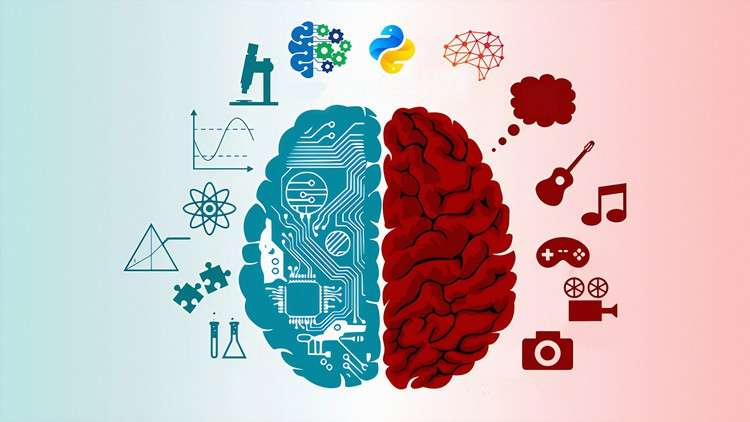
20 practical projects of Machine Learning and Deep Learning and their implementation in Python along with all the codes
What you will learn
Introducing the structure of Machine Learning and Deep Learning and their application in real problems
Introducing Machine Learning and Deep Learning algorithms and launching them in projects
Implementing Machine Learning and Deep Learning algorithms in Python
Familiarity with Python syntax for using Machine Learning and Deep Learning
Familiarity with Prediction Models
Data preparation and Visualization for use in Machine Learning and Deep Learning algorithms
Using Case Studies in projects
Learning how to use APIs to collect up-to-date data and learn about different Data sets
Introducing and using different Machine Learning and Deep Learning libraries in Python
Getting to know different Neural Networks and using them in real projects
Image processing using Artificial Neural Network (ANN) in Python
Classification with Neural Networks using Python
Familiarity with Natural Language Processing (NLP) and its use in projects
Forecasting the amount of sales, product price, sales price, etc.
Introducing and using algorithm validation metrics such as: Confusion matrix, Accuracy score, Precision score, Recall score, F1 score, etc.
+40 Cheat Sheets of Data Science, Machine Learning, Deep Learning and Python
Description
Machine learning and Deep learning have revolutionized various industries by enabling the development of intelligent systems capable of making informed decisions and predictions. These technologies have been applied to a wide range of real-world projects, transforming the way businesses operate and improving outcomes across different domains.
In this training, an attempt has been made to teach the audience, after the basic familiarity with machine learning and deep learning, their application in some real problems and projects (which are mostly popular and widely used projects).
Also, all the coding and implementation of the models are done in Python, which in addition to machine learning, students’ skills in Python language will also increase and they will become more proficient in it.
In this course, students will be introduced to some machine learning and deep learning algorithms such as Logistic regression, multinomial Naive Bayes, Gaussian Naive Bayes, SGDClassifier, … and different models. Also, they will use artificial neural networks for modeling to do the projects.
The use of effective data sets in different fields, data preparation and pre-processing, visualization of results, use of validation metrics, different prediction methods, image processing, data analysis and statistical analysis are other parts of this course.
Machine learning and deep learning have brought about a transformative impact across a multitude of industries, ushering in the creation of intelligent systems with the ability to make well-informed decisions and accurate predictions. These innovative technologies have been harnessed across a diverse array of real-world projects, reshaping the operational landscape of businesses and driving enhanced outcomes across various domains.
Within this training course, the primary aim is to impart knowledge to the audience, assuming a foundational understanding of machine learning and deep learning concepts. The focus then shifts to their practical applications in addressing real-world challenges and undertaking projects, many of which are widely recognized and utilized within the field.
Moreover, the entirety of coding and models implementation is conducted using the Python programming language. This dual approach not only deepens the students’ grasp of machine learning but also contributes to their proficiency in the Python language itself.
The curriculum of this course encompasses the introduction of several fundamental machine learning and deep learning algorithms, including Logistic Regression, Multinomial Naive Bayes, Gaussian Naive Bayes, SGDClassifier, and some other algorithms among others, alongside diverse model architectures. As a pivotal component of the course, students delve into the utilization of artificial neural networks for modeling, which serves as the cornerstone for executing the various projects.
Comprehensive utilization of pertinent datasets spanning diverse domains, coupled with comprehensive data preparation and preprocessing techniques, takes precedence. The students are further equipped with the skills to visualize and interpret outcomes effectively, employ validation metrics judiciously, explore varied prediction methodologies, engage in image processing, and undertake data analysis and statistical analysis. These facets collectively constitute the multifaceted landscape covered by this course.
And at the end, more than 40 complete and practical cheat sheets in the field of data science, machine learning, deep learning and Python have been given to you.
Content
Introduction
Waiter Tips Prediction with Machine Learning
Future Sales Prediction with Machine Learning
Cryptocurrency Price Prediction with Machine Learning
Stock Price Prediction with LSTM Neural Network
Image Classification with Neural Networks
Visualize a Machine Learning Algorithm
Instagram Reach Analysis with Machine Learning
Mobile Price Classification with Machine Learning
Gold Price Prediction with Machine Learning
Language Translation with Machine Learning
Covid-19 Vaccine Sentiment Analysis
Hotel Recommendation System with Natural Language Processing (NLP)
Email Spam Detection with Natural Language Processing (NLP)
Data Augmentation in Deep Learning and Neural Networks model
Image to Pencil Sketch
Hate Speech Detection with Machine Learning
SMS Spam Detection with Machine Learning
Resume Screening with Machine Learning
Credit Card Fraud Detection with Machine Learning
YouTube Trending Videos Analysis
Cheat Sheet
The Verdict: A Deep Dive into ‘Machine Learning and Deep Learning Projects in Python’
I’ve spent over a decade navigating the ever-shifting landscape of software engineering and data science, and if there’s one thing I’ve learned, it’s that theory is a comfortable lie. You can watch 50 hours of lectures on stochastic gradient descent, but until you’re staring at a broken model with a learning rate that refuses to converge, you don’t really know anything. That’s why I was curious about this specific course. With a promise of 20 distinct projects, it positions itself as a bootcamp for those tired of academic fluff.
What sets this course apart isn’t just the sheer volume of hands-on labs, but the focus on the “messy” parts of the pipeline. Most courses give you a perfectly cleaned CSV file and tell you to run a regression. In the real world, data is garbage. This course spends significant time on data preparation and visualization, which is where 80% of a Data Scientist’s day actually goes. It’s an industry-standard approach that bridges the gap between being a student and being a practitioner. Whether you are moving from beginner to advanced or just need to refresh your portfolio, the structure here is designed to produce job-ready skills rather than just a certificate to hang on a digital wall.
Prerequisites for Success
Before you jump into the deep end, let’s talk about what you actually need in your toolkit. While the course covers Python syntax, you shouldn’t be a total stranger to the language. You don’t need to be a software architect, but understanding basic loops and data structures will keep you from getting bogged down. Additionally, a high-school level understanding of statistics is helpful—not because you’ll be doing manual calculations, but because you need to understand why a prediction model is failing. If you have a computer with at least 8GB of RAM and a hunger to break things and fix them, you’re ready.
Skills & Industry-Standard Tools
The tech stack here is exactly what you’ll encounter in a modern AI development role. You aren’t just learning “theory”; you are gaining mastery over the tools that power top-tier tech firms. Here is a breakdown of what you’ll be working with:
- Python Ecosystem: Mastery of Pandas for data manipulation and NumPy for numerical computing.
- Scikit-Learn: The bread and butter for traditional Machine Learning algorithms like Random Forests and SVMs.
- Deep Learning Frameworks: Implementing neural networks using TensorFlow or Keras for complex pattern recognition.
- API Integration: Using APIs to collect up-to-date data, which is a critical skill for building dynamic, real-world applications.
- Data Visualization: Using Matplotlib and Seaborn to communicate insights—essential for stakeholder buy-in.
Career Benefits & Job Roles
Let’s be blunt: companies don’t hire you for what you know; they hire you for what you can build. Completing 20 real-world projects gives you a massive advantage during the hiring process. This course serves as excellent certification prep for those looking to validate their expertise, but more importantly, it builds a portfolio. After finishing, you’ll be qualified to step into roles such as:
- Machine Learning Engineer: Designing and deploying scalable models in production environments.
- Data Scientist: Extracting actionable insights from complex datasets to drive career growth and business value.
- AI Research Assistant: Testing and iterating on cutting-edge Deep Learning architectures.
- Business Intelligence Developer: Creating prediction models that forecast market trends and consumer behavior.
Why This Course Hits the Mark (The Pros)
- The “Project-First” Philosophy: Instead of boring you with 10 hours of slides, you get straight into hands-on labs. This builds muscle memory that sticks.
- API and Live Data Focus: Most courses use static, outdated datasets. Learning to pull live data via APIs makes your projects feel current and professionally relevant.
- Comprehensive Breadth: Covering both Machine Learning and Deep Learning in one go provides a holistic view of the AI landscape, making you a more versatile hire.
- Code Transparency: Having access to all the implementation codes is a lifesaver. It allows you to reverse-engineer complex logic when you get stuck.
The Reality Check (The Cons)
If you are someone who craves deep, theoretical mathematical proofs, you might find this course a bit “fast.” It prioritizes implementation and job-ready skills over academic rigor. It’s perfect for those who want to build things, but if you want to write a thesis on the derivative of an activation function, you’ll need to supplement this with heavy textbooks.