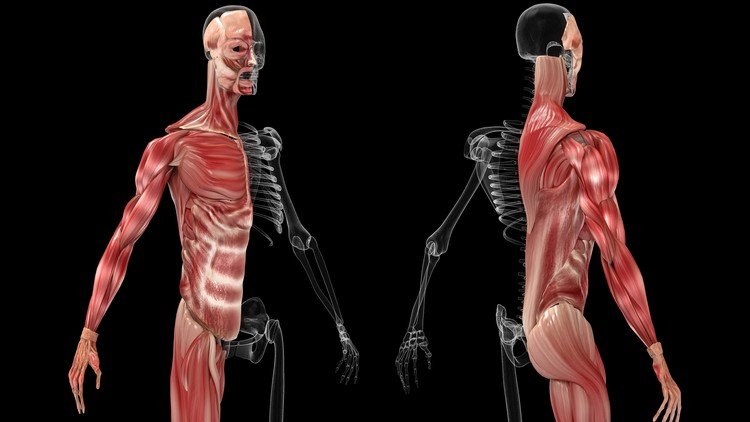
Master deep muscle anatomy, mechanics and biomechanics
What You Will Learn:
- Identify major skeletal muscles and bones relevant to strength training and fitness.
- Understand basic joint movements and biomechanics (flexion, extension, etc.).
- Connect specific exercises to the target muscle groups being worked.
- Improve exercise cueing and form using proper English anatomical terms.
Alright, let’s talk about ‘Functional anatomy and muscle mechanics’. If you’re even remotely serious about fitness, personal training, or just genuinely understanding how your meat suit actually works when you’re pushing iron, then listen up. This isn’t just another dry anatomy class regurgitating Latin terms; it’s a deep dive into the ‘why’ and ‘how’ behind every rep, every stretch, every single movement you or your clients make. And honestly, it’s a game-changer.
Overview
Look, anyone can memorize biceps origins. What this course *actually* delivers is crucial understanding of *how* that muscle functions dynamically – not in isolation, but in concert with other muscles, bones, and joints. It’s about moving beyond static flashcards to living comprehension of human movement. We connect the dots between squat variations and precise biomechanical demands on glutes, quads, and core, or why a bench press grip targets triceps. This isn’t just foundational; it’s the bedrock for intelligent training design, injury mitigation, and impactful exercise cueing beyond “squeeze your shoulder blades.” It elevates your understanding from basic mechanics to a nuanced, holistic approach to movement science, crucial for optimizing performance or preventing setbacks.
Prerequisites
Honestly, you don’t need a Ph.D. in kinesiology. If you have a genuine interest in human movement, some gym experience, or are contemplating a fitness career, you’re good. While it takes you from beginner to advanced concepts, a basic grasp of biological terms helps. The course builds from fundamentals, but come prepared to apply what you learn – passive learning won’t cut it.
Skills & Tools
Post-course, you won’t just *know* anatomy; you’ll *see* it. You’ll master sophisticated biomechanical analysis, dissecting exercise form with precision. This directly enhances exercise selection and prescription. You’ll precisely identify major skeletal muscles and bones as active movement components. Your vocabulary upgrades to proper anatomical terms, dramatically improving your exercise cueing and explaining critical form adjustments. The acquired skills—deep observational ability, analytical thinking, and precise communication—are the real job-ready skills. Expect visual aids, anatomical models, and practical examples connecting theory to movement.
Career Benefits & Job Roles
This course is a goldmine for fitness professionals: personal trainers, strength and conditioning coaches, group fitness instructors, and aspiring physical therapy assistants. The in-depth knowledge translates into higher client retention, better results, and expertise. It’s excellent for certification prep (NASM, ACE, NSCA CSCS), solidifying foundational knowledge. Mastering functional anatomy boosts professional credibility and opens doors to specialized roles. This unlocks significant career growth with indispensable skills. You’ll confidently explain *why* and *how* to do exercises safely, fostering trust and better outcomes.
Pros
- Unparalleled Practical Application: This course immediately links anatomical knowledge to real-world exercises and movement. You learn how muscles *work* during a deadlift or shoulder press, providing invaluable, hands-on contextual understanding for practical coaching.
- Elevated Exercise Cueing & Communication: Master proper anatomical terminology to deliver precise, effective cues. This directly improves client understanding, form, and results, elevating your coaching beyond generic instructions to sophisticated, targeted guidance.
- Robust Foundation for Injury Prevention & Performance: Gain a deep understanding of muscle mechanics and joint biomechanics, crucial for preventing client injuries and maximizing performance. You’ll identify movement dysfunctions and design safer, more effective programs, boosting client success and your reputation.
- Strong Certification Prep: This course builds comprehensive anatomical and biomechanical understanding vital for major industry certifications. It makes complex exam questions approachable, providing a distinct advantage in your certification prep.
Cons
- Potentially Overwhelming Depth for Absolute Novices: While the course builds from foundational concepts, the sheer volume and depth of information, particularly on muscle mechanics and biomechanics, can be substantial for someone with zero prior exposure. It demands serious dedication, so don’t expect a casual stroll.