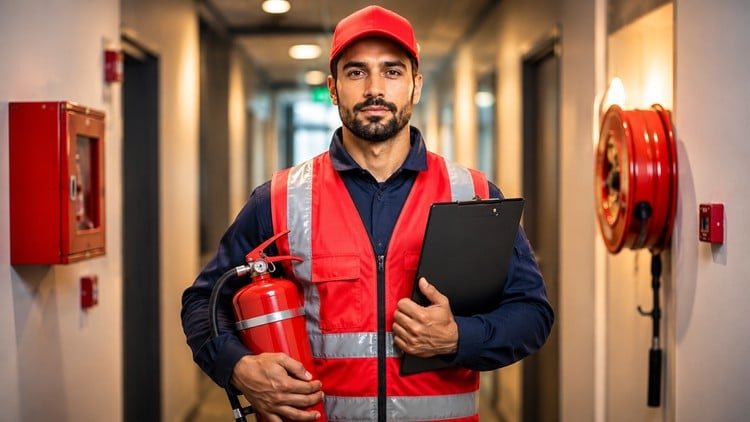
Fire Warden Training: Fire Prevention, Emergency Evacuation, Fire Extinguishers & Workplace Safety
What You Will Learn:
- Understand Canadian fire safety legislation and the key responsibilities of a workplace Fire Warden.
- Identify common workplace fire hazards and apply effective fire prevention and risk-control measures.
- Recognize different classes of fire and select appropriate fire extinguishers and initial response methods.
- Understand workplace fire protection systems, emergency equipment, alarms, and essential safety procedures.
- Plan and support safe emergency evacuations, including evacuation routes, assembly points, and Fire Warden procedures.
- Conduct effective fire drills, contribute to incident reporting, and understand post-fire responsibilities and follow-up actions.
- Show more
Overview: Why Every Tech Lead Should Actually Pay Attention
Let’s be real for a second. In the tech world, we spend 90% of our time worrying about cybersecurity, server uptime, and whether the latest deployment is going to break the build. Physical safety? That’s usually something we assume the “building management” handles. But after being tapped as the designated Fire Warden for my floor during a recent office transition, I realized how massive that blind spot is. The Fire Warden and Workplace Fire Safety Training isn’t just another compliance checkbox; it’s a deep dive into the literal life-and-death mechanics of the modern office environment.
Most people expect these courses to be dry PowerPoint marathons. While there is definitely a legal framework involved—specifically focusing on Canadian fire safety legislation—the course actually feels more like a tactical briefing. It moves past the “don’t leave the toaster unattended” clichés and gets into the high-stakes logic of incident management. Whether you are working in a sprawling corporate HQ or a high-density data center packed with lithium-ion batteries and cooling systems, the job-ready skills you pick up here are surprisingly transferable to any leadership role. It’s about maintaining “cool under fire” (pun intended) and managing human behavior when the alarm actually goes off.
What I appreciated most was the focus on the “Warden” mindset. It’s not just about knowing where the exit is; it’s about the career growth that comes from taking ownership of a team’s physical security. You’re essentially the “Incident Commander” for the physical layer. If you’ve ever managed a SEV-1 outage, you’ll recognize the patterns here: triage, communication, and execution under pressure.
Prerequisites: Who Should Step Up?
Technically, this is designed for beginner to advanced learners, meaning you don’t need a background in emergency services to get started. However, I’d argue that the best candidates are those already in mid-to-senior positions or facility management roles. If you’re the person people look to when the Wi-Fi goes down, you’re likely the person they’ll look to when the smoke detectors trigger. There are no heavy hardware requirements, but a basic understanding of your current office layout and a willingness to lead a “debrief” or real-world project (like mapping your own floor’s hazards) is essential.
Skills & Tools: Beyond the Red Can
The course covers a surprising amount of ground regarding industry-standard tools. We aren’t just talking about the basic ABC extinguisher; we’re talking about specialized suppression systems that are vital for anyone working around servers or expensive hardware. Here’s a breakdown of the toolkit you develop:
- Extinguisher Proficiency: Understanding the chemistry of fire and which hands-on labs or simulations to use for electrical vs. chemical fires.
- Emergency Command: Using industry-standard tools like evacuation whistles, high-visibility gear, and communication logs.
- Risk Mitigation: Learning how to perform a “bug hunt” for fire hazards—overloaded daisy-chained power strips in the dev lab, blocked vents, and outdated server room cooling.
- Legislation Mapping: Navigating the certification prep materials for Canadian fire codes to ensure your workplace isn’t just safe, but legally compliant.
Career Benefits & Job Roles
You might think “Fire Warden” is just a volunteer title, but in the world of Facilities Management, Operations, and Site Reliability, these job-ready skills are a major differentiator. If you are aiming for a role as a Safety Officer, Facilities Manager, or even a Head of Operations, having a formal certification in fire safety adds a layer of professional maturity to your resume. It shows you understand the real-world projects associated with risk management. In many jurisdictions, having a certified Fire Warden is a legal requirement for certain building occupancies, making you an indispensable asset to the HR and Legal departments.
Pros
- Tactical Clarity: It cuts through the fluff. You walk away knowing exactly who does what when the bells ring, which is a massive confidence booster.
- Tech-Relevant Scenarios: The training specifically addresses modern workplace hazards, including the high-voltage environments and server rooms that tech pros actually inhabit.
- Leadership Development: It’s an excellent way to practice career growth through crisis management training that translates directly to team lead roles.
- Comprehensive Certification Prep: The modules are structured perfectly for anyone looking to pass formal safety audits or internal compliance checks.
Cons
The Legislative Dryness: Let’s be honest, the sections covering the specific subsections of Canadian fire safety legislation can be a bit of a slog. It’s essential information, but it lacks the excitement of the hands-on labs or evacuation simulations. You’ll need a double espresso to get through the legal definitions, but once you hit the practical response sections, the pace picks up significantly.