principales of ethology
What you will learn
intron to ethology
general ethology vs special
horse special behavior
Management and animal behavior
Why take this course?
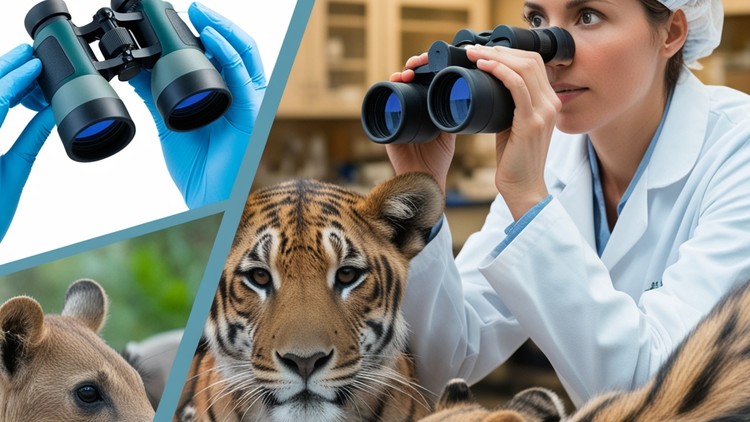
Ethology for veterinarians is a course that focuses on the scientific study of animal behavior, particularly in the context of veterinary medicine. It covers key aspects of animal behavior including social interactions, communication, learning, instincts, and responses to different environmental stimuli. The course is designed to help veterinarians understand normal versus abnormal behaviors in a variety of species, such as domesticated pets, livestock, and wildlife.
Topics may include:
- Behavioral patterns and their evolutionary significance
- Stress, fear, and aggression management
- Human-animal interactions
- Diagnosis and treatment of behavioral disorders
- Application of behavioral principles in clinical practice
course typically covers the following key topics:Introduction to Ethology: Basic principles, history, and significance of animal behavior in veterinary medicine.Behavioral Development: How genetics and environment influence behavior from birth to adulthood.Learning and Conditioning: Mechanisms of classical and operant conditioning, habituation, imprinting, and social learning.Communication in Animals: How animals use visual, auditory, chemical, and tactile signals to communicate.Social Structures and Behavior: Social hierarchies, territoriality, group dynamics, and cooperative behaviors.Normal vs. Abnormal Behavior: Identifying and differentiating typical behaviors from behavioral disorders in various species.
Fear, Aggression, and Stress: Causes and management of fear, aggression, stress-related behaviors, and anxiety in animals.
Human-Animal Interaction: The impact of human handling, socialization, and training on animal behavior and welfare.
Behavioral Disorders: Diagnosing and treating issues like separation anxiety, compulsive disorders, and aggression in clinical settings.
Animal Welfare and Ethics: The role of veterinarians in promoting animal welfare through an understanding of behavioral needs.
Species-Specific Behavior: Behavior patterns of common domestic animals (dogs, cats, horses, livestock) and exotic species.
Environmental and Enrichment Strategies: Use of environmental modifications and enrichment to promote natural behavior and reduce stress.
These topics help veterinarians improve animal welfare, prevent behavioral issues, and offer behavior-based treatment in clinical practice.
Overview: Why Behavioral Data is the New Gold Standard
After spending a decade in the tech sector, I’ve learned that the best systems are only as good as our understanding of their “users.” In the world of veterinary medicine, the users are the animals, and their “interface” is their behavior. The **Applied Veterinary Ethology** course isn’t just some dry academic exercise; it’s a masterclass in reading the room—if that room happens to be a stable or a clinic.
What struck me most wasn’t just the “what” of animal behavior, but the “how.” Most courses give you a list of traits; this one provides a framework for troubleshooting. Think of it as **advanced** debugging for living organisms. We often look at an aggressive horse or a stressed herd and see a problem to be “fixed.” This course teaches you to see it as a system failure—usually a failure of management or environment. The transition from **beginner to advanced** concepts happens fast, moving from simple evolutionary drives to complex behavioral feedback loops. If you want to move beyond “guessing” why an animal is acting out and start using **industry-standard tools** for behavioral assessment, this is the deep dive you’ve been looking for.
Prerequisites
You don’t need a PhD in biology to get started, but you do need a baseline comfort level with scientific observation. If you’ve done any kind of **certification prep** in the past, you’ll appreciate the structured approach here. A basic understanding of vertebrate anatomy is helpful, and a healthy dose of patience for objective observation is mandatory. You’re not just “watching” animals; you’re collecting data, so a analytical mindset is your best asset.
Skills & Tools Mastered
This isn’t just theoretical fluff; you walk away with a toolkit that is immediately applicable to **real-world projects**.
- Ethogram Construction: Learning how to create a comprehensive catalog of behaviors, which is the “source code” for any ethological study.
- Stress Indicator Mapping: Identifying cortisol-related behaviors before they escalate into clinical issues.
- Environmental Optimization: Designing “hardware” (enclosures/stables) that minimizes “software” glitches (stereotypies).
- Observational Software: Exposure to **industry-standard tools** used for logging behavioral sequences in real-time.
- Risk Assessment: Predicting flight-or-fight responses in high-pressure veterinary environments.
Career Benefits & Job Roles
Taking this course is a major move for **career growth**, especially if you’re looking to pivot into specialized animal care or management. We’re seeing a massive shift in the industry toward “low-stress handling,” and being the person who actually understands the science behind it makes you an invaluable asset.
- Equine Behavioral Consultant: Use your knowledge of **horse special behavior** to fix performance issues that trainers can’t solve.
- Veterinary Practice Manager: Implement **job-ready skills** by redesigning clinic workflows to reduce patient anxiety.
- Animal Welfare Auditor: A must-have for those looking to work in regulatory roles or large-scale agricultural oversight.
- Ag-Tech Consultant: For those of us with a tech background, this knowledge is critical for developing “smart” monitoring systems for livestock.
Pros
- Hands-on Labs: The course doesn’t keep you behind a desk. The **hands-on labs** force you to apply the theory to actual animals, which is where the real learning happens.
- The “Special Ethology” Deep Dive: Most courses treat all animals the same. This one treats horses as a unique “special behavior” case study, which is essential given their complexity and economic value.
- Management-Centric: It connects behavior directly to management. It proves that most “behavioral problems” are actually “management bugs” that can be patched with the right environmental tweaks.
- Networking: You’re learning alongside professionals who are already in the field, providing a great “in” for future collaborations.
Cons
If I’m being honest, the transition from “general ethology” to “special ethology” can feel a bit like a jump in difficulty settings. The introductory modules are very accessible, but once you hit the specific equine behavioral data, the learning curve gets steep. If you aren’t prepared to do some heavy lifting in terms of memorizing specific behavioral triggers and metabolic links, you might feel a bit underwater mid-way through. It’s definitely not a “passive” course you can just breeze through over a weekend.