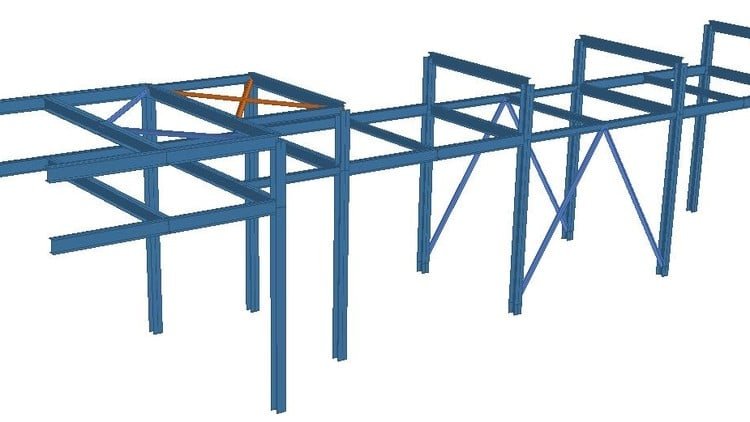
Advance Professional Course on Design of Steel Industrial Pipe Rack Structure (PR-I) using AISC & ACI
What You Will Learn:
- Analysis Design of Industrial Steel Pipe Rack Structure using AISC, ACI
- Design of Steel Connections of the Pipe Rack Structure
- Earthquake load Assignment as per AISC, Wind load as per AISC
- International norms and design standards for Pipe Rack Structure design
- Optimization and Finalization of Steel Members
- Design of RC Foundation and RC Pedestal as per ACI
Advance Professional Course on Design of Steel Industrial Pipe Rack Structure (PR-I) using AISC & ACI
Topics: Analysis Design of Industrial Steel Pipe Rack Structure using AISC, ACI | Design of Steel Connections of the Pipe Rack Structure | Earthquake load Assignment as per AISC, Wind load as per AISC | International norms and design standards for Pipe Rack Structure design | Optimization and Finalization of Steel Members | Design of RC Foundation and RC Pedestal as per ACI
Alright, let’s talk about the ‘Design of PipeRack Structure (PR-I) Part-I’ course. If you’re a structural engineer looking to level up in the industrial design space, especially for the heavy-hitter sectors like oil & gas or petrochemicals, this one definitely deserves your attention. My take on these types of courses is always rooted in practical application, and this program largely delivers on that front.
Overview
This isn’t just another theoretical stroll through structural engineering principles. What you get here is a focused, deep dive into one of the most common, yet critically complex, structures in industrial facilities: the pipe rack. The course brilliantly stitches together the entire design lifecycle, from understanding the various loading conditions to the intricate details of steel connections and the often-overlooked but crucial RC foundations. It’s a comprehensive approach that moves beyond isolated design tasks, teaching you to see the pipe rack as an integrated system. Instead of just showing you formulas, it guides you through the process of applying AISC (American Institute of Steel Construction) and ACI (American Concrete Institute) codes in tandem, which is exactly how it works in the real world. For those of us who appreciate a holistic view rather than compartmentalized learning, this course offers a truly valuable perspective on bringing a robust industrial structure to life.
Prerequisites
Let’s be clear: this isn’t a “beginner to advanced” course for someone just starting their journey in structural engineering. To genuinely benefit from this program, you need a solid foundational understanding of structural analysis and design principles. You should be comfortable with basic mechanics of materials, structural statics, and have at least an introductory grasp of steel and concrete design. Familiarity with any industry-standard structural analysis software (like STAAD.Pro, ETABS, or SAP2000) would be a significant advantage, as the course heavily relies on applying theoretical knowledge through these industry-standard tools. If you’re fresh out of school without much practical exposure, you might find the pace challenging. But for someone with a few years under their belt or a strong academic background in structural design, you’ll hit the ground running and find immense value.
Skills & Tools
Post-completion, you’ll walk away with some seriously job-ready skills. The course hones your ability to perform detailed structural analysis, encompassing gravity, wind (per AISC), and complex earthquake load assignments (also per AISC), which is absolutely critical for project compliance and safety. You’ll gain expertise in the practical application of both AISC for steel and ACI for concrete elements, ensuring designs meet rigorous international norms and standards. A significant component is the design of various steel connections, a common pain point for many engineers. Furthermore, you’ll learn about the optimization and finalization of steel members to achieve efficient and cost-effective designs. Finally, it dives into the design of RC foundations and pedestals, completing the full structural picture. Expect to deepen your proficiency with FEA software for analysis and design verification, an indispensable skill in today’s engineering landscape.
Career Benefits & Job Roles
This course is a definite accelerator for career growth, especially if you’re targeting or already in the industrial sector. The specialized knowledge in pipe rack design, combined with a mastery of international codes like AISC and ACI, makes you a highly sought-after professional. You’ll be equipped to tackle real-world projects in oil & gas, petrochemical plants, power generation facilities, and other heavy industrial installations. This isn’t just theory; it’s practical know-how that translates directly into project execution. It’s also excellent for indirect certification prep, as the rigorous application of design codes strengthens the fundamental knowledge required for professional engineering (PE) exams. You’d be well-suited for roles such as Structural Design Engineer, Project Engineer (with a structural focus), Consulting Engineer, or even a lead role in specialized industrial design firms. The practical, code-compliant approach sets you apart in a competitive market.
Pros
- Highly Practical and Industry-Relevant: The focus on a specific, critical industrial structure (pipe racks) ensures that the skills learned are immediately applicable to real-world industrial projects, making it a powerful addition to your professional toolkit.
- Comprehensive Code Integration: It doesn’t just mention AISC and ACI; it truly integrates their application throughout the design process, from steel members to concrete foundations and seismic/wind loads. This is invaluable for ensuring designs are compliant and safe.
- Holistic Design Approach: Unlike courses that compartmentalize design elements, this program teaches you to view the pipe rack as a complete system, including connections, foundations, and load considerations, fostering a more robust engineering mindset.
- Emphasis on Optimization: The module on optimization and finalization of steel members is particularly useful. Learning to create not just compliant, but also efficient and economical designs, directly impacts project budgets and distinguishes skilled engineers.
Cons
- Steep Learning Curve if Foundations are Weak: While the course is labeled “professional,” I felt that for some, the pace might be a bit too fast if their fundamental understanding of structural analysis and design codes isn’t already rock-solid. There’s an assumption of a certain baseline proficiency with structural analysis software, and a deeper dive into software specifics or additional hands-on labs for diverse case studies could further enhance the learning for those who need more repeated exposure to various scenarios beyond the main examples.