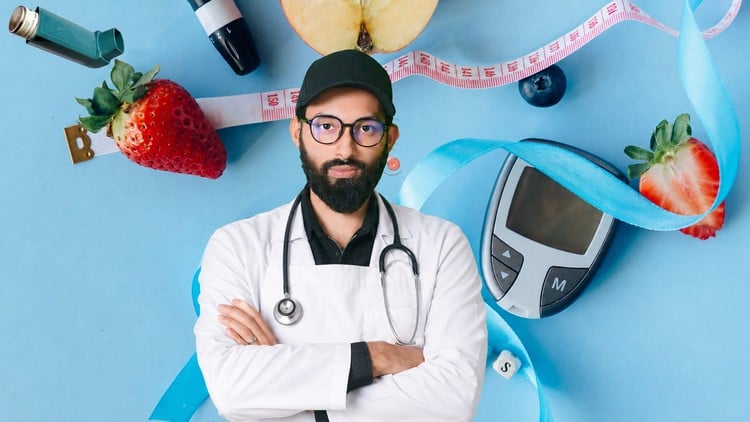
Practical guidance for schools and carers supporting people with long-term health conditions.
What You Will Learn:
- Understand what dementia is, its main types, and how to recognise the early warning signs in those you support.
- Learn how dementia is diagnosed and how a person-centred approach transforms the quality of care provided.
- Know how to support individuals with dementia in the workplace, at home, and across different care environments.
- Apply active care strategies including daily care planning, medication management, consent, and end-of-life support.
- Get the communication skills needed to decode unmet needs, build meaningful connections, and preserve dignity.
- Understand what diabetes is, the difference between Type 1 and Type 2, and the long-term risks of poor management.
- Show more
Alright, let’s talk about ‘Dementia, Diabetes, Epilepsy & Asthma Care Awareness’. As someone who usually navigates complex systems architectures and debates the merits of various cloud platforms, diving into a course focused purely on human care might seem like a departure. But honestly, it’s one of those foundational courses that every thinking adult, especially in a professional capacity, should consider. Forget the usual tech stacks for a moment; this is about understanding the human stack, its vulnerabilities, and how to maintain it with dignity.
Overview
This isn’t your typical certification path with a clear-cut API or a new programming language to master. Instead, it’s a deep dive into empathy, practical support, and critical awareness for conditions that affect millions globally. Think of it less as a coding bootcamp and more as an operating system upgrade for your human interaction skills. It systematically unpacks four prevalent long-term health conditions, offering not just definitions but actionable strategies for support. What truly impressed me was its pragmatic angle: it’s not about becoming a medical professional, but about equipping you with the understanding and confidence to make a tangible, positive difference in someone’s daily life. It’s about building resilient human systems, something we often overlook in our pursuit of technological efficiency. Whether you’re a professional carer, an HR manager, or simply supporting a loved one, this course lays down a robust framework for compassionate and effective care.
Prerequisites
Unlike most technical courses that demand prior coding experience or a specific understanding of data structures, the prerequisites here are delightfully human. You need a willingness to learn, an open mind, and perhaps most importantly, a dash of empathy. While no formal medical background is required, having even anecdotal experience with someone living with a long-term condition—be it a family member, a colleague, or a friend—will likely deepen your appreciation for the material. Basic literacy and a decent internet connection are pretty much the only hard requirements. It’s truly accessible from a beginner to advanced learner perspective, as the core concepts are universal, and the practical application scales with your existing experience.
Skills & Tools
You won’t be writing any code or configuring network devices here, but the ‘tools’ you acquire are arguably more impactful for human interaction. This course sharpens your communication skills to an acute degree, enabling you to decode unmet needs and foster meaningful connections – a skill often undervalued even in tech leadership. You’ll gain a methodological approach to daily care planning, learn the essentials of medication management without needing a pharmacy degree, and understand the nuances of consent in complex situations. The ‘tools’ are essentially frameworks for a person-centred approach, observation techniques, and strategies for maintaining dignity in challenging circumstances, including end-of-life support. While not “industry-standard tools” in the software sense, these are “life-standard tools” that are invaluable across any professional or personal domain. The focus here is on developing robust soft skills and a structured approach to care, which are directly transferable to managing people and projects with greater sensitivity.
Career Benefits & Job Roles
For a tech professional, you might wonder about the direct ROI for career growth. While this isn’t explicit certification prep for a specific tech role, the indirect benefits are profound. Think about roles in HR, health & safety, diversity & inclusion, or even leadership positions where understanding employee well-being is paramount. Being equipped with this awareness makes you a more empathetic leader, a more understanding colleague, and frankly, a better human being in the workplace. It enhances your ability to manage teams, support employees facing personal challenges, and contribute to a more inclusive work environment. For those interested in real-world projects involving assistive technology or healthcare tech, this course provides crucial context and user understanding. Specific job roles benefiting include: HR Business Partner, Team Lead, Health & Safety Officer, Diversity & Inclusion Specialist, Community Manager, or even entrepreneurs developing products for aging populations or those with chronic conditions. It imbues you with job-ready skills that extend beyond technical prowess, making you a more rounded and valuable professional in any forward-thinking organization.
Pros
- Profound Practicality: This isn’t theoretical fluff. The course delivers genuinely practical guidance, focusing on hands-on labs (albeit conceptual ones through case studies) for implementing care strategies. You walk away with tangible steps for daily support, communication, and crisis management.
- Holistic & Integrated Approach: By covering four distinct conditions, the course implicitly teaches how to manage multiple health needs simultaneously, which is a common real-world scenario. It highlights the interconnectedness of care.
- Emphasis on Dignity and Person-Centred Care: The constant focus on the individual, maintaining their autonomy, and preserving their dignity truly elevates this course beyond mere awareness to genuine compassionate action. It teaches you to truly “see” the person, not just the condition.
- Exceptional Communication Skills Development: A significant portion is dedicated to effective communication, active listening, and interpreting non-verbal cues. These are invaluable soft skills applicable in almost any professional or personal context, far beyond caregiving.
Cons
- Breadth Over Depth: Given its “awareness” scope and covering four distinct conditions, the course naturally leans towards breadth rather than profound depth on any single condition. If you need highly specialized clinical knowledge for a specific disease, this course serves as an excellent foundation but would require further, more specialized training. It’s not a medical degree, nor does it pretend to be.