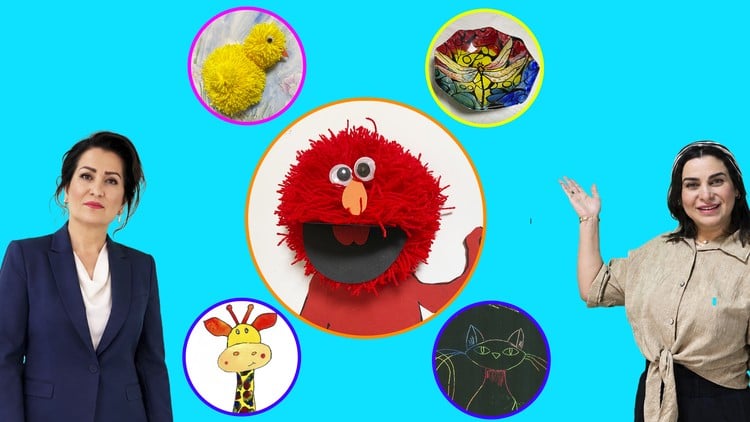
Fun hands-on craft projects for kids ages 5-12 using creativity, storytelling, and AI-inspired ideas.
What You Will Learn:
- Create unique and imaginative craft projects using simple materials
- Develop creativity and artistic thinking through hands-on activities
- Improve fine motor skills and hand-eye coordination
- Learn how to turn ideas into creative art projects
- Build confidence through self-expression and creative exploration
- Discover AI-inspired methods for generating fun craft ideas
- Strengthen problem-solving and critical thinking skills
- Complete engaging DIY projects designed for children ages 5-12
Overview: Why This Isn’t Your Typical Glitter-and-Glue Session
As someone who spends most of my day staring at IDEs and managing high-level cloud deployments, I’ve grown increasingly wary of “digital-first” education for kids. We’re quick to throw a tablet at a seven-year-old and call it certification prep for the future. But the “Creative Kids Workshop: Smart DIY Crafts & AI-Powered Ideas” caught my eye because it attacks the problem from a different angle. It bridges the gap between old-school tactile hands-on labs and the burgeoning world of generative technology.
I went into this expecting another cookie-cutter art class, but what I found was actually a clever primer on computational thinking. The course doesn’t just ask kids to build a cardboard robot; it uses AI-inspired brainstorming frameworks to push them into real-world projects that mirror how we, as professionals, use industry-standard tools to ideate. It treats creativity as a structured workflow—moving from a prompt to a prototype. In a world where career growth is increasingly tied to how well you can collaborate with machine intelligence, teaching a 10-year-old to use AI as a “creative co-pilot” for physical crafts is a genius move. This isn’t just about making “stuff”; it’s about the iteration process, which is a fundamental job-ready skill in any technical field.
Prerequisites
One of the best things about this workshop is the low barrier to entry. While it targets the beginner to advanced spectrum for children, the technical requirements are minimal:
- A basic curiosity for making things (no coding knowledge required).
- Access to a parent’s smartphone or tablet for the AI-assisted ideation segments.
- A standard kit of household craft supplies (cardboard, tape, markers, etc.).
- Supervision for the younger end of the 5-12 age bracket to help with the “hardware” (aka scissors).
Skills & Tools: Building the Tech-Creative Stack
The curriculum leans heavily into problem-solving, which is essentially the industry-standard for engineering. The “tools” here are a mix of physical and conceptual.
- AI Prompting for Creativity: Kids learn how to use simple AI tools to generate wild project ideas, teaching them early “prompt engineering” logic.
- Structural Engineering Basics: Using recycled materials to understand weight, balance, and real-world application of physics.
- Iterative Design: The course encourages “v2” and “v3” of projects, mirroring the agile development cycle I see in my daily work.
- Storytelling & UX: Every craft has a “why” behind it, which is the cornerstone of great User Experience (UX) design.
Career Benefits & Job Roles: The Long Game
You might think it’s a stretch to talk about career benefits for a craft course, but I disagree. The modern workforce is pivoting away from rote memorization toward creative problem-solving. By engaging in these hands-on labs, kids are developing the neural pathways needed for high-level roles later in life.
- Future UX/UI Designers: Understanding how a physical object interacts with a user’s story is the first step toward digital design.
- AI Trainers & Prompt Engineers: Learning that AI is a tool to be directed, not a replacement for human thought, is a job-ready skill that will only grow in value.
- Project Managers: Taking a craft from a “concept” to a finished “deliverable” builds the foundation for future career growth in management.
- Creative Directors: Leading the vision of a project and seeing it through the prototyping phase is exactly what we look for in senior-level talent.
The Pros
- Balanced Screen Time: It uses tech as a catalyst for physical activity, rather than a replacement for it. This is a refreshing take on hands-on learning.
- Scalable Difficulty: The course is truly beginner to advanced. A 5-year-old can make a mask, while a 12-year-old can use the AI prompts to design a complex, kinetic sculpture.
- Confidence Building: By focusing on self-expression, it removes the “fear of failure” that often plagues students in more rigid certification prep environments.
The Cons
- Parental Overhead: Let’s be honest—if you’re looking for a “set it and forget it” course to keep the kids quiet for three hours, this isn’t it. Because it involves AI-inspired ideas and physical construction, younger kids will definitely need you to act as the “Technical Lead” on their projects to ensure they don’t get frustrated or glue the cat to the floor.