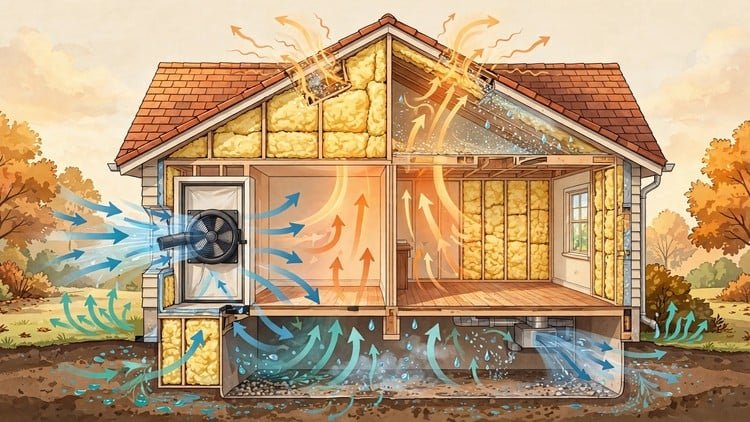
Practice for the BSP exam with 562 multiple-choice questions, detailed explanations, and self-paced study for 2026.
What You Will Learn:
- Apply building science fundamentals, heat, air, and moisture flow for home performance work.
- Identify envelope, insulation, and control layers, including air, thermal, and moisture layers.
- Apply blower door, infiltration, and ventilation concepts for air leakage assessment decisions.
- Apply HVAC, water heating, efficiency ratings, and system sizing concepts for field decisions.
- Apply combustion safety, gas appliances, and carbon monoxide action levels for field work correctly.
Overview
Alright, let’s cut through the noise. You’re looking at the ‘BPI Building Science Principles (BSP) Practice Tests,’ and if you’re serious about a career in home performance or energy auditing, this isn’t just another set of quizzes. This is your mental grindstone, sharpening your theoretical edge for what many consider a foundational certification in our field. With a whopping 562 multiple-choice questions, this isn’t some quick refresh; it’s a deep dive into the BPI exam structure and the core concepts you absolutely need to master. What truly sets this package apart, in my opinion, isn’t just the quantity of questions, but the quality of the detailed explanations accompanying each answer. This isn’t just about rote memorization; it’s about understanding the “why” behind the “what,” transforming every incorrect answer into a genuine learning opportunity. It’s a self-paced study tool designed to get you exam-ready for 2026, offering the flexibility we all need when juggling work and professional development. Think of it as your virtual tutor, guiding you through complex building science principles without the pressure of a live classroom, preparing you for the certification prep journey.
Prerequisites
Let’s be real, while the BSP is an entry-level certification, you won’t get the most out of these practice tests if you’re coming in completely cold. Ideally, you should have at least a basic understanding of residential construction or HVAC systems. Familiarity with fundamental physics concepts like heat transfer (conduction, convection, radiation) and moisture dynamics wouldn’t hurt either. If you’ve been working in the trades for a bit, maybe as an HVAC technician, an electrician, or even a general contractor, you’ll find the concepts resonate much faster. If you’re a complete newbie, I’d strongly recommend pairing this with a foundational textbook or an introductory online course on building science to truly grasp the principles before diving headfirst into hundreds of practice questions. This isn’t a course to teach you building science from scratch; it’s a rigorous testing ground for knowledge you should ideally already be acquiring.
Skills & Tools
While these are practice tests and not hands-on labs, successfully navigating these questions will dramatically improve your conceptual mastery of critical field skills. You’ll solidify your understanding of how to correctly interpret data from industry-standard tools. For instance, you won’t be physically operating a blower door, but you’ll learn the concepts behind assessing infiltration and ventilation, enabling you to make informed decisions about air leakage. You’ll mentally wrestle with scenarios involving combustion safety, knowing the proper protocols for gas appliances and recognizing dangerous carbon monoxide action levels – essential for real-world field work. Similarly, you’ll refine your knowledge of HVAC efficiency ratings and system sizing, translating directly into better decision-making on the job. This prepares you not just for the exam, but for the intellectual demands of actual home performance work, giving you the theoretical backbone to eventually apply these concepts with physical tools and on real-world projects.
Career Benefits & Job Roles
Earning your BPI Building Science Principles certification is a significant step for anyone looking for serious career growth in the energy efficiency and home performance sector. It’s often the baseline requirement for many roles, demonstrating a fundamental understanding of how buildings function as integrated systems. Successfully passing the BSP exam, aided by these practice tests, positions you for various rewarding job roles. Think Energy Auditor, Weatherization Technician, Home Performance Contractor, or even a specialized HVAC or insulation installer focused on efficiency. It provides you with crucial job-ready skills – not just technical know-how, but the ability to communicate complex building issues to clients, identify common problems, and recommend effective solutions. It’s the foundational badge that tells employers you understand the science behind making homes safer, healthier, and more energy-efficient.
Pros
- Extensive Question Bank: With 562 questions, you get unparalleled exposure to the types of questions and topics covered on the actual BSP exam. This volume is crucial for comprehensive certification prep.
- Detailed Explanations: This isn’t just about getting the answer right; it’s about understanding why it’s right (or wrong). The explanations elevate these practice tests from simple quizzes to a powerful learning tool, reinforcing complex building science concepts.
- Self-Paced Flexibility: The ability to study on your own schedule is a huge advantage for working professionals or those juggling other commitments. You can tailor your study plan to your availability, moving from beginner to advanced topics as your understanding grows.
- Direct Exam Alignment: The content is specifically geared towards the BPI BSP exam, ensuring that your study efforts are focused and efficient, directly preparing you for the certification’s specific requirements.
Cons
- Lacks Hands-On Application: Let’s be frank, these are practice tests. While they build immense theoretical knowledge, they don’t offer any actual hands-on labs or practical experience with industry-standard tools. For true proficiency and to develop practical job-ready skills, you’ll need to supplement this with field experience or dedicated practical training.