Prepare For BPI Building Analyst Professional BA-P Exam with multiple-choice questions and detailed explanations.
What You Will Learn:
- Apply building science and envelope concepts, heat, air, and moisture flow for home audits.
- Apply combustion safety, CAZ testing, and carbon monoxide action levels for field work correctly.
- Apply blower door, duct leakage, and diagnostic testing for building performance assessment work.
- Apply air sealing, insulation, and retrofit strategies for energy improvement recommendations.
- Apply HVAC, ventilation, and indoor air quality concepts for mechanical system assessment decisions.
- Apply reporting, protocols, and professional practices for audit documentation and ethics work.
- Distinguish spillage from backdrafting and infiltration from ventilation when explaining results.
An Unfiltered Look at the BPI Building Analyst Professional BA-P Prep
Let’s be real for a second: the world of home performance is changing fast. If you’ve been hanging around the HVAC or weatherization space, you know that the “old way” of doing things—guessing where the drafts are or eyeball-testing a furnace—just doesn’t cut it anymore. The industry is moving toward data-driven, science-backed results, and the **BPI Building Analyst Professional (BA-P)** is the gold standard for that shift. I recently spent some time digging through the “BPI Building Analyst Professional BA-P Practice Tests 2026,” and I wanted to share why this is more than just another set of multiple-choice questions.
The 2026 update is significant because it reflects the most recent industry-standard tools and safety protocols. This isn’t just a certification prep course; it’s a mental exercise in how to treat a house as a single, interconnected system. If you’re serious about career growth in energy auditing, you know that BPI exams are notoriously tricky—they test your ability to apply physics under pressure. This course aims to bridge that gap between “knowing the stuff” and “passing the test.”
The Real Prerequisites: Who Is This Actually For?
You don’t need to be a rocket scientist, but don’t walk into this expecting a beginner to advanced hand-holding session from scratch. To get the most out of these practice tests, you should already have a baseline understanding of home construction. If you don’t know what a joist is or have never seen a furnace, you’ll want to do some preliminary reading. However, if you’ve spent any time in the field or have taken an introductory building science course, this is the perfect “finishing school.” It takes your existing knowledge and sharpens it into job-ready skills that can withstand the scrutiny of a BPI proctor.
Mastering the Tools and the Science
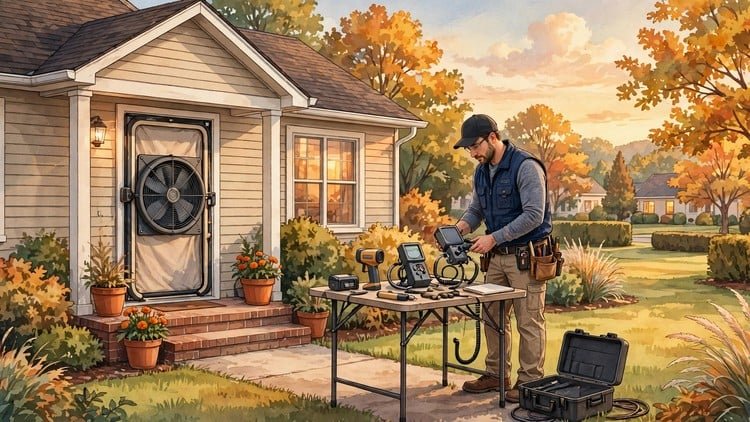
What I appreciated most was how the questions integrated industry-standard tools. We’re talking about the blower door, digital manometers, and combustion analyzers. The course doesn’t just ask “what is a manometer?” It asks you to interpret the readings. It forces you to distinguish spillage from backdrafting and infiltration from ventilation in scenarios that feel like real-world projects.
You’ll dive deep into:
- Combustion Safety: Navigating the CAZ (Combustion Appliance Zone) without causing a safety hazard.
- Diagnostic Testing: Using duct leakage data to prioritize energy improvement recommendations.
- The Envelope: Understanding the complex relationship between air sealing, insulation, and moisture flow.
- Ethics and Reporting: Because a great audit is useless if you can’t document it and explain the “why” to a client.
Career Benefits and the Job Market
Passing the BA-P is a massive boost for your resume. With the influx of federal rebates and energy efficiency incentives, companies are desperate for certified professionals who can perform official audits. This isn’t just about getting a badge; it’s about career growth.
Once you’re certified, you’re looking at roles like:
- Energy Auditor: Performing high-level assessments for utility programs.
- Quality Control Inspector (QCI): Overseeing weatherization crews.
- HVAC Consultant: Designing mechanical systems that actually fit the home’s envelope.
- Project Manager: Leading real-world projects in the green building sector.
The Pros
- Precision Alignment: The questions are closely mapped to the 2026 BPI standards, meaning you aren’t wasting time on outdated CAZ protocols.
- Detailed Explanations: This is the secret sauce. When you get a question wrong, the “why” is explained clearly, helping you master the building science behind the answer.
- Scalability: The tests range from beginner to advanced difficulty, allowing you to build confidence before hitting the simulation-heavy professional questions.
The Cons (Keep it 100)
Let’s be honest: practice tests are not a replacement for hands-on labs. You can’t learn the “feel” of a blower door frame or the smell of a gas leak through a computer screen. While this course is excellent for the written component, it cannot replace the physical muscle memory required for the field exam. Use this to master the theory and the math, but make sure you’re still getting time with the actual gear.
Final Verdict
If you’re looking to secure job-ready skills and want a no-nonsense path to BPI certification, these practice tests are a solid investment. They take the stress out of the 2026 exam update and ensure you’re not just memorizing answers, but actually understanding the physics of a healthy home. It’s a must-have for anyone serious about a career in building performance.