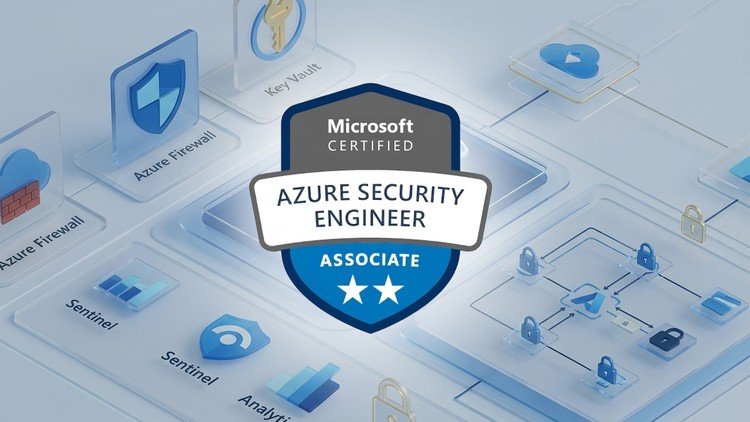
Prepare for AZ-500 with practice questions on Azure security, identity, networking, data protection.
What You Will Learn:
- Understand the key concepts and skills measured in the Microsoft AZ-500 Azure Security Technologies certification exam.
- Apply Azure security best practices across cloud and hybrid environments.
- Understand Microsoft Entra ID, authentication, authorization, and identity security concepts.
- Configure and evaluate access control and role-based access control (RBAC) concepts in Azure.
- Apply security controls to Azure networking and infrastructure.
- Understand Azure network security, firewalls, private endpoints, and network segmentation.
- Protect Azure compute resources, storage services, databases, and applications.
- Understand data protection, encryption, key management, and secure data access.
- Apply Microsoft Defender for Cloud concepts to improve cloud security posture and threat protection.
- Understand security monitoring, vulnerability management, and security recommendations in Azure.
Alright, let’s talk about the AZ-500. If you’re eyeing a real move into cloud security, or you’re already dabbling and want to formalize your expertise, this isn’t just another certification prep course; it’s a deep dive into the very practicalities of securing Microsoft Azure environments. Forget the dry theory for a moment – this course, when done right, aims to equip you with the kind of hands-on knowledge you need to protect digital assets, manage identities, and secure network perimeters in the cloud. It’s less about memorizing definitions and more about understanding *how* to apply security controls effectively, whether you’re dealing with a pure cloud setup or wrestling with hybrid complexities. In my book, that’s where the real value lies, bridging the gap between theoretical knowledge and job-ready skills.
Overview
The AZ-500 isn’t just a badge; it’s a statement about your proficiency in a critical, high-demand field. What I really appreciate about the scope of this course is how it forces you to think like a security professional from day one. You’re not just learning features; you’re learning how to architect, implement, and monitor security across the entire Azure ecosystem. This means getting comfortable with everything from designing robust identity and access solutions with Microsoft Entra ID to hardening your network infrastructure against threats. It’s a holistic approach that acknowledges security isn’t a bolt-on, but an integral part of cloud operations. For anyone serious about making an impact in cloud security, this course sets a formidable foundation, pushing you beyond basic concepts into practical, deployable strategies.
Prerequisites
While the course itself might be a fantastic journey, don’t walk into the AZ-500 cold. You really should have a solid foundational understanding of Azure services before you begin. Think general knowledge of virtual machines, networking, storage, and databases. Additionally, some prior experience with general security concepts, like firewalls, encryption, and identity management (even on-premises Active Directory), will be a huge advantage. This isn’t a beginner to advanced course in the sense of starting with “what is a cloud?”. It’s designed for someone with an existing technical background who wants to specialize in Azure security. If you’re completely new to cloud or security, I’d suggest some fundamental Azure and security courses first to avoid feeling overwhelmed.
Skills & Tools
Upon completing a comprehensive AZ-500 course, you’ll be much more than just a cert holder. You’ll gain crucial job-ready skills in implementing advanced security controls across various Azure services. This includes mastering Microsoft Entra ID for identity and access management, configuring intricate Role-Based Access Control (RBAC) policies, and fortifying network perimeters using Azure Firewall and Private Endpoints. You’ll learn to protect data at rest and in transit with Azure Key Vault and various encryption methods, plus secure your compute, storage, and database resources. A significant portion focuses on leveraging Microsoft Defender for Cloud, an industry-standard tool, to improve your security posture, perform vulnerability management, and respond to threats. These practical skills are directly transferable to real-world projects, making you a valuable asset to any team.
Career Benefits & Job Roles
The demand for skilled cloud security professionals is through the roof, and the AZ-500 is a highly respected credential that can significantly boost your career growth. Successfully completing this course and earning the certification opens doors to various specialized roles. You’ll be well-positioned for positions such as an Azure Security Engineer, Cloud Security Analyst, Security Consultant, or even a specialized DevOps Engineer with a strong security focus. Organizations are desperately seeking individuals who can not only deploy cloud solutions but also secure them effectively against an ever-evolving threat landscape. This certification validates your expertise, making you a competitive candidate in a market where cloud security talent is both scarce and highly valued. It shows employers you’re serious about protecting their critical cloud infrastructure.
Pros
- Comprehensive Security Coverage: This course meticulously covers all major facets of Azure security, from identity and network to data and applications. It doesn’t shy away from complex topics, providing a thorough understanding essential for real-world deployments and effective certification prep.
- Focus on Best Practices: Beyond just configuring services, the course emphasizes applying Azure security best practices. This is crucial for building resilient, secure cloud environments and moving beyond basic setup to genuinely secure architectures.
- High Market Value: The AZ-500 certification carries significant weight in the industry. It’s a recognized credential that demonstrates advanced proficiency in Azure security, often leading to better opportunities and substantial career growth.
- Practical Skill Development: A good AZ-500 course, especially one with strong hands-on labs, builds practical skills using industry-standard tools. This ensures you’re not just learning theory, but gaining the ability to actually implement and manage security controls.
Cons
- Rapid Evolution of Azure Services: The most honest con I can offer is that Azure services, particularly in security, evolve at an incredible pace. While a course provides a snapshot, some specific configurations or UI elements might shift quickly. This means continuous learning beyond the course material is absolutely critical to stay current and maintain truly relevant job-ready skills, requiring an ongoing investment of time.