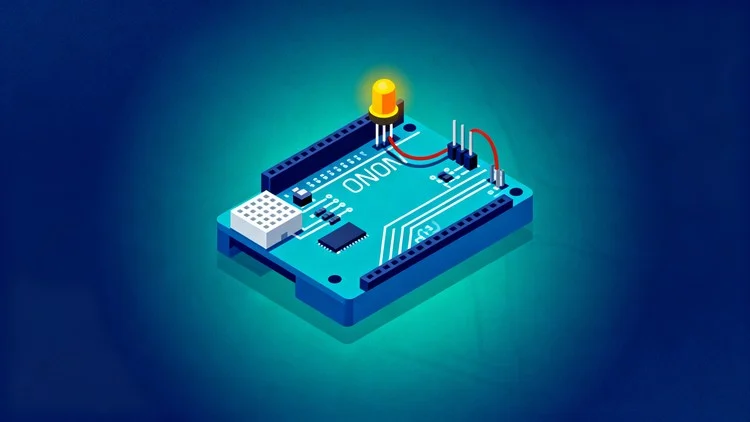
Learn Arduino from LED blinking to sensor‑based mini projects using C/C++ code, serial monitor, and hands‑on circuits.
⏱️ Length: 2.2 total hours
⭐ 4.50/5 rating
👥 540 students
🔄 March 2026 update
Add-On Information:
- Course Overview
- Embark on an immersive journey into the world of microcontrollers with the “Arduino: Fully Hands-On Learning Experience” course. This program is meticulously designed for absolute beginners and aspiring makers who want to bridge the gap between abstract coding concepts and tangible, functional electronic projects.
- Forget passive learning; this course prioritizes practical application from the very first module. You’ll move beyond theoretical discussions and dive straight into building, coding, and troubleshooting, fostering a deep understanding through direct interaction with the Arduino platform.
- We’ll guide you through the fundamental principles of embedded systems, demystifying how code translates into physical actions. You’ll gain the confidence to bring your innovative ideas to life by controlling electronic components and interpreting data from the real world.
- The curriculum is structured to progressively build your expertise. Starting with the most basic interactions – making an LED light up – you’ll gradually advance to more complex projects involving user input and real-time feedback, laying a robust foundation for future endeavors in electronics and programming.
- This course is your gateway to the exciting realm of IoT (Internet of Things) and automation. By mastering Arduino, you’ll acquire the skills necessary to create smart devices, interactive installations, and automated systems that can respond to their environment.
- Requirements / Prerequisites
- No prior programming experience is necessary. The course starts with the very basics of C/C++ syntax relevant to Arduino.
- No prior electronics knowledge is required. We’ll introduce fundamental electronic concepts as they become relevant to the projects.
- A personal computer (Windows, macOS, or Linux) capable of running the Arduino IDE.
- A stable internet connection to download the Arduino IDE and access online resources.
- An Arduino Uno development board (or a compatible microcontroller board).
- A basic electronics starter kit containing essential components such as jumper wires, breadboard, LEDs, resistors, and pushbuttons. Specific component requirements will be detailed at the start of the course.
- Skills Covered / Tools Used
- Fundamental C/C++ Programming Constructs: Variables, data types, operators, control flow (if-else, loops), functions – all tailored for microcontroller programming.
- Digital Input/Output (I/O) Principles: Understanding how to send signals to components (like LEDs) and receive signals from sensors or switches.
- Analog Input and Digital Output Interpretation: Learning to read analog sensor data and control digital actuators.
- Circuit Building and Breadboarding Techniques: Safely and effectively connecting electronic components using breadboards and jumper wires.
- Understanding of Resistor Functions: Specifically, the role of pull-up and pull-down resistors in managing digital inputs.
- Effective Use of the Arduino IDE: Navigating the integrated development environment, writing, compiling, and uploading code.
- Serial Communication and Debugging: Utilizing the Serial Monitor for real-time data output and troubleshooting code logic.
- Component Selection and Integration: Gaining practical knowledge of common electronic components used in Arduino projects.
- Problem-Solving and Debugging Strategies: Developing logical thinking to identify and resolve issues in both code and circuits.
- Tools Used: Arduino IDE, Arduino Uno Board, Breadboard, Jumper Wires, LEDs, Resistors, Pushbuttons, USB Cable.
- Benefits / Outcomes
- Develop a solid foundation in embedded systems and microcontroller programming, opening doors to further learning in robotics, IoT, and automation.
- Gain the confidence to design, build, and program your own simple electronic gadgets and interactive prototypes.
- Enhance your logical thinking and problem-solving abilities through hands-on coding and circuit debugging.
- Become proficient in using the Arduino ecosystem, a widely adopted platform in education, hobbyist communities, and professional prototyping.
- Acquire practical skills directly applicable to STEM fields and maker culture.
- Transform abstract ideas into tangible, functional projects, fostering a sense of accomplishment and creativity.
- Understand the synergy between software (code) and hardware (circuits), a crucial skill in the modern technological landscape.
- Be equipped to participate in maker fairs, hackathons, or even conceptualize your own entrepreneurial ventures based on Arduino technology.
- Empower yourself with the ability to automate simple tasks and create responsive devices.
- Build a portfolio of small, functional projects that demonstrate your practical understanding of electronics and programming.
- PROS
- Extremely practical approach: Emphasizes learning by doing, leading to better retention and understanding.
- Beginner-friendly: Assumes no prior knowledge, making it accessible to a wide audience.
- Covers fundamental concepts: Builds a strong base in both coding and basic electronics.
- Develops debugging skills: Essential for any programmer or maker.
- Tangible project outcomes: Provides immediate gratification and a sense of achievement.
- CONS
- Limited scope for advanced topics: Focuses on introductory projects and may not delve into complex circuits or advanced programming paradigms.
Learning Tracks: English,IT & Software,Hardware