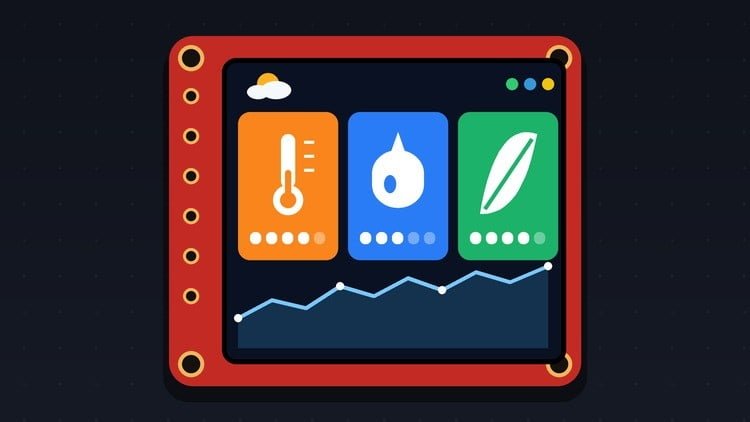
Draw screens for OLED, TFT and e-paper displays in your browser and run the code on Arduino and ESP32
What You Will Learn:
- Design screens for OLED, TFT and e-paper displays in your browser with Lopaka
- Turn a drawn screen into ready Arduino code and run it in the free Wokwi simulator
- Understand pixels, coordinates, fonts, icons and how much memory each one costs
- Build color dashboards, live sensor screens, menus, animations and LVGL touch UIs
- Take one screen design to Arduino, ESPHome, MicroPython, CircuitPython and Flipper Zero
- Upload to a real Arduino and fix the five common reasons an OLED stays black
Lopaka Basics: Design Screens for Arduino & ESP32 – An Experienced Dev's Take
Caption: Draw screens for OLED, TFT and e-paper displays in your browser and run the code on Arduino and ESP32 | Topics: Design screens for OLED, TFT and e-paper displays in your browser with Lopaka
Overview
Having spent my fair share of time wrestling with display drivers and pixel manipulation on various embedded platforms, I can confidently say that anything promising to streamline UI design for microcontrollers immediately grabs my attention. 'Lopaka Basics: Design Screens for Arduino & ESP32' isn't just another tutorial; it's a genuine game-changer for anyone looking to bridge the gap between UI/UX concepts and embedded hardware without getting lost in the weeds of low-level graphics libraries. This course zeroes in on Lopaka, a browser-based tool that significantly reduces the friction typically associated with creating interactive display interfaces for humble devices like Arduino and ESP32.
The core proposition here is powerful: design visually in your browser, generate clean code, and test it instantly in a simulator like Wokwi. This workflow dramatically accelerates rapid prototyping and iteration, which is invaluable in embedded development where physical hardware testing can be time-consuming. It's a fresh, modern approach to an age-old problem, moving embedded UI development closer to the kind of efficiency we see in web or mobile app design.
Note➛ Make sure your 𝐔𝐝𝐞𝐦𝐲 cart has only this course you're going to enroll it now, Remove all other courses from the 𝐔𝐝𝐞𝐦𝐲 cart before Enrolling!
Prerequisites
While the "Basics" in the title might suggest a total novice entry point, an experienced tech professional understands that no significant skill is truly built from a vacuum. For this course, I'd recommend having a foundational understanding of C++ or Python (depending on your preferred microcontroller ecosystem) and some familiarity with the Arduino IDE or PlatformIO. Basic electronics knowledge, particularly how to wire up a simple display, will also serve you well when you move from simulation to real hardware. That said, the course does a commendable job of guiding you from a beginner to advanced level within the Lopaka ecosystem, making complex topics digestible. You don't need to be a graphics wizard, but a general comfort level with coding logic is a definite advantage.
Skills & Tools
This course punches well above its weight in the practical skills it imparts. You'll become proficient with Lopaka as an industry-standard tool for browser-based display design, allowing you to create stunning visuals for OLED, TFT, and e-paper displays. Beyond the tool itself, you'll gain a deep appreciation for the constraints and opportunities within embedded UI. This includes a clear understanding of fundamental concepts like pixels, coordinates, and the critical importance of selecting efficient fonts and icons, directly linking to how much precious memory each element consumes. This memory-cost awareness is a significant takeaway for any embedded developer.
The course goes beyond static screens, teaching you to build dynamic color dashboards, live sensor screens, intricate menus, and even simple animations. Crucially, it delves into creating LVGL touch UIs, equipping you with capabilities for modern, interactive interfaces. The ability to seamlessly translate your single screen design to diverse platforms like Arduino, ESPHome (a personal favorite for home automation), MicroPython, CircuitPython, and even Flipper Zero is a testament to the course's comprehensive coverage. The integration with the free Wokwi simulator for hands-on labs means you get immediate feedback without needing physical hardware initially, making the learning process incredibly smooth. You'll also learn practical debugging techniques, like troubleshooting the five common reasons an OLED display might stay black – invaluable troubleshooting wisdom.
Career Benefits & Job Roles
In today's competitive landscape, simply having functional code isn't enough; the user experience matters more than ever, even for embedded devices. The skills acquired in 'Lopaka Basics' are highly transferable and translate directly into job-ready skills that enhance your resume. Being able to rapidly prototype and implement intuitive user interfaces for IoT devices positions you strongly for roles such as Embedded Systems Developer, IoT Engineer, Hardware Prototyper, or even a specialist in Embedded UI/UX Design. The ability to quickly turn ideas into functional, visually appealing prototypes using real-world projects as examples significantly boosts your market value and contributes to tangible career growth.
For those interested in certification prep for broader embedded or IoT specializations, the practical experience gained in display design and memory management is foundational. It's about taking your projects beyond just blinking LEDs and pushing them into the realm of professional, user-friendly devices.
Pros
- Unparalleled Rapid Prototyping: Designing visually in a browser and instantly simulating with Wokwi cuts development time dramatically. This is a massive win for iterative development.
- Multi-Platform Code Generation: The ability to generate ready-to-run code for Arduino, ESPHome, MicroPython, CircuitPython, and Flipper Zero from a single design is incredibly versatile and saves immense porting effort.
- Practical Memory Management: The course emphasizes the critical importance of understanding memory costs for fonts, icons, and display elements, which is often overlooked in introductory materials but vital for robust embedded systems.
- LVGL & Touch UI Introduction: Getting hands-on with LVGL for touch interfaces elevates the course beyond basic display output, preparing you for more sophisticated interactive devices.
Cons
- While Lopaka excels at abstracting away much of the low-level complexity, an experienced professional might find themselves wanting more depth on the underlying display driver architectures or the full capabilities of graphics libraries like Adafruit GFX or LVGL. The course focuses heavily on using Lopaka as an intermediary, which is powerful but can sometimes feel like a slight detachment from the raw metal for advanced debugging or highly custom optimizations.