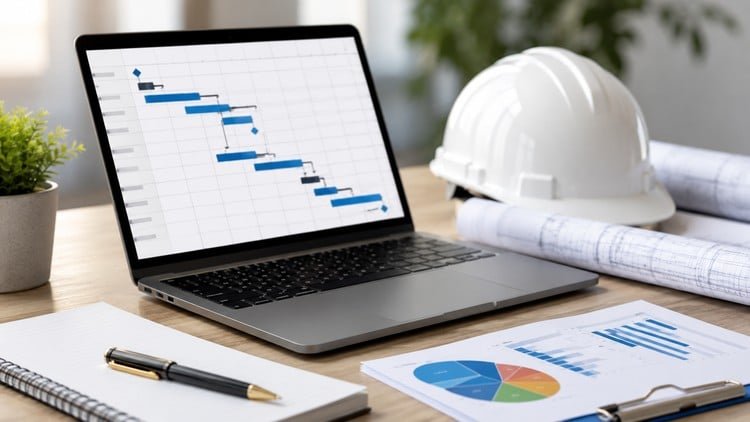
Learn PSP exam fundamentals with CPM scheduling, WBS, cost control, stakeholder management, and project control
What You Will Learn:
- Understand the PSP exam structure, key knowledge areas, and how to study with planning and scheduling judgment.
- Explain planning fundamentals, including scope, stakeholders, constraints, resources, sequence, and project strategy.
- Build a strong scheduling mindset using CPM logic, activities, durations, calendars, milestones, and baseline concepts.
- Apply WBS, OBS, CBS, and coding structures to organize scope, responsibility, cost, reporting, and schedule control.
- Analyze contract requirements, stakeholder impacts, change management, and documentation needed for defensible schedules.
- Prepare for PSP-style scenario questions and written memo responses using clear professional reasoning.
Alright, let’s dive into the PSP Exam Preparation: Planning, Scheduling course. I’ve been in the trenches with project controls for a good while now, seen a lot of folks chase certifications, and frankly, some are more fluff than substance. This one, though? It caught my eye for its focus on the PSP – the Planning & Scheduling Professional certification. It’s a big deal in our field, and getting that credential can really move the needle on your career. So, I decided to check it out.
Overview
This course isn’t just about memorizing answers for the PSP exam. It aims to build a foundational understanding of what goes into creating a robust project schedule, from the initial scope definition all the way through to managing changes. It covers the whole lifecycle, really. What I appreciated is its emphasis on the “why” behind each element, not just the “what.” They’re trying to instill that critical thinking and judgment the PSP exam really probes. You’re not just learning to input data; you’re learning to interpret project dynamics and translate them into a defensible schedule. It’s about developing that planning and scheduling mindset that seasoned professionals talk about, the kind that helps you anticipate problems before they derail a project.
Prerequisites
Honestly, this course is best suited for those who already have some footing in project management or a related technical field. While they don’t explicitly state a hard requirement, I’d say having at least a basic understanding of project lifecycles and perhaps some exposure to project management software would be incredibly beneficial. If you’re coming in completely cold, you might find yourself playing catch-up. Think of it as needing some general construction or engineering awareness before diving deep into the intricate scheduling details. It’s not a beginner-level “intro to projects” course; it’s more of a specialized certification prep for those looking to validate their planning and scheduling expertise.
Skills & Tools
The skills you’ll hone here are highly practical and directly applicable to the day-to-day realities of project controls. You’ll get a firm grasp on:
- Scope management through Work Breakdown Structures (WBS).
- Critical Path Method (CPM) logic – understanding how to link activities and identify critical paths.
- Resource planning and allocation.
- Cost control integration with scheduling (CBS, coding).
- Stakeholder analysis and communication strategies.
- Change management processes as they impact schedules.
- Developing defensible schedules that can withstand scrutiny.
While the course itself might not be a deep dive into specific software hands-on labs (though it certainly mentions them as a study method), the concepts taught are designed to be applied using industry-standard tools like Primavera P6 or Microsoft Project. The focus is on the methodology, which you can then transfer to whatever platform you’re using.
Career Benefits & Job Roles
Let’s talk brass tacks: career growth. The PSP certification is a significant differentiator. It positions you as an expert in planning and scheduling, opening doors to roles such as:
- Project Scheduler
- Senior Project Scheduler
- Project Controls Manager
- Planning Engineer
- Cost Engineer (with scheduling focus)
Having this certification on your resume signals to employers that you possess a specialized, recognized skill set, making you a more attractive candidate for job-ready skills in demanding industries like construction, engineering, aerospace, and IT. It’s about moving up the ladder and taking on more responsibility.
Pros
- Comprehensive Curriculum: It covers all the key knowledge areas required for the PSP exam and then some. You get a holistic view of planning and scheduling.
- Focus on Judgment: The emphasis on developing “planning and scheduling judgment” is crucial. This isn’t just rote learning; it’s about understanding the principles to make sound decisions.
- Real-World Application: The scenarios and discussions are geared towards practical application, making the learning feel relevant to real-world projects.
- Structured Exam Preparation: The course is clearly designed to guide you through the exam structure and common question types, including the often-challenging written memo responses.
Cons
The biggest “con,” and it’s a significant one if you’re looking for a purely self-paced, fully independent learning experience, is that the course leans heavily on active participation and application outside of the core content. While it provides the knowledge, you’ll absolutely need to supplement with personal practice, diving into scheduling software, and perhaps forming study groups to truly master the material and be exam-ready. It’s more of a structured guide than a fully automated pass.