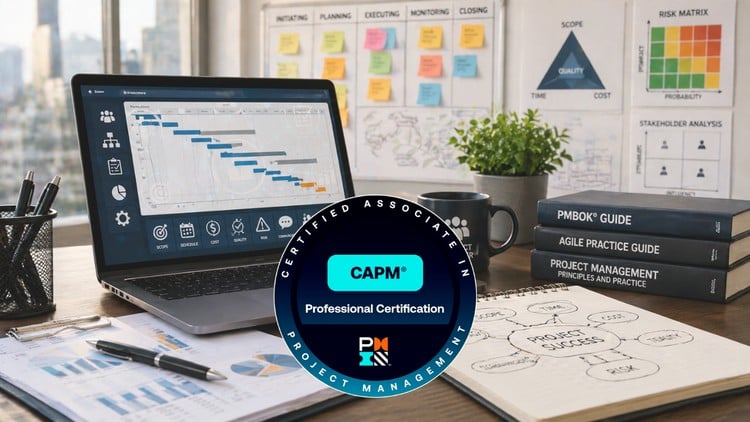
Master CAPM® with PMI logic, real exam questions, practice tests, and clear strategies to pass on your first attempt
What You Will Learn:
- Understand all CAPM® domains and apply PMI project management principles confidently
- Answer scenario-based exam questions using PMI logic and structured decision-making
- Differentiate between predictive, agile, and hybrid project approaches effectively
- Identify and avoid common CAPM® exam traps and improve exam performance
- Apply project management processes including scope, schedule, cost, risk, and stakeholder management
- Build strong exam confidence through practice tests, explanations, and proven CAPM® strategies
CAPM® Exam Full Prep Course: Videos, Practice Tests & Tips – A Tech Pro’s Verdict
Alright folks, as someone who’s navigated the choppy waters of IT certifications and seen firsthand how a solid credential can open doors, I decided to dive deep into the ‘CAPM® Exam Full Prep Course: Videos, Practice Tests & Tips’. Let’s be honest, the CAPM® isn’t the PMP®, but for those of us looking to get a foundational understanding of project management principles without the years of experience the PMP® demands, it’s a fantastic stepping stone. This course promises to get you there, and I went in with a healthy dose of skepticism and a keen eye for what actually works in the real world of tech.
Overview
This isn’t just another generic video dump. What struck me immediately was the focus on PMI logic. They hammer home that this is about understanding *how* PMI thinks, not just memorizing terms. This distinction is crucial because the exam often throws scenario-based questions at you, and without that underlying logic, you’re just guessing. The breakdown of predictive, agile, and hybrid approaches felt particularly well-done, going beyond the textbook definitions to practical application. The course does a good job of highlighting common exam traps – little nuances that can trip you up if you’re not paying attention. It’s clear they’ve analyzed past exams to identify these sticky points.
Prerequisites
Honestly, the only real prerequisite is a desire to understand project management and the willingness to put in the study time. While some basic familiarity with IT concepts might help in grasping certain scenarios, the course is designed for those starting out. If you’re a student, a recent graduate, or a junior professional looking to formalize your PM knowledge, this is squarely in your wheelhouse. No need for prior industry experience to tackle this.
Skills & Tools
The skills you’ll hone here are directly applicable to any project environment, regardless of the industry. You’ll gain a strong grasp of core project management processes like:
- Scope definition and management
- Schedule development and control
- Cost estimation and budgeting
- Risk identification and mitigation
- Stakeholder engagement and communication
While the course itself doesn’t offer hands-on labs in industry-standard tools like Jira or MS Project, the principles it teaches are the bedrock upon which those tools are built. Think of it as learning the grammar before you write the novel. The practice tests are invaluable for reinforcing learning and simulating the exam environment, which is a critical part of any effective certification prep.
Career Benefits & Job Roles
Getting your CAPM® can significantly boost your career growth. It signals to employers that you understand fundamental project management methodologies, which is a sought-after skill across various tech roles. This certification can help you land entry-level project coordinator positions, junior project manager roles, or even just make you a more effective team member in a project-driven environment. It’s a way to build towards more advanced certifications and open doors to opportunities that require a structured approach to managing projects. This is about developing job-ready skills from the get-go.
Pros
- Deep Dive into PMI Logic: The course excels at teaching you *why* PMI processes are structured the way they are, which is essential for tackling scenario-based questions confidently.
- Comprehensive Practice Materials: The variety and quality of practice tests, coupled with detailed explanations for each answer, are a huge asset for reinforcing concepts and identifying weak areas.
- Focus on Exam Strategies: Beyond just content, the course provides actionable tips for avoiding common traps and improving overall exam performance, building significant exam confidence.
- Clear Differentiation of Methodologies: The explanation of predictive, agile, and hybrid approaches is practical and helps you understand when and how to apply each, making the concepts feel less abstract.
Cons
The only real drawback, and it’s a minor one if you’re committed, is that the course content is primarily video-based. While the instructors are engaging, for some learners, a more interactive approach with perhaps some integrated quizzes within the video modules themselves could further enhance engagement and retention. However, the extensive practice tests largely compensate for this.
In summary, if you’re looking for a robust, well-structured CAPM® prep course that focuses on understanding the underlying principles and logic, rather than just rote memorization, this is a solid investment. It gives you the knowledge, the practice, and the confidence to tackle the exam effectively.