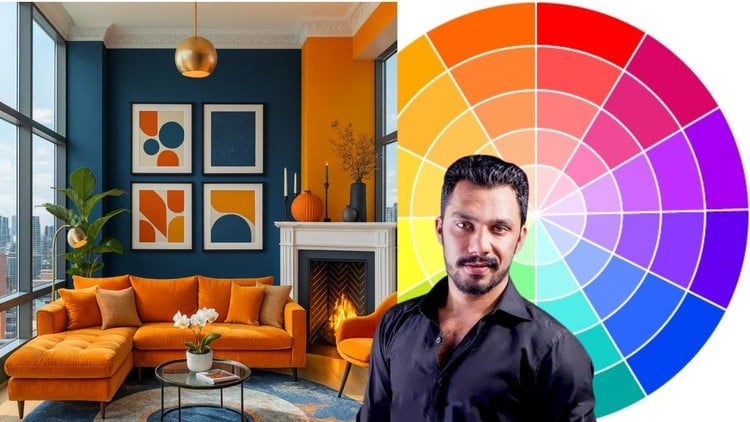
Learn how colors affect mood, space, lighting, and interior design decisions using color theory and psychology.
What You Will Learn:
- Understand the fundamentals of color theory for interior design
- Learn how colors affect mood, emotions, and human psychology
- Understand warm colors, cool colors, hue, tint, tone, and shade
- Learn how to use the color wheel and color harmony correctly
- Understand how lighting changes the appearance of colors
- Learn how colors affect room size and space perception
- Build balanced color palettes for interior spaces
- Apply the 60-30-10 color rule in interiors
- Show more
Course Review: Color Theory & Psychology for Interior Design (2026)
As someone who’s spent a good chunk of my career translating complex technical concepts into actionable, *job-ready skills*, I’ve always been fascinated by how design principles, even those outside the realm of pure tech, can have such a profound impact. This “Color Theory & Psychology for Interior Design (2026)” course caught my eye because it promised to bridge the gap between aesthetic appeal and the science behind it, which, let’s be honest, is where the real magic happens for *career growth*. My take? It’s a surprisingly robust offering that could genuinely elevate your design game, whether you’re a seasoned pro or just dipping your toes into the world of interiors.
This isn’t your grandma’s art class, folks. The course dives deep into the “why” behind color choices, going beyond just picking pretty shades. It’s about understanding the neuroscience of color perception and how it directly influences the human experience within a space. We’re talking about how a specific hue can make a small room feel expansive or a sterile environment feel warm and inviting. The emphasis on *real-world projects* is a huge plus here, pushing you to apply these principles in practical scenarios. Think less rote memorization, more strategic application of *industry-standard tools* and concepts.
Prerequisites
Honestly, you don’t need to be a certified interior designer or a psychology PhD to ace this. The course is structured to take you from *beginner to advanced*, so a genuine interest in how color impacts us is pretty much all you need. Having a basic understanding of design principles or even just a keen eye for aesthetics would be beneficial, but not strictly required.
Skills & Tools
This course is all about building a solid foundation in color theory and then layering on the psychological applications. You’ll learn to dissect the *color wheel*, understand the nuances of *hue, tint, tone, and shade*, and master techniques like the *60-30-10 color rule*. Beyond theory, there’s a strong focus on practical application, which means you’ll be developing skills in building *balanced color palettes* and understanding how *lighting changes the appearance of colors* – a critical element often overlooked. While the course might not delve into specific *industry-standard tools* for rendering or design software in detail, the knowledge gained is universally applicable and will inform your use of any tool you choose. The implied takeaway is that understanding color is paramount, regardless of the software.
Career Benefits & Job Roles
For those looking to enhance their interior design portfolio, this course is a no-brainer. It’s the kind of knowledge that can set you apart and move you towards more specialized or senior roles. Imagine pitching a design concept that not only looks good but also demonstrably *affects mood, emotions, and human psychology*. This translates directly into value for clients. It’s excellent *certification prep* if you’re aiming for more formal qualifications, and the *hands-on labs* (or simulated real-world projects) provide tangible proof of your skills. It’s also a fantastic course for aspiring interior designers, decorators, architects, and even real estate stagers who want to leverage color for maximum impact.
Pros
* Deep dive into psychological impact: This isn’t just about aesthetics; it’s about understanding the science behind why colors work the way they do. It’s about creating spaces that *affect mood* intentionally.
* Practical application focus: The emphasis on applying concepts like the *60-30-10 color rule* and building *balanced color palettes* makes the learning immediately actionable.
* Comprehensive understanding of color relationships: Learning to correctly use the *color wheel* and understand *color harmony* is fundamental and well-covered, providing a strong theoretical backbone.
* Illuminating insight on lighting: The section on how *lighting changes the appearance of colors* is a game-changer. It’s a often-underestimated factor that this course thankfully addresses head-on.
Cons
* Limited software integration: While the theoretical and psychological aspects are stellar, the course doesn’t dive into specific design software. This means you’ll need to pair this knowledge with your preferred design tools, which might require some additional self-directed learning if you’re new to them.
Overall, “Color Theory & Psychology for Interior Design (2026)” is a surprisingly insightful and practical course. It equips you with a unique blend of artistic understanding and scientific rationale, making you a more informed and impactful designer. It’s a worthwhile investment for anyone serious about creating spaces that resonate on a deeper level.